
Sawfly Larvae
Tenthredinidae family
About Sawfly Larvae
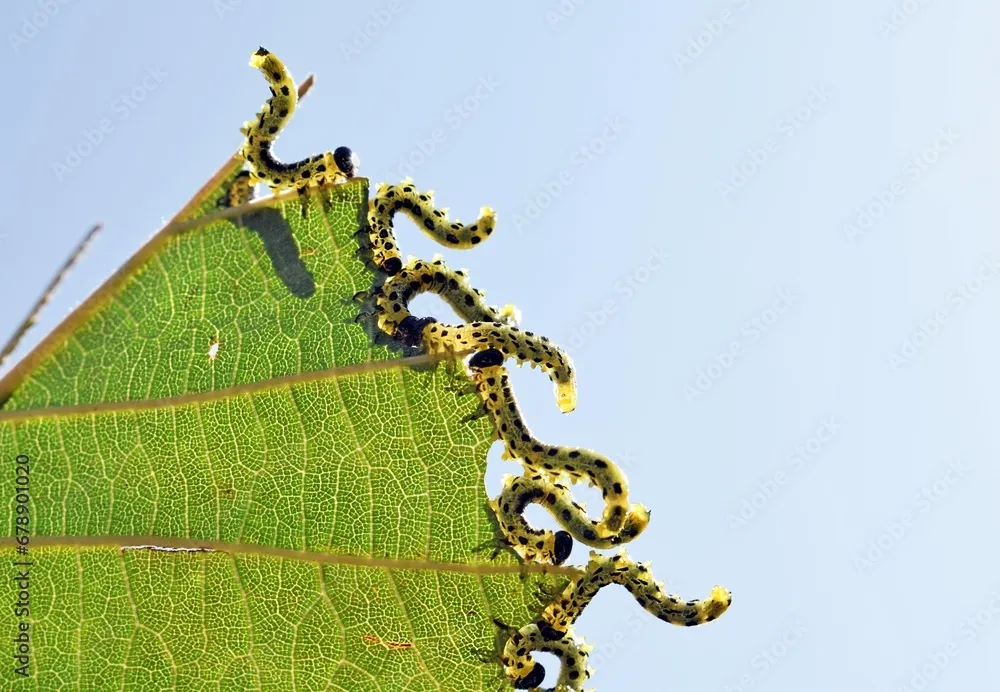
Sawflies are a primitive group of insects belonging to the suborder Symphyta, closely related to wasps, bees, and ants but distinguished by the absence of the characteristic 'wasp-waist' constriction. The name 'sawfly' is derived from the specialized, saw-like ovipositor that adult females use to cut slits into plant tissue to deposit their eggs. While the adults are mostly harmless nectar feeders, the larvae are significant agricultural and garden pests. These larvae are often mistaken for butterfly or moth caterpillars due to their similar appearance and voracious leaf-eating habits. They are notorious for their ability to rapidly defoliate host plants, especially roses (rose slugs), hibiscus, and various fruit trees, causing significant aesthetic and structural damage.
Identification of sawfly larvae is critical for choosing the correct treatment, as they are biologically distinct from true caterpillars. The most reliable diagnostic feature is the number of fleshy abdominal prolegs; sawfly larvae possess six or more pairs, whereas butterfly caterpillars never have more than five. Their damage is equally characteristic, often appearing as translucent 'windowpane' spots where only the upper layer of the leaf is eaten, or as complete skeletonization where only the midrib and veins remain. Many species, such as the rose slug, are semi-transparent and pale green, blending perfectly with the leaf undersides, while others may be brightly colored or covered in waxy secretions.
Sawflies selective target various host trees and garden ornamental plants.
| Crop/Plant Type | Severity Rating | Impact Description |
|---|---|---|
| Pines & Conifers | Extreme (⭐⭐⭐) | Complete needle defoliation, twig dieback, stunting, and seedling mortality |
| Roses & Hibiscus | High (⭐⭐) | Larval leaf skeletonization (slug-like feeding), ruined blooms, and leaf browning |
| Pears & Plums | Medium (⭐) | Cherry-slug skeletonization on foliage, cosmetic leaf damage, and healthy fruit set |
Management of sawfly populations emphasizes early detection and physical removal. For small gardens, handpicking clusters or using a forceful stream of water to dislodge larvae is highly effective. Because they are not true caterpillars, the biological insecticide Bacillus thuringiensis (Bt), which is commonly used for moth larvae, is generally ineffective against sawflies. Instead, organic gardeners should use Spinosad, insecticidal soaps, or neem oil, which are highly successful when applied during the early larval stages. Cultivating the soil around the base of vulnerable plants in late fall or early spring can also help expose and destroy overwintering pupae, breaking the local infestation cycle. For detailed crop pest guides, check our Plant Disease Identifier Hub, or read related articles on Army worm, Leafminer, and Black Spot.
Taxonomy & Features
- Lace-like Skeletonization: Larvae feed voraciously on the soft tissue between leaf veins, leaving behind a characteristic skeletonized or lace-like appearance.
- Abundant Abdominal Prolegs: Distinguished from butterfly caterpillars by having six or more pairs of fleshy prolegs along the abdomen.
- Diagnostic Oviposition Slits: Adult females leave small, scarred, brownish slits along leaf midribs where eggs were inserted using their saw-like ovipositor.
- S-Shaped Defensive Posture: Many species arch their bodies into a distinctive 'S' or 'U' shape when disturbed as a defensive display to ward off predators.
- Gregarious Feeding Habit: Larvae often cluster in large groups on the undersides or edges of leaves, moving in unison as they consume foliage.
- Soil-Based Pupation: After finishing their larval development, they drop to the earth to spin silk cocoons in the soil, where they overwinter.
Seasonal Outbreak Calendar
Outbreak risk and activity timeline for Sawfly Larvae based on seasonal climate patterns:
Names in Different Languages
Affected Plant Species
Vegetables & Crops
- Turnips
- Cabbages (occasional)
Flowers & Ornamentals
- Roses (Rose Slugs)
- Hibiscus
- Iris
Fruits & Berries
- Gooseberries
- Currants
- Pears
- Cherries
- Plums
Prevention & Cure
Natural & Organic Methods
- Handpicking: For small infestations, manually remove larvae and drop them into a bucket of soapy water.
- Spinosad: Apply organic-approved Spinosad sprays, which are highly effective against sawfly larvae.
- Neem Oil: Use neem oil as a repellent and to disrupt the growth of young larvae.
- Water Pressure: A strong blast of water from a garden hose can dislodge larvae.
Chemical & Professional Control
- Pyrethroids: Apply sprays containing Permethrin, Cyfluthrin, or Bifenthrin for immediate contact kill.
- Acetamiprid: Use systemic insecticides for long-lasting protection, especially on woody ornamentals.
- Carbaryl: Effective against a wide range of sawfly species.
Frequently Asked Questions
Are sawflies the same as caterpillars?
No. While they look similar, sawfly larvae are the offspring of a primitive wasp-like insect, not a butterfly or moth. You can distinguish them by counting their legs; sawflies have 6 or more pairs of abdominal prolegs, while caterpillars have 5 or fewer.
Do sawflies sting?
No, adult sawflies do not have stings. Their "saw" is used only for laying eggs into plants.
Will my plant die after sawfly defoliation?
Most healthy plants can survive a single season of defoliation, but repeated attacks will weaken the plant, reduce flowering/fruiting, and eventually lead to death.
Recommended diagnostics based on crop family and symptoms:
Remedy Disclaimer & Safety Notice
This disease guide is for educational screening purposes only. Pathogen behavior, severity, and host susceptibility can vary dramatically based on seed variety, weather conditions, and regional microclimates. Chemical pesticides and organic treatments are subject to strict regional environmental regulations and registration mandates. Please verify all chemical registrations and review manufacturer safety labels carefully with local certified agronomists or agricultural extension service offices before applying.