
Squash Vine Borer
Melittia cucurbitae
About Squash Vine Borer
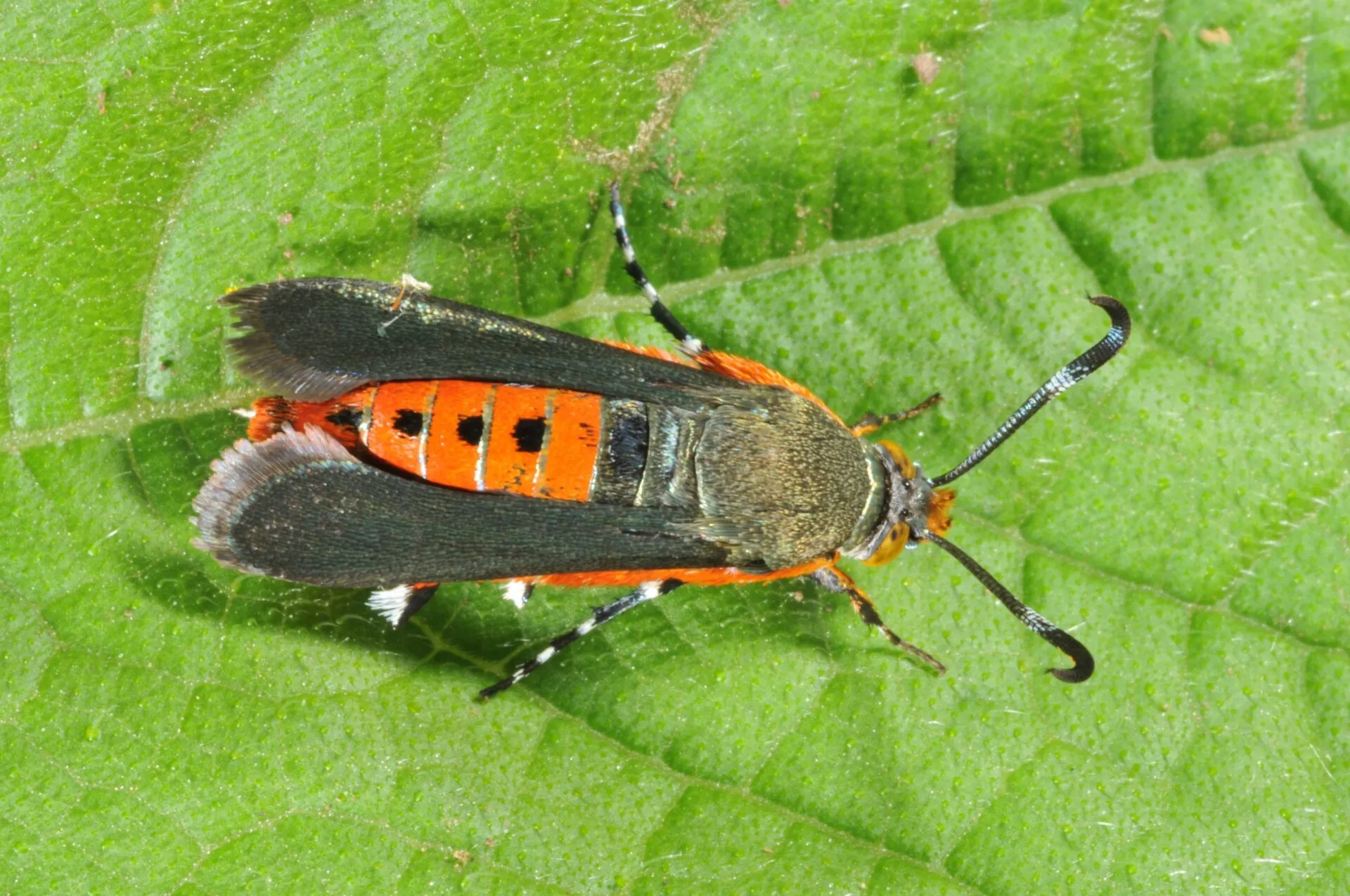
The Squash Vine Borer (*Melittia cucurbitae*), a member of the clearwing moth family *Sesiidae* under the order *Lepidoptera*, is one of the most destructive pests of cucurbit crops in North America. Unlike most moths, which are active at night, the adult vine borer is a day-flying moth that mimics a wasp. The true damage is caused by its larval stage—a fat, cream-colored caterpillar that bores directly into the hollow stems of squash and pumpkin plants, feeding internally and severing the plant's vascular system.
Identifying squash vine borer activity requires close inspection of the vine bases. The first sign of damage is the sudden wilting of an entire runner or plant during the day, which may temporarily recover at night. Closer inspection reveals small holes near the base of the stem, usually within a foot of the soil line. These holes are surrounded by moist, greenish-yellow, sawdust-like frass (caterpillar excrement) spilling out of the wound. If left untreated, the stem rots, leading to complete plant death.
Vine borers selectively target thick-stemmed cucurbits.
| Crop/Plant Type | Severity Rating | Impact Description |
|---|---|---|
| Summer Squash (Zucchini, Yellow Squash) | Extreme (⭐⭐⭐) | Stem girdling, vascular severing, sudden vine wilt, and total plant death before harvest |
| Pumpkins & Winter Squash | High (⭐⭐) | Multiple borer holes, reduced fruit size, stem rot, and shriveled fruit yields |
| Cucumbers & Melons | Medium (⭐) | Rarely targeted; thin stems make them less suitable, though minor runner damage occurs |
Management focuses on preventing adult moths from laying eggs and destroying larvae before they enter the stem. Sowing early or using row covers until flowering can exclude adults. Stems can be wrapped with aluminum foil at the base to block egg-laying. If a borer is inside, growers can make a careful longitudinal slit along the stem, remove the caterpillar, and bury the stem in moist soil to encourage root regeneration. For cucurbit pest guides, refer to our Plant Disease Identifier Hub, or explore profiles like Cucumber Beetle, Corn Borer, and Cabbage Maggot.
Taxonomy & Features
- Wasp-Mimicking Adult Moth: Day-flying moth with a bright orange abdomen, black spots, and metallic green-black forewings.
- Sawdust-Like Frass: Piles of moist, greenish-yellow sawdust-like excrement pushed out of small holes in the stem.
- Sudden Runner Wilting: Runner leaves wilt rapidly in the sun while the rest of the plant appears healthy.
- Creamy Larvae with Brown Head: Large (25 mm) cream-white caterpillars with dark brown heads feeding inside the stem.
- Basal Entry Point: Larvae enter the stem almost exclusively within the first 30 cm (12 inches) from the soil level.
- Overwintering Cocoons: Larvae pupate in tough, dirt-covered silk cocoons 2–5 inches deep in the soil.
Seasonal Outbreak Calendar
Outbreak risk and activity timeline for Squash Vine Borer based on seasonal climate patterns:
Names in Different Languages
Affected Plant Species
Vegetables & Crops
- Zucchini
- Yellow Squash
- Pumpkin
- Butternut Squash
- Acorn Squash
- Hubbard Squash
Flowers & Ornamentals
- None
Fruits & Berries
- Watermelon
- Muskmelon
Prevention & Cure
Natural & Organic Methods
- Foil Wrapping: Wrap the lower 12 inches of the main stem with aluminum foil to prevent moths from laying eggs.
- Surgical Removal: Slit the infested stem lengthwise, remove the borer, and heap moist compost over the cut to re-root.
- Bt Stem Injection: Inject Bacillus thuringiensis (Bt) liquid suspensions directly into the hollow stem base.
Chemical & Professional Control
- Carbaryl Stem Sprays: Spray carbaryl or permethrin onto the lower stems weekly during the egg-laying flight period.
- Spinosad Application: Apply spinosad around leaf stems and vine bases in late spring when adults are active.
- Soil Tilling: Deeply till garden beds in autumn to destroy overwintering pupae cocoons.
Frequently Asked Questions
Which squashes are resistant to the Squash Vine Borer?
Butternut squash and other members of the Cucurbita moschata species are highly resistant because they have solid, woody stems that larvae cannot easily bore into.
How do I spot squash vine borer eggs?
Eggs are flat, oval, brown, and tiny (1 mm). They are laid individually on the stems near the soil surface, making them easy to scrape off with a fingernail.
Will a systemic insecticide protect my squash plants?
Systemic insecticides can protect stems but are discouraged once flowers open, as squash plants rely heavily on honeybees and squash bees for pollination.
Recommended diagnostics based on crop family and symptoms:
Remedy Disclaimer & Safety Notice
This disease guide is for educational screening purposes only. Pathogen behavior, severity, and host susceptibility can vary dramatically based on seed variety, weather conditions, and regional microclimates. Chemical pesticides and organic treatments are subject to strict regional environmental regulations and registration mandates. Please verify all chemical registrations and review manufacturer safety labels carefully with local certified agronomists or agricultural extension service offices before applying.