
Bean Weevil
Acanthoscelides obtectus
About Bean Weevil
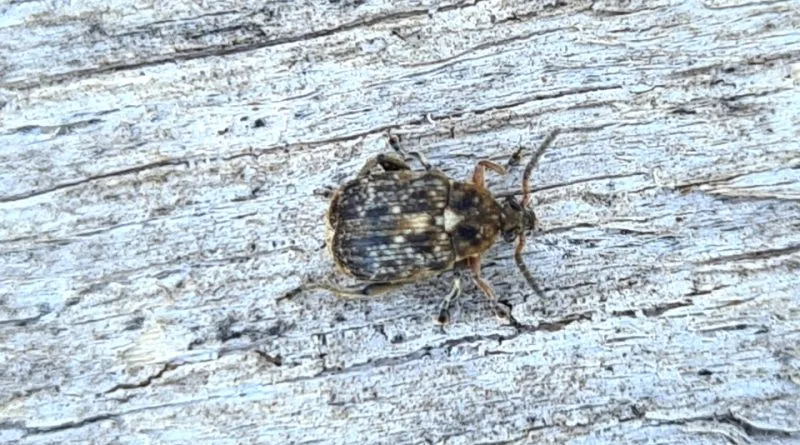
The Bean Weevil (*Acanthoscelides obtectus*), belonging to the seed beetle subfamily *Bruchinae* within the family *Chrysomelidae* under the order *Coleoptera*, is a highly destructive storage and field pest of dry beans and other legumes. Unlike true weevils, bean weevils lack a long snout but possess compact, oval bodies. The larvae feed inside dry legume seeds, consuming the starch and embryo. They represent a severe threat to grain stores, as they can continuously breed indoors and completely hollow out stored beans.
Identifying a bean weevil infestation involves checking stored seeds for small, clean circular exit holes (1.5 mm). The adult beetles are small (3–4 mm), oval, and olive-brown to grey with yellow-grey hairs and red-tipped hind legs. Larvae are tiny, white, C-shaped grubs that live completely inside the seeds. Infested bags of beans often contain fine white powder (seed debris) at the bottom and active crawling beetles.
The bean weevil targets dry legume seeds both in fields and storage.
| Crop/Plant Type | Severity Rating | Impact Description |
|---|---|---|
| Stored Dry Beans (Kidney, Pinto) | Extreme (⭐⭐⭐) | Hollowed-out seeds, white powder debris, continuous indoor breeding, and total loss of stores |
| Field Pea & Chickpea pods | High (⭐⭐) | Bored pods, larval feeding inside green seeds, and reduced crop viability at harvest |
| Lentils & Broad Beans | Medium (⭐) | Minor seed damage, surface exit holes, and reduced germinating strength |
Females lay eggs on dry pods in the field or directly onto stored dry seeds. The larvae hatch and bore into the seeds to feed, eventually pupating inside. The adults chew their way out, leaving circular exit holes. The entire lifecycle takes 3 to 4 weeks at 30°C. Organic management focuses on freezing stored seeds for 48 hours to kill all stages, keeping beans in airtight jars, and using diatomaceous earth. Chemical control includes fumigating storage bins with phosphine. For seed health guides, check our Plant Disease Identifier Hub, or explore similar pests like Flea Beetle, Cabbage Maggot, and Japanese Beetle.
Taxonomy & Features
- Circular Exit Holes: Stored dry beans exhibit clean, circular exit holes (1.5 mm) chewed by emerging adults.
- Olive-Grey Oval Body: Small (3-4 mm) compact, oval-shaped beetles covered in olive-grey hairs, lacking a true snout.
- Internal Larval Grubs: Creamy-white C-shaped larvae feed completely hidden inside individual dry legume seeds.
- Storage Reproduction: Unlike most pests, they can continuously mate and reproduce inside dry stored seed bags.
- Seed Debris Powder: Heavy infestations produce a distinct white seed powder at the bottom of storage containers.
- Cold Treatment Control: Freezing dry beans at -18°C for 48 hours completely destroys all internal larvae and eggs.
Seasonal Outbreak Calendar
Outbreak risk and activity timeline for Bean Weevil based on seasonal climate patterns:
Names in Different Languages
Affected Plant Species
Vegetables & Crops
- Kidney Bean
- Pinto Bean
- Chickpea
- Lentil
- Pea
Flowers & Ornamentals
- None
Fruits & Berries
- None
Prevention & Cure
Natural & Organic Methods
- Freezing Treatment: Freeze dry beans at -18°C for 48 hours immediately after harvest to destroy all eggs and larvae.
- Airtight Storage: Keep dry beans in tightly sealed glass jars or thick plastic bins to prevent adult entry.
- Diatomaceous Earth: Mix stored seeds with food-grade diatomaceous earth to dehydrate and kill wandering beetles.
Chemical & Professional Control
- Phosphine Fumigation: Fumigate large commercial seed warehouses with aluminum phosphide gas.
- Deltamethrin Dust: Treat seed stocks intended strictly for planting with protective deltamethrin dust formulations.
- Foliar Sprays: Apply permethrin to green pods in fields during peak egg-laying to prevent early infestations.
Frequently Asked Questions
Do bean weevils bite humans or pets?
No. Bean weevils feed strictly on legume starch and have no biting mouthparts or venom that can harm humans or pets.
Can I eat dry beans that have weevil holes in them?
Technically yes, if they are boiled. However, the larvae consume the internal seed contents, leaving them hollow, bitter, and filled with insect debris, so it is best to discard heavily infested batches.
How do bean weevils get inside sealed bags in my pantry?
They usually enter the beans in the field before harvest when the female lays eggs on green pods. The larvae bore inside and are harvested with the beans, hatching later inside your pantry.
Recommended diagnostics based on crop family and symptoms:
Remedy Disclaimer & Safety Notice
This disease guide is for educational screening purposes only. Pathogen behavior, severity, and host susceptibility can vary dramatically based on seed variety, weather conditions, and regional microclimates. Chemical pesticides and organic treatments are subject to strict regional environmental regulations and registration mandates. Please verify all chemical registrations and review manufacturer safety labels carefully with local certified agronomists or agricultural extension service offices before applying.