
Cabbage Maggot
Delia radicum
About Cabbage Maggot
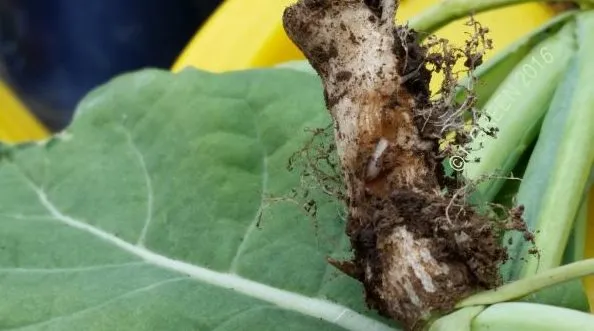
The cabbage maggot (*Delia radicum*), belonging to the root fly family *Anthomyiidae* under the order *Diptera*, is a major soil-dwelling insect pest that targets cruciferous crops worldwide. The primary damage is executed by the larval stage—a small, legless white maggot—which feeds exclusively on the roots of plants in the Brassicaceae family. This makes it a leading cause of early-season seedling loss in cabbages, cauliflowers, radishes, and turnips.
Identifying a cabbage maggot infestation involves inspecting the root zones of wilting seedlings. Affected plants display leaf yellowing, stunting, and a distinct bluish-grey color. Under sun heat, infested plants wilt rapidly because the roots have been hollowed out. Pulling the plant reveals a decayed, rootless base tunneled with legless cream-colored maggots (8 mm). The feeding channels quickly attract secondary soft rot bacteria, causing the stem to decay and release a foul odor.
The cabbage maggot selectively damages cruciferous vegetable fields and starter beds.
| Crop/Plant Type | Severity Rating | Impact Description |
|---|---|---|
| Seedlings & Starter Plugs | Extreme (⭐⭐⭐) | Complete root destruction, damping-off collapse, and total stand loss |
| Radishes & Turnips | Extreme (⭐⭐⭐) | Corky feeding tunnels inside roots, bacterial rot, and totally unmarketable crop |
| Cabbages, Cauliflowers, Broccoli | High (⭐⭐) | Stunted growth, daytime wilting, root decay, and reduced head yields |
Adult flies are grey, slender, and resemble small houseflies. They emerge from soil puparia in early spring, laying eggs in soil cracks near host stems. The eggs hatch in 3 to 7 days, and larvae feed on roots for 3 weeks before pupating. Organic management focuses on placing cabbage collars around stems, using row covers, and introducing predatory beetles. Chemical control includes soil drenches with spinosad or diazinon at transplanting. For detailed brassica guides, check our Plant Disease Identifier Hub, or read related threat profiles like Onion Maggot, Clubroot, and Flea Beetle.
Taxonomy & Features
- Brassica Specialization: These maggots are specifically attracted to the glucosinolate oils found in cabbage, kale, broccoli, and turnips.
- Seedling Vulnerability: The first spring generation is the most lethal, as it targets young plants before they have developed any root resilience.
- Cabbage Collar Defense: A simple physical barrier placed flat on the soil around the stem can prevent 90% of egg-laying success by the adult fly.
- Secondary Infection Risk: Larval tunneling creates entry points for Sclerotinia and other soil-borne pathogens, leading to rapid bacterial soft rot.
- Overwintering Pupae: The pest survives the winter as small, brown, barrel-shaped puparia buried 2-5cm deep in the soil of previous crop sites.
- Indicator Plants: The blooming of common yellow rocket or wild mustard often coincides with the peak flight of the first-generation adult flies.
Seasonal Outbreak Calendar
Outbreak risk and activity timeline for Cabbage Maggot based on seasonal climate patterns:
Names in Different Languages
Affected Plant Species
Vegetables & Crops
- Cabbage
- Broccoli
- Cauliflower
- Radish
- Turnip
- Kale
- Brussels Sprouts
Flowers & Ornamentals
- Wallflowers
- Sweet Alyssum
Fruits & Berries
- None
Prevention & Cure
Natural & Organic Methods
- Cabbage Collars: Place cardboard or rubber discs flat on the soil around the stem base to prevent flies from laying eggs.
- Floating Row Covers: Cover crop beds with fine mesh netting immediately at planting to physically exclude adult flies.
- Predatory Nematodes: Apply Steinernema feltiae nematodes to the soil to consume feeding maggot larvae.
Chemical & Professional Control
- Spinosad Soil Drench: Drench the transplant root zone with spinosad-based insecticides to destroy emerging larvae.
- Chlorpyrifos Inoculation: Treat planting furrows with granular protective soil insecticides at seeding time.
- Foliar Pyrethroids: Spray adult flies on foliage with bifenthrin to reduce egg-laying populations in spring.
Frequently Asked Questions
Can cabbage maggots bite humans or pets?
No. Cabbage maggots are small fly larvae that feed exclusively on plant root tissue. They have no biting mouthparts capable of harming humans or pets.
How do I tell cabbage maggots apart from wireworms?
Cabbage maggots are soft, white, tapered, and completely legless. Wireworms are hard-bodied, orange-brown, segmented, and have three pairs of small legs near their head.
Can a brassica seedling survive a cabbage maggot attack?
Young seedlings rarely survive because their small root systems are quickly consumed. Established, mature plants can sometimes survive but will show severely stunted growth and daytime wilting.
Recommended diagnostics based on crop family and symptoms:
Remedy Disclaimer & Safety Notice
This disease guide is for educational screening purposes only. Pathogen behavior, severity, and host susceptibility can vary dramatically based on seed variety, weather conditions, and regional microclimates. Chemical pesticides and organic treatments are subject to strict regional environmental regulations and registration mandates. Please verify all chemical registrations and review manufacturer safety labels carefully with local certified agronomists or agricultural extension service offices before applying.