
Clubroot
Plasmodiophora brassicae
About Clubroot
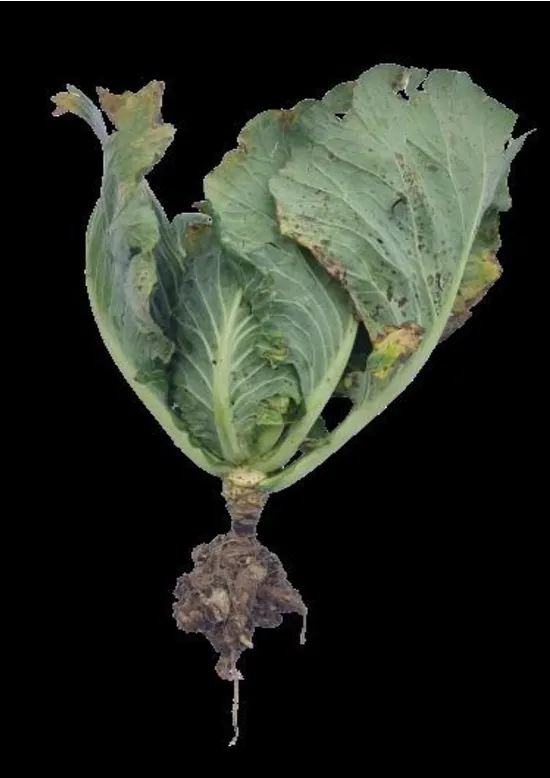
Clubroot, caused by the soil-borne protist pathogen *Plasmodiophora brassicae*, is an aggressive, persistent, and highly destructive root disease that exclusively targets plants in the mustard family (*Brassicaceae*), including cabbage, cauliflower, broccoli, and canola. Classed under the phylum *Cercozoa*, the pathogen is not a true fungus but an obligate biotrophic protist. It infects root hairs, multiplying rapidly and secreting hormones that trigger abnormal cell division. This results in massive, swollen, club-like root gall structures that restrict water and nutrient uptake, causing systemic stunting, severe wilting, and eventual crop loss.
Identifying clubroot involves inspecting both foliage and root systems. Foliage symptoms begin as slow growth and a pale green or yellowish coloration of the leaves. During warm afternoons, affected crops wilt rapidly, but often recover overnight, mimicking simple drought stress. Slicing open the soil base exposes the key diagnostic indicator: the root system is severely deformed, displaying large, swollen, club-like or spindle-shaped root galls (referred to as 'finger-and-toe' disease). These galls lack the clean, fibrous structure of healthy roots and eventually rot into a dark, foul-smelling, mushy mass.
Clubroot is highly specialized to crucifers, presenting an extreme hazard to agricultural brassica crops and surviving on various wild cruciferous weeds.
| Affected Brassica Crops | Severity Rating | Damage Symptoms |
|---|---|---|
| Cabbage, Cauliflower, Broccoli | Extreme (⭐⭐⭐) | Massive root galls, severe leaf wilting during heat, stunted heads, crop rot |
| Canola, Brussels Sprouts, Turnips | High (⭐⭐) | Deformed taproots, reduced pod sets, severe stunted vegetative growth |
| Radishes, Wild Mustard Weeds | Medium (⭐) | Minor localized root swelling, acting as persistent soil spore reservoirs |
The pathogen's life cycle revolves around extremely resilient resting spores that can survive dormant in the soil for over 15 to 20 years. In cool, wet, and acidic soils (pH below 6.5), resting spores germinate to release swimming biflagellate zoospores that navigate through soil moisture to infect root hairs. Spread occurs via drainage water, wind-blown dust, and contaminated farming footwear or machinery. Organic control focuses on raising soil pH above 7.2 using agricultural lime, improving field drainage, and practicing long 7-year crop rotations. Chemical soil treatments are limited, though flusulfamide can suppress spore activity. For complete root disease guides, visit our Plant Disease Identifier Hub, or explore similar root-rotting and brassica threat profiles like Cabbage Maggot, Cabbage Worm, Diamondback Moth, and Root Rot.
If your brassica crops (cabbage, broccoli, cauliflower) exhibit severe afternoon wilting, it is critical to diagnose Clubroot (*Plasmodiophora brassicae*) correctly against other below-ground root threats like Root-Knot Nematode (*Meloidogyne spp.*) and Cabbage Maggot (*Delia radicum*). Clubroot causes massive, continuous, swollen club-like root galls that distort the main taproot and eventually rot into a dark, foul-smelling mass. Root-Knot Nematode infections cause smaller, distinct bead-like nodules scattered along fine feeder roots without fusing the main taproot. Cabbage Maggots carve physical brown feeding tunnels and grooves into the root tissue, with visible white larvae present. Review the diagnostic difference table below:
| Diagnostic Feature | Clubroot (Plasmodiophora) | Root-Knot Nematode (Meloidogyne) | Cabbage Maggot (Delia) |
|---|---|---|---|
| Root Deformity Structure | Large, solid, club-like swollen galls fusing the main taproot | Small, distinct bead-like nodules scattered on lateral feeder roots | Chewed grooves, hollowed taproot tunnels, no root swelling |
| Causative Organism | Soil-borne protist pathogen (Plasmodiophora brassicae) | Microscopic parasitic roundworms (Meloidogyne spp.) | Larvae (maggots) of the root fly (Delia radicum) |
| Host Crop Specificity | Strictly limited to Brassicaceae (cabbage, kale, mustard, canola) | Extremely broad host range (tomatoes, carrots, beans, lettuce) | Targets Brassicaceae root crops (cabbage, turnip, radish) |
| Soil Condition Factor | Thrives in acidic soil (pH < 6.5); suppressed by liming (pH > 7.2) | Thrives in sandy, warm soils with poor organic matter | Cool, moist soils during early spring fly egg-laying periods |
| Root Decay Pattern | Galls decay into dark, mushy, foul-smelling bacterial secondary rot | Galls remain firm until late season decay | Brown slime and physical tunnels containing white maggots |
Taxonomy & Features
- Abnormal Root Swelling: Pathogen secretes hormones that trigger massive, distorted, club-like root galls, stopping water and nutrient intake.
- Protist Pathogen Nature: Not a true fungus but an obligate biotrophic protist (Plasmodiophora brassicae) that cannot grow without a living brassica host.
- Lethal Soil Persistence: resting spores possess exceptionally tough double walls, allowing them to remain dormant and infectious in soil for 15-20 years.
- Acidic Soil Catalyst: Thrives and multiplies rapidly in cool, waterlogged, and acidic soils with a pH below 6.5.
- Midday Wilting Clue: Affected plants wilt severely during hot, bright afternoons but recover overnight, serving as a primary above-ground warning.
- Liming pH Management: Raising soil pH above 7.2 using agricultural hydrated lime represents the single most effective cultural control.
Seasonal Outbreak Calendar
Outbreak risk and activity timeline for Clubroot based on seasonal climate patterns:
Names in Different Languages
Affected Plant Species
Vegetables & Crops
- Cabbage
- Cauliflower
- Broccoli
- Brussels Sprouts
- Turnip
- Radish
- Kale
Flowers & Ornamentals
- Stocks (Matthiola)
- Wallflowers (Erysimum)
- Aubrieta
Fruits & Berries
- None
Prevention & Cure
Natural & Organic Methods
- Soil Liming: Apply agricultural hydrated lime or calcium carbonate to raise soil pH to 7.2 or higher; alkaline soils completely inhibit spore germination.
- Field Drainage: Install drainage tiles or grow crucifers in raised beds; the swimming zoospores require standing soil moisture to infect root hairs.
- Crop Rotation: Practice a strict 5-to-7-year rotation cycle with non-brassica crops like rye, corn, grass, or alfalfa.
- Weed Control: Thoroughly eradicate wild mustard weeds and shepherd's purse, as their roots shelter and propagate the protist.
Chemical & Professional Control
- Fungicide Drenches: Apply chemical soil drenches containing flusulfamide or PCNB (pentachloronitrobenzene) to suppress spore germination before planting.
- Seedbed Treatment: Disinfect nursery transplant soils with dazomet or steam sterilization to ensure seedlings start clean.
- Tool Sanitization: Clean and disinfect tractor tires, cultivators, and boots with disinfectants before moving from infected to clean fields.
Frequently Asked Questions
Why is clubroot so extremely difficult to eradicate from garden soil?
P. brassicae produces microscopic resting spores that are exceptionally durable due to their thick chitinous double-layered walls. These resting spores can remain completely dormant, viable, and highly infectious in the soil for 15 to 20 years, even in the complete absence of a host brassica crop, making short crop rotations ineffective.
How do I distinguish clubroot galls from root-knot nematode galls?
Clubroot galls are exceptionally large, thick, swollen, and look like clubs or smooth spindles that distort the entire main taproot and lateral roots, eventually rotting into a soft, foul-smelling mush. Root-knot nematode galls are much smaller (pinhead to pea-sized), resemble small beads or nodules scattered along fine fibrous roots, and do not cause the roots to rot.
Can I eat cabbages or cauliflowers from a plant infected with clubroot?
Yes. The clubroot pathogen strictly infects the root system and does not enter the above-ground edible heads or leaves. Cabbage or cauliflower heads harvested from infected plants are completely safe for human consumption, though they will usually be much smaller, stunted, and lower in quality.
Recommended diagnostics based on crop family and symptoms:
Remedy Disclaimer & Safety Notice
This disease guide is for educational screening purposes only. Pathogen behavior, severity, and host susceptibility can vary dramatically based on seed variety, weather conditions, and regional microclimates. Chemical pesticides and organic treatments are subject to strict regional environmental regulations and registration mandates. Please verify all chemical registrations and review manufacturer safety labels carefully with local certified agronomists or agricultural extension service offices before applying.