
Grape Downy Mildew
Plasmopara viticola
About Grape Downy Mildew
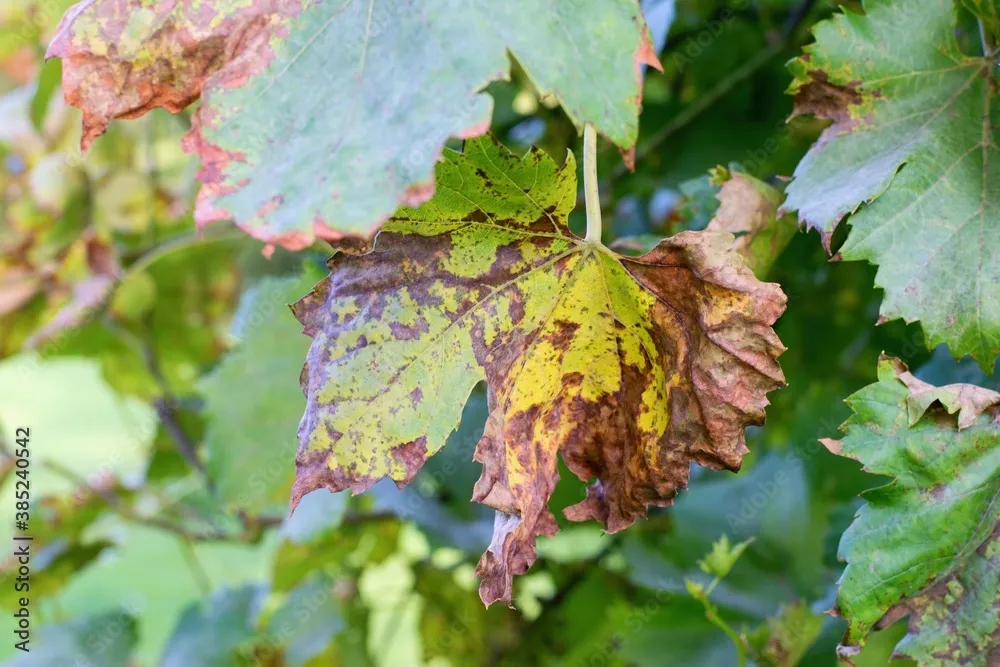
Grape Downy Mildew is a highly destructive, weather-driven oomycete disease caused by the specialized biotrophic pathogen *Plasmopara viticola*. This water mold represents one of the most critical threats to viticulture globally, historically famous for nearly destroying the French wine industry in the late 19th century. The pathogen attacks all green parts of the grape vine, including leaves, young shoots, tendrils, and emerging fruit clusters. By destroying the photosynthetic leaf area and directly rotting developing grape clusters, this disease can cause total crop failure, poor wood ripening, and a decline in vineyard longevity if left managed.
Identifying Grape Downy Mildew requires close inspection of both leaf surfaces. Early leaf symptoms appear on the upper surface as circular, pale-yellow, translucent spots often called 'oil spots'. In warm, humid weather, a distinctive, cottony, snow-white fuzzy growth (consisting of sporangiophores) develops directly beneath these oil spots on the leaf underside. As the disease matures, these lesions turn brown and necrotic. Developing grape berries are also highly vulnerable: young berries turn soft, dull green, and develop a white fuzzy coating, shriveling into hard, dark-brown, leather-like berries.
The lifecycle of *Plasmopara viticola* is heavily driven by rain and humidity. The pathogen overwinters as thick-walled oospores in fallen leaves on the vineyard floor. In spring, when temperatures exceed 10°C and rainfall occurs, these oospores germinate to release swimming zoospores.
| Grape Host / Species | Severity Rating | Leaf Spot & Berry Rot Symptoms |
|---|---|---|
| European Wine Grapes (Vitis vinifera) | Extreme (⭐⭐⭐) | Highly susceptible; total leaf defoliation, brown leathery berry rot |
| American Grapes (Vitis labrusca) | High (⭐⭐) | Moderate foliar oil spots, rare direct fruit rot |
| Muscadine Grapes (Vitis rotundifolia) | Medium (⭐) | Highly resistant; rare leaf spots under extreme humidity |
It is important to distinguish Grape Downy Mildew from the generic Downy Mildew disease. Generic Downy Mildew refers to a broad family of diseases caused by multiple different genera of water molds (such as *Peronospora* and *Pseudoperonospora*) that target a wide range of garden crops like cucumbers, onions, and spinach. In contrast, Grape Downy Mildew is strictly host-specific to the grapevine family (*Vitaceae*), caused solely by the specialized pathogen *Plasmopara viticola*, and has unique symptoms (such as translucent oil spots on leaves and leathery berry rot) and chemical sensitivities (e.g. Bordeaux mixture).
Eradicating Grape Downy Mildew requires strict moisture control and protective treatments. Keep the vine canopy open by pruning shoots and leaves around fruit clusters to improve airflow and solar exposure. Collect, bury, or compost all fallen leaves in autumn to eliminate overwintering oospores. For organic control, apply copper-based fungicides (such as Bordeaux mixture) before predicted rain events to establish a protective barrier. Chemical options include applying systemic oomyceticides like metalaxyl-M, fosetyl-aluminum, or cyazofamid during critical pre-bloom and post-bloom windows. For complete vineyard health guides, browse our Plant Disease Identifier Hub, or explore related threat profiles like Downy Mildew, Black Rot (Grape), and Black Spot.
Taxonomy & Features
- Translucent Leaf 'Oil Spots': Upper leaf surfaces develop distinct, pale-yellow translucent circular lesions known as oil spots.
- Underside White Felt: In high humidity, a dense, snow-white cottony layer of spore stalks develops on the undersides of oil spots.
- Leathery Berry Rot: Developing green berries shrivel, dry out, turn dark brown, and assume a tough, leathery texture.
- Oospore Overwintering: The oomycete spends winters as thick-walled oospores in leaf litter on the vineyard floor, surviving for years.
- Zoospores Swimming habit: Spores possess flagella, allowing them to actively swim in rainwater films to penetrate leaf stomata.
- Bordeaux Mixture Shield: Applications of organic copper-lime Bordeaux mixture before rainy spring forecasts prevent infection.
- Grape Host Specificity: Strictly host-specific to the grapevine family (Vitaceae). Unlike general downy mildews (Peronospora/Pseudoperonospora) which damage cucumbers, onions, and flowers, Plasmopara viticola will not cross-infect other crops.
Seasonal Outbreak Calendar
Outbreak risk and activity timeline for Grape Downy Mildew based on seasonal climate patterns:
Names in Different Languages
Affected Plant Species
Vegetables & Crops
- None documented
Flowers & Ornamentals
- None documented
Fruits & Berries
- Wine Grapes (Vitis vinifera - Extremely susceptible)
- Table Grapes
- Wild Grapes
- Muscadines (Highly resistant)
Prevention & Cure
Natural & Organic Methods
- Bordeaux Mixture: Apply standard organic copper-lime Bordeaux mixture before spring rains.
- Canopy Pruning: Prune foliage around grape clusters to promote rapid drying of morning dew.
- Debris Sanitation: Till or rake up and bury all fallen leaves in autumn to destroy dormant oospores.
- Resistant Hybrids: Plant downy-mildew resistant grape cultivars or Muscadine varieties.
Chemical & Professional Control
- Metalaxyl-M (Ridomil Gold): Apply systemically during pre-bloom to protect emerging shoots internally.
- Fosetyl-Aluminum: Use as a highly mobile systemic oomyceticide to boost the vine's natural defense.
- Cyazofamid Sprays: Apply as a highly effective preventive spray to inhibit zoospore release.
Frequently Asked Questions
What is the historical significance of Grape Downy Mildew?
In the late 19th century, Grape Downy Mildew was accidentally introduced into France from North America. It spread like wildfire, decimating vineyards and nearly destroying the French wine industry. This crisis led to the accidental discovery of Bordeaux Mixture (copper sulfate and lime), which became the world's first widely used chemical fungicide.
How do 'oil spots' help identify downy mildew on grapes?
Oil spots are the earliest leaf symptom. They appear on the upper surface of grape leaves as circular, pale-yellow, slightly translucent spots that look like oil has been spilled on the leaf. If you turn the leaf over during humid morning hours, you will see a bright white, fuzzy growth directly underneath these spots.
Are grapes harvested from downy mildew infected vines safe to eat or make wine?
Yes, they are safe, but the quality is highly compromised. Infected young berries shrivel, turn brown and leathery, and drop. Surviving berries remain small, sour, and lack sugar, making them completely unappealing for eating and useless for producing high-quality wine.
Recommended diagnostics based on crop family and symptoms:
Remedy Disclaimer & Safety Notice
This disease guide is for educational screening purposes only. Pathogen behavior, severity, and host susceptibility can vary dramatically based on seed variety, weather conditions, and regional microclimates. Chemical pesticides and organic treatments are subject to strict regional environmental regulations and registration mandates. Please verify all chemical registrations and review manufacturer safety labels carefully with local certified agronomists or agricultural extension service offices before applying.