
Plum Curculio
Conotrachelus nenuphar
About Plum Curculio
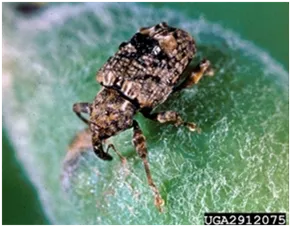
The Plum Curculio (*Conotrachelus nenuphar*), a highly destructive fruit-infesting snout beetle (weevil) belonging to the family *Curculionidae* under the order *Coleoptera*, is a premier pest of stone and pome fruits across eastern North America. Adult curculios are small, cryptically colored, hard-shelled beetles equipped with a highly distinct downward-curved snout (rostrum) used for chewing. Both adults and their legless grubs feed aggressively on developing fruit. The pest is famous for the diagnostic, crescent-shaped egg-laying scars left by females, which cause severe fruit deformation, internal worm decay, and massive premature crop drops.
Identifying a plum curculio infestation involves looking closely at young developing fruits for egg-laying scars. The most diagnostic above-ground visual symptom is a small, crescent-shaped or semi-circular slit (2–3 mm) cut into the skin of developing fruit. Slicing open an infected fruit reveals a small, legless, creamy-white grub with a distinct brown head capsule feeding near the pit or core. Infested fruits display deep dimpling, surface scarring, oozing droplets of clear gum, and premature ripening. In early summer, affected fruits turn soft and drop from branches.
Plum curculio attacks stone fruits (plums, peaches, cherries) and pome fruits (apples, pears), with a high preference for plums and early peaches.
| Affected Fruit Crops | Severity Rating | Damage Symptoms |
|---|---|---|
| Plums, Peaches, Nectarines | Extreme (⭐⭐⭐) | Crescent egg scars, gummy exudates, legless grubs in pit, heavy June fruit drop |
| Apples, Pears, Cherries | High (⭐⭐) | Dimpled and knotty mature fruit, crescents, surface scarring, core tunnels |
| Blueberries, Quince | Medium (⭐) | Minor crescent markings, localized berry shriveling |
Plum curculios overwinter as dormant adults in leaf litter, hedgerows, and woods bordering orchards. In spring, as temperatures exceed 16°C during bloom, adults migrate into orchard trees, feeding on young leaves and blossoms. Females chew a cavity, insert an egg, and then cut a crescent-shaped slit beneath it to prevent the growing fruit from crushing the egg. Larvae hatch, feed for 2 to 3 weeks, and drop inside fallen fruit to pupate in the soil. Organic control focuses on jarring trees to shake adults onto tarps, collecting fallen fruit, and using kaolin clay. Chemical control relies on spraying pyrethroids or organophosphates at shuck split. For complete fruit pest guides, browse our Plant Disease Identifier Hub, or explore similar fruit borer profiles like Codling Moth, Apple Maggot, and Oriental Fruit Moth.
Distinguishing Plum Curculio infestation from other common orchard tunnelers is critical to applying the right biological control. While codling moths and apple maggots also cause wormy fruit, only the Plum Curculio female leaves a distinctive crescent-shaped egg-laying scar. Furthermore, curculio grubs are curved and legless with a visible brown head, which differs from the headless peg-shaped apple maggots and the legged pinkish-white caterpillars of the codling moth. To help you precisely identify the culprit in your orchard, refer to the side-by-side diagnostic breakdown below:
| Feature / Trait | Plum Curculio (Conotrachelus nenuphar) | Apple Maggot | Codling Moth |
|---|---|---|---|
| Primary Classification | Weevil / Snout Beetle (Coleoptera) | Fruit Fly Larva (Diptera) | Caterpillar / Moth Larva (Lepidoptera) |
| Key Egg Signatures | Distinct crescent-shaped slit cut around the egg pocket | Microscopic pinprick puncture (heals to a dark dimple) | Invisible, flat single eggs laid on leaves or fruit skin |
| Fruit Damage Pattern | Deformed, dimpled fruit with clear oozing gum and larval tunnels near core | Brown, winding, decaying tunnels throughout the fruit flesh ("railroad tracks") | Direct entry hole plugged with sawdust-like frass; seeds and core completely consumed |
| Larval Appearance | Legless, curved, creamy-white grub with a distinct brown head capsule | Legless, peg-shaped, translucent-white maggot with no distinct head capsule | Pinkish-white caterpillar with a brown head, 3 pairs of thoracic legs, and prolegs |
| Primary Control Stage | Early spring (petal fall to shuck split) via tree jarring, kaolin clay, or contact sprays | Midsummer (June to August) using red sticky sphere traps and soil pupae cleanup | Post-petal fall (critical 24-hour hatch window) via pheromone traps and Bt/spinosad sprays |
Taxonomy & Features
- Crescent-Shaped Egg Slit: Females chew crescent slits around eggs to relieve fruit growth pressure, leaving highly diagnostic permanent crescent scars.
- Downward Snout Beetles: Adults are small snout beetles (weevils) featuring a distinctive downward snout used for chewing egg cavities.
- Gummy Fruit Exudate: Stone fruits (like peaches) respond to feeding punctures by secreting thick droplets of sticky, clear, jelly-like gum.
- Dormant Tree Jarring: Jarring or shaking tree branches causes adults to play dead (thanatosis) and drop onto ground tarps for easy collections.
- Host-Migration spring Behavior: Adult weevils overwinter in forest borders and migrate into orchards in spring as warm temperatures exceed 16°C.
- Summer Fruit Drop: Larvae chew near the seed pit, releasing enzymes that trigger host fruits to ripen prematurely and drop in late spring.
Seasonal Outbreak Calendar
Outbreak risk and activity timeline for Plum Curculio based on seasonal climate patterns:
Names in Different Languages
Affected Plant Species
Vegetables & Crops
- None
Flowers & Ornamentals
- None
Fruits & Berries
- Plum (Highly preferred)
- Peach
- Nectarine
- Apricot
- Cherry
- Apple
- Pear
- Blueberry
Prevention & Cure
Natural & Organic Methods
- Tree Jarring: Lay a white tarp under the tree in spring and shake or jar the branches firmly with a padded mallet; the weevils drop down and can be collected.
- Fruit Drop Collection: Collect and immediately destroy all small fallen fruit in June to kill the grubs inside before they enter the soil.
- Kaolin Clay: Spray fruit thoroughly with kaolin clay (Surround WP) during petal fall to create a protective barrier that deters egg-laying.
- Poultry Foraging: Allow chickens or ducks to forage beneath fruit trees in June and July; they consume emerging larvae and pupae from the soil.
Chemical & Professional Control
- Shuck-Split Sprays: Apply contact insecticides (like phosmet or carbaryl) at 'shuck split' in stone fruits when petals fall.
- Pyrethroid Sprays: Spray foliar permethrin or esfenvalerate to control migrating adults in early spring as temperatures rise.
- Spinosad Treatments: Apply spinosad formulations to suppress feeding adults, though weevils are less susceptible than caterpillars.
Frequently Asked Questions
Why does the female Plum Curculio cut a crescent slit around her egg?
As young fruits grow, their internal tissue expands rapidly under high pressure. If the female simply laid an egg in the fruit, the expanding tissue would crush and kill the egg. By cutting a crescent-shaped slit directly underneath the egg cavity, she severs the local tissue connections, creating a soft pocket that protects the egg from being crushed.
What is tree jarring, and how is it used to manage curculio?
When disturbed or threatened, Plum Curculio adults exhibit a natural defense behavior called 'thanatosis' (playing dead). They draw in their legs, release their grip on branches, and drop to the ground. Growers place a white sheet under the canopy in early morning and hit the branches with a padded mallet to easily collect and destroy them.
What is the 'June drop' associated with Plum Curculio?
When the curculio egg hatches, the legless grub tunnels straight to the center of the fruit to feed on the seed cavity or pit. This internal chewing releases specific enzymes within the fruit, triggering it to ripen prematurely, turn soft, and drop from the tree in early summer (typically June). This is the tree's natural response to get rid of damaged fruit.
Recommended diagnostics based on crop family and symptoms:
Remedy Disclaimer & Safety Notice
This disease guide is for educational screening purposes only. Pathogen behavior, severity, and host susceptibility can vary dramatically based on seed variety, weather conditions, and regional microclimates. Chemical pesticides and organic treatments are subject to strict regional environmental regulations and registration mandates. Please verify all chemical registrations and review manufacturer safety labels carefully with local certified agronomists or agricultural extension service offices before applying.