
Apple Maggot
Rhagoletis pomonella
About Apple Maggot
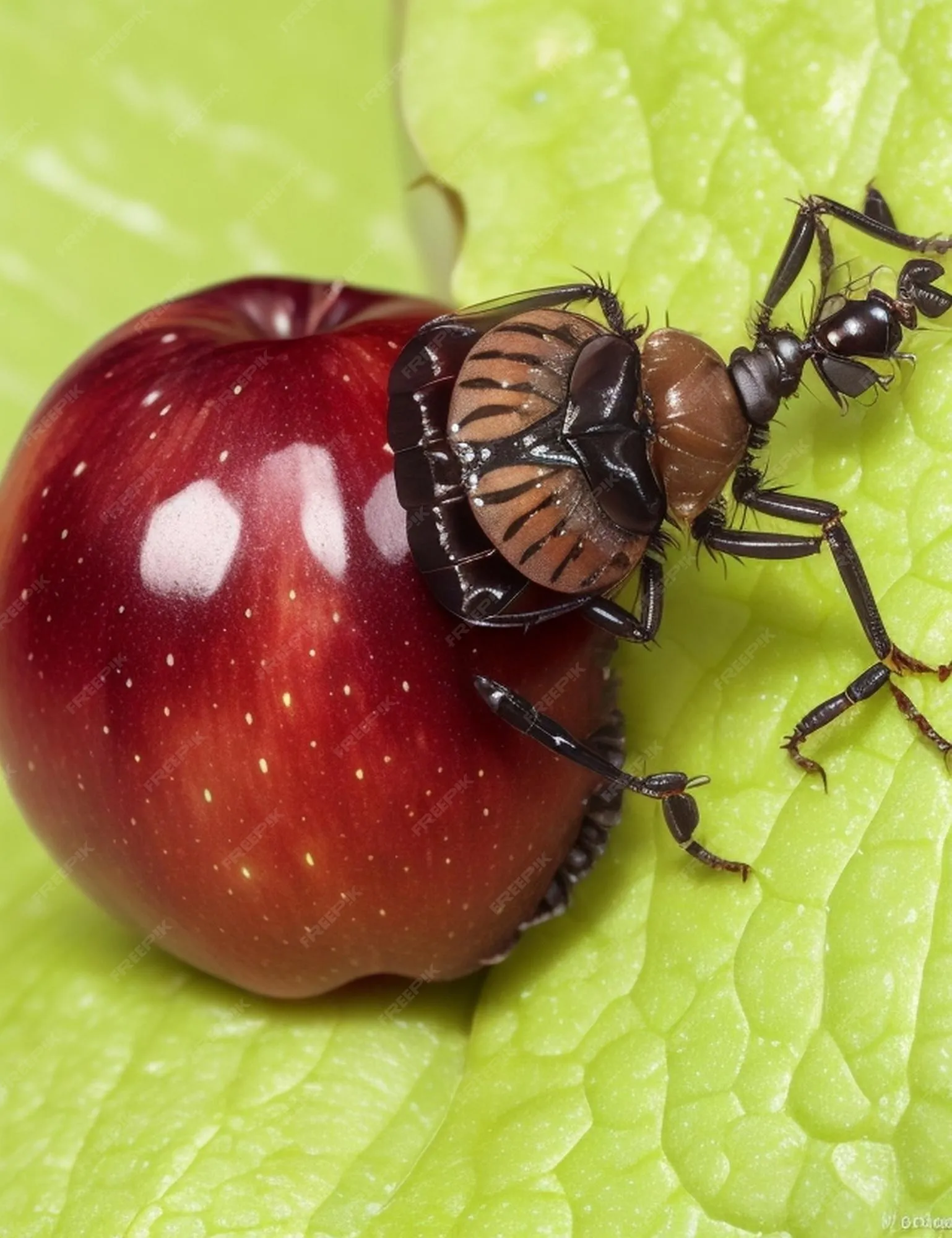
The Apple Maggot (*Rhagoletis pomonella*), a highly destructive fruit-infesting fly larva belonging to the fruit fly family *Tephritidae* under the order *Diptera*, is a major economic pest of apples and various pome fruits across North America. Often referred to as the 'railroad worm,' this pest is native to eastern North America, where it originally fed on wild hawthorns before adapting to cultivated apples. The adult fly is easily recognized by its distinctive banded wing patterns, but the damage is caused by the legless larvae (maggots) that feed silently inside the fruit, tunneling brown, winding trails through the flesh.
Identifying an apple maggot infestation involves checking ripening fruit for skin punctures and internal decay. The female fly leaves a tiny, pinprick puncture wound on the fruit skin when laying eggs, which turns into a small, dark, dimpled or sunken spot as the fruit grows. Slicing open an infected apple reveals the diagnostic 'railroad' damage: winding, brown, decaying tunnels running through the white flesh, caused by the feeding of the small (8 mm), translucent white, legless maggots. Heavily infested fruits turn soft, decay completely, and drop prematurely.
Apple maggots primarily attack cultivated apples and wild hawthorns, but they can also infest pears, plums, and other pome and stone fruits.
| Affected Fruit Crops | Severity Rating | Damage Symptoms |
|---|---|---|
| Apples (early-ripening varieties) | Extreme (⭐⭐⭐) | Dimpled skin punctures, brown internal tunnels, mushy rotten flesh, fruit drop |
| Hawthorns (Wild & Landscape) | High (⭐⭐) | Fruiting punctures, minor internal decay, acting as local spore/pest reservoir |
| Pears, Plums, Cherries | Medium (⭐) | Cosmetic skin dimpling, localized flesh browning, minor fruit drop |
Apple maggots overwinter as pupae inside hard puparia buried 1 to 3 inches deep in the soil beneath host trees. In midsummer (June to July), adult flies emerge and feed on leaf secretions for 7 to 10 days before mating. Females puncture fruit skins to insert eggs singly, which hatch in 3 to 7 days, and the maggots feed for 3 to 4 weeks before emerging from fallen fruit to pupate in the soil, with one generation per year. Organic control focuses on hanging red sticky sphere traps baited with apple volatile lures to capture adult flies, collecting and destroying fallen fruit daily to prevent larvae from entering the soil, and using clay barriers (kaolin clay). Chemical control uses foliar spinosad or organophosphates. For complete fruit pest guides, browse our Plant Disease Identifier Hub, or explore similar fruit-boring profiles like Codling Moth, Plum Curculio, and Oriental Fruit Moth. For specialized diagnosis of related crop threats, see our guide on Cedar-Apple Rust.
To prevent extensive crop loss, orchardists must separate Apple Maggot infestations from other key fruit-boring insects. Apple maggots (often called railroad worms) chew winding brown decay lines directly through the flesh of apples and plums. Unlike the clean entry holes plugged with brown frass left by the codling moth, or the crescent scars characteristic of the plum curculio, apple maggots leave only microscopic skin punctures. Their larvae are headless, legless white maggots that pupate in the soil. The comparison table below provides a diagnostic reference to identify the pest:
| Feature / Trait | Plum Curculio | Apple Maggot (Rhagoletis pomonella) | Codling Moth |
|---|---|---|---|
| Primary Classification | Weevil / Snout Beetle (Coleoptera) | Fruit Fly Larva (Diptera) | Caterpillar / Moth Larva (Lepidoptera) |
| Key Egg Signatures | Distinct crescent-shaped slit cut around the egg pocket | Microscopic pinprick puncture (heals to a dark dimple) | Invisible, flat single eggs laid on leaves or fruit skin |
| Fruit Damage Pattern | Deformed, dimpled fruit with clear oozing gum and larval tunnels near core | Brown, winding, decaying tunnels throughout the fruit flesh ("railroad tracks") | Direct entry hole plugged with sawdust-like frass; seeds and core completely consumed |
| Larval Appearance | Legless, curved, creamy-white grub with a distinct brown head capsule | Legless, peg-shaped, translucent-white maggot with no distinct head capsule | Pinkish-white caterpillar with a brown head, 3 pairs of thoracic legs, and prolegs |
| Primary Control Stage | Early spring (petal fall to shuck split) via tree jarring, kaolin clay, or contact sprays | Midsummer (June to August) using red sticky sphere traps and soil pupae cleanup | Post-petal fall (critical 24-hour hatch window) via pheromone traps and Bt/spinosad sprays |
Taxonomy & Features
- Railroad Flesh Tunneling: Maggot larvae feed inside fruit flesh, hollowing out winding, brown, decaying trails referred to as 'railroad' tracks.
- Sunken Skin Dimples: Egg-laying punctures create tiny pinpricks on developing fruit skins that sink and dimple as fruit grows.
- Soil Overwintering Pupae: Pathogen overwinters as pupae inside hard puparia buried in the soil canopy, emerging as flies in midsummer.
- Banded Wing Adults: Adult flies display a highly distinctive black 'F' or 'W' band pattern on transparent wings, serving as an instant visual alert.
- Red Sticky Spheres: Flying adults are highly attracted to red sphere traps baited with apple scents, providing an organic monitoring and capture tool.
- Daily Fallen Fruit Collection: Picking up and burying fallen apples daily destroys feeding maggots before they can tunnel into the soil to pupate.
Seasonal Outbreak Calendar
Outbreak risk and activity timeline for Apple Maggot based on seasonal climate patterns:
Names in Different Languages
Affected Plant Species
Vegetables & Crops
- None
Flowers & Ornamentals
- None
Fruits & Berries
- Apple (Primary host)
- Hawthorn (Wild host)
- Pear
- Plum
- Sour Cherry
- Apricot
Prevention & Cure
Natural & Organic Methods
- Red Sphere Traps: Hang red sticky sphere traps (3-4 per tree) baited with butyl hexanoate (apple scent lure) in late June to capture adult flies.
- Fruit Sanitation: Collect and immediately destroy or bury all fallen fruit daily; this prevents mature maggots from exiting the fruit to enter the soil.
- Kaolin Clay: Spray foliage and fruit thoroughly with kaolin clay (Surround WP) to form a dusty white coating that deters egg-laying flies.
- Soil Tillage: Till the soil beneath the tree canopy in late autumn to expose overwintering puparia to frost and predatory birds.
Chemical & Professional Control
- Foliar Spinosad: Spray spinosad-based formulations (such as Entrust) starting 7-10 days after the first fly is captured in traps.
- Organophosphate Sprays: Apply contact sprays like phosmet or carbaryl to kill adults before they puncture fruit to lay eggs.
- Systemic Neonicotinoids: Apply foliar imidacloprid to target young crawling larvae just entering fruit tissues.
Frequently Asked Questions
Why is the apple maggot referred to as the 'railroad worm'?
The apple maggot larva is called the 'railroad worm' because of the winding, brown, decaying trails it creates through the white flesh of the apple. As the small maggot tunnels in search of food, it leaves behind thin, dark brown lines that branch out randomly, resembling a chaotic railway map.
How do red sticky spheres control apple maggot flies?
Female apple maggot flies search for mature, red, round fruit to lay their eggs. Large red sticky spheres hung in the tree canopy look exactly like giant, attractive ripe apples. The adult flies fly straight to the spheres and become permanently stuck to the adhesive coating, preventing them from laying eggs.
Can I use wormy apples for cider or baking?
If the apples are only slightly infested (with few brown trails) and have not begun to rot, they can still be used for cider pressing or cooking after cutting away the damaged brown sections. However, heavily tunneled apples turn soft, bitter, mushy, and host rot-promoting bacteria, making them unusable.
Recommended diagnostics based on crop family and symptoms:
Remedy Disclaimer & Safety Notice
This disease guide is for educational screening purposes only. Pathogen behavior, severity, and host susceptibility can vary dramatically based on seed variety, weather conditions, and regional microclimates. Chemical pesticides and organic treatments are subject to strict regional environmental regulations and registration mandates. Please verify all chemical registrations and review manufacturer safety labels carefully with local certified agronomists or agricultural extension service offices before applying.