
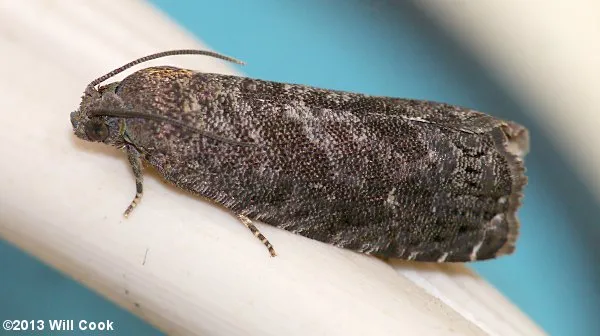
Oriental Fruit Moth
Grapholita molesta
About Oriental Fruit Moth
The Oriental Fruit Moth (*Grapholita molesta*), a highly destructive fruit and shoot-boring pest belonging to the leafroller moth family *Tortricidae* under the order *Lepidoptera*, is an invasive insect of stone and pome fruits globally. First introduced from Asia, this moth is the premier pest of peaches, nectarines, and plums. The caterpillar exhibits a dual-phase damage cycle: the first spring generations bore directly into the tender new vegetative shoot tips, causing them to wilt and die, while subsequent summer generations bore into the ripening fruits, resulting in rot and unmarketable crops.
Identifying an oriental fruit moth infestation involves monitoring both spring shoots and summer fruits. The most diagnostic spring symptom is shoot tip 'flagging'—the terminal 2 to 4 inches of new succulent shoots wilt, turn brown, and die back sharply. On stone fruits, summer boring is marked by small entry holes near the stem end, exuding sticky, clear droplets of jelly-like gum mixed with brown fecal frass. Slicing open an infected peach exposes the pinkish-white, 12-mm caterpillar feeding near the pit, leaving behind dark, decaying, hollowed-out tunnels.
While peaches and nectarines are the most preferred hosts, oriental fruit moths also feed on apples, pears, plums, and other pome and stone fruits.
| Affected Fruit Crops | Severity Rating | Damage Symptoms |
|---|---|---|
| Peaches, Nectarines, Quince | Extreme (⭐⭐⭐) | Shoot tip flagging, gummy fruit entries, rotting pits, fruit drop |
| Plums, Apricots, Cherries | High (⭐⭐) | Bored fruit flesh, localized twig wilting, surface feeding, clear gumming |
| Apples, Pears (late season) | Medium (⭐) | Core tunneling, late-season fruit boring, minor shoot flagging |
Oriental fruit moths overwinter as mature larvae inside silken cocoons spun in bark crevices, leaf litter, or on the soil surface. In early spring, as buds burst, they pupate and emerge as small, greyish-brown moths. Females lay eggs on leaves or twigs, hatching in 5 to 10 days, with 3 to 6 generations overlapping throughout summer. Organic control focuses on hanging pheromone ties for mating disruption, removing and burning flagged shoot tips weekly in spring, and applying Bt or spinosad. Chemical control uses foliar pyrethroids like permethrin or systemic neonicotinoids. For complete fruit pest guides, browse our Plant Disease Identifier Hub, or explore similar fruit-boring profiles like Codling Moth, Apple Maggot, and Plum Curculio.
Taxonomy & Features
- Dual-Phase Boring Attack: Invades new succulent shoot tips in spring causing twig flagging, and then transitions to boring inside fruits in summer.
- Diagnostic Twig Flagging: Spring terminal shoots rapidly wilt, turn dark brown, and hang downward like dead flags on the outer branch tips.
- Gummy Stem Entries: Stone fruits exude sticky, clear jelly-like gum mixed with brown sawdust-like frass near the stem end entry holes.
- Pheromone Mating Disruption: Hanging female pheromone dispenser ties saturates the orchard canopy, blocking male moths from finding mates.
- Spinosad/Bt Whorl Sprays: Biological Bt or spinosad sprays successfully destroy spring larvae as they feed on shoot tips before boring inside.
- Bark & Litter Cocooning: Mature caterpillars spin thick, silken cocoons under loose trunk bark or in dried leaf litter to survive freezing winters.
Seasonal Outbreak Calendar
Outbreak risk and activity timeline for Oriental Fruit Moth based on seasonal climate patterns:
Names in Different Languages
Affected Plant Species
Vegetables & Crops
- None
Flowers & Ornamentals
- None
Fruits & Berries
- Peach (Highly preferred)
- Nectarine
- Quince
- Apricot
- Plum
- Apple (late season)
- Pear (late season)
- Cherry
Prevention & Cure
Natural & Organic Methods
- Flagged Shoot Removal: Regularly prune out and burn or destroy all wilted, flagged shoot tips in spring weekly; this captures and kills the developing larvae before they pupate.
- Pheromone Disruption: Install mating disruption pheromone ties throughout the orchard canopy (200-400 ties/acre) to completely block reproduction.
- Fruit Thinning: Thin peach clusters so they do not touch; larvae prefer entering fruits where they touch leaves or other fruits.
- Trunk Banding: Wrap corrugated cardboard bands around trunks in summer to capture migrating cocoon spinners.
Chemical & Professional Control
- Shuck-Split Sprays: Apply contact insecticides (like phosmet or carbaryl) at shuck split and shuck fall in stone fruits.
- Pyrethroid Sprays: Spray foliar permethrin, esfenvalerate, or bifenthrin to control adults during active flight cycles.
- Neonicotinoid Drenches: Apply systemic acetamiprid to target feeding larvae inside twigs during early spring.
Frequently Asked Questions
What is the shoot 'flagging' symptom caused by this moth?
Twig flagging is the primary spring symptom. In early spring, the newly hatched first-generation caterpillars are unable to feed on hard green peaches. Instead, they bore directly into the tips of tender, fast-growing new vegetative shoots. This internal feeding cuts off water flow, causing the tip 2 to 4 inches of the shoot to wilt, turn brown, and die, hanging like a dead flag on the branch.
How do I distinguish Oriental Fruit Moth damage from Codling Moth damage in apples?
Codling Moth larvae tunnel straight to the apple core to feed exclusively on the seeds, leaving large, dry, brown frass tunnels. Oriental Fruit Moth larvae (which attack late-season apples after peaches are harvested) tunnel randomly throughout the fruit flesh without targeting the seeds, leaving cleaner, wetter, and smaller winding trails.
Why are peaches so gummy when infected by this pest?
Peaches and nectarines possess highly active vascular defenses. When the Oriental Fruit Moth larva chews through the skin, the fruit responds by secreting thick, clear, sticky sap (gum) as a physical defense to drown the insect. This clear gum, mixed with the caterpillar's brown sawdust-like fecal waste, accumulates around the stem entry hole.
Recommended diagnostics based on crop family and symptoms:
Remedy Disclaimer & Safety Notice
This disease guide is for educational screening purposes only. Pathogen behavior, severity, and host susceptibility can vary dramatically based on seed variety, weather conditions, and regional microclimates. Chemical pesticides and organic treatments are subject to strict regional environmental regulations and registration mandates. Please verify all chemical registrations and review manufacturer safety labels carefully with local certified agronomists or agricultural extension service offices before applying.