
Codling Moth
Cydia pomonella
About Codling Moth
The Codling Moth (*Cydia pomonella*), a highly destructive fruit-boring caterpillar belonging to the tortrix moth family *Tortricidae* under the order *Lepidoptera*, is the single most significant and economically damaging insect pest of pome and stone fruits worldwide. Widely known as the classic 'worm in the apple,' this pest is the primary concern for commercial orchardists. The adult moth is relatively inconspicuous, but its larvae feed aggressively. After hatching, the tiny caterpillars bore directly through the fruit skin, tunneling deep into the flesh to feed on the nutrient-rich seeds in the core, rendering the fruit completely ruined.
Identifying a codling moth infestation involves checking developing fruit for entry signs. The most prominent visual symptom is a small (1–2 mm) entry hole on the fruit skin, usually surrounded by a dark red, bruised-looking ring and plugged with sticky, sawdust-like brown fecal waste called 'frass.' Cutting open the fruit reveals long, hollowed-out feeding tunnels leading to a dark, frass-filled core containing the 2-cm, pinkish-white caterpillar with a brown head. Infested fruits ripen prematurely, turn soft, rot due to secondary pathogens, and drop early from the branch.
While apples and pears are the primary hosts, codling moths also attack quince, crabapples, and various thin-skinned stone fruits and nuts.
| Affected Fruit & Nut Crops | Severity Rating | Damage Symptoms |
|---|---|---|
| Apples, Pears | Extreme (⭐⭐⭐) | Core tunneling, seed consumption, brown frass entry holes, premature fruit drop |
| Quince, Crabapples | Extreme (⭐⭐⭐) | Severe boring, distorted fruit shape, rot entry wounds, heavy crop drop |
| Walnuts, Plums, Peaches | High (⭐⭐) | Kernel boring (in walnuts), surface fruit feeding, localized gumming |
Codling moths overwinter as mature larvae inside thick, silken cocoons hidden under loose bark plates, in wood crevices, or leaf litter. In spring, moths emerge as buds burst, and females lay tiny, flat, single eggs directly on leaves or developing fruit skins. Larvae hatch and have a critical 24-hour window to bore into fruit before they are shielded from contact controls, with 2 to 3 generations per year. Organic control focuses on scraping loose bark to expose cocoons, hanging codling moth pheromone traps to disrupt mating, wrapping cardboard bands around trunks to capture crawling larvae, and applying Bt or spinosad. Chemical control uses foliar pyrethroids like permethrin. For complete fruit pest guides, browse our Plant Disease Identifier Hub, or explore similar fruit-boring profiles like Apple Maggot, Plum Curculio, and Oriental Fruit Moth.
Properly identifying Codling Moth damage is essential to successfully timing control applications. The hallmark sign of codling moth larvae is an entry hole packed with wet, sawdust-like fecal frass, typically located near the blossom end. Unlike the winding, surface-oriented tunnels of the apple maggot, or the clean, crescent-shaped scars left on the skin by the plum curculio, codling moth caterpillars bore straight to the center of the fruit to feed on the seeds. Refer to the table below to compare the critical features, larvae, and damage profiles of these three classic orchard pests:
| Feature / Trait | Plum Curculio | Apple Maggot | Codling Moth (Cydia pomonella) |
|---|---|---|---|
| Primary Classification | Weevil / Snout Beetle (Coleoptera) | Fruit Fly Larva (Diptera) | Caterpillar / Moth Larva (Lepidoptera) |
| Key Egg Signatures | Distinct crescent-shaped slit cut around the egg pocket | Microscopic pinprick puncture (heals to a dark dimple) | Invisible, flat single eggs laid on leaves or fruit skin |
| Fruit Damage Pattern | Deformed, dimpled fruit with clear oozing gum and larval tunnels near core | Brown, winding, decaying tunnels throughout the fruit flesh ("railroad tracks") | Direct entry hole plugged with sawdust-like frass; seeds and core completely consumed |
| Larval Appearance | Legless, curved, creamy-white grub with a distinct brown head capsule | Legless, peg-shaped, translucent-white maggot with no distinct head capsule | Pinkish-white caterpillar with a brown head, 3 pairs of thoracic legs, and prolegs |
| Primary Control Stage | Early spring (petal fall to shuck split) via tree jarring, kaolin clay, or contact sprays | Midsummer (June to August) using red sticky sphere traps and soil pupae cleanup | Post-petal fall (critical 24-hour hatch window) via pheromone traps and Bt/spinosad sprays |
Taxonomy & Features
- Worm-in-the-Apple Path: Bores straight to the core of developing apples and pears, selectively devouring seeds and leaving rotting trails.
- Frass-Plugged Entry: Sieve-like entry holes are plugged with sticky, wet, sawdust-like brown fecal waste called frass.
- Narrow Chemical Window: Once larvae hatch, they have a critical 24-hour window to bore inside fruit, after which contact sprays are useless.
- Bark-Crevice Overwintering: Mature larvae spin thick silken cocoons inside loose bark flakes on the tree trunk to survive winter.
- Pheromone Mating Disruption: Hanging female pheromone traps saturates the air, preventing males from finding mates and breaking the cycle.
- Cardboard Trunk Banding: Wrapping corrugated cardboard bands around trunks in summer traps crawling larvae looking for cocoon sites.
Seasonal Outbreak Calendar
Outbreak risk and activity timeline for Codling Moth based on seasonal climate patterns:
Names in Different Languages
Affected Plant Species
Vegetables & Crops
- None
Flowers & Ornamentals
- None
Fruits & Berries
- Apple (Highly preferred)
- Pear
- Quince
- Crabapple
- Peach
- Plum
- English Walnut
Prevention & Cure
Natural & Organic Methods
- Cardboard Trunk Bands: Wrap corrugated cardboard bands (2-3 inches wide) around tree trunks in June; collect and burn them in August to trap cocoons.
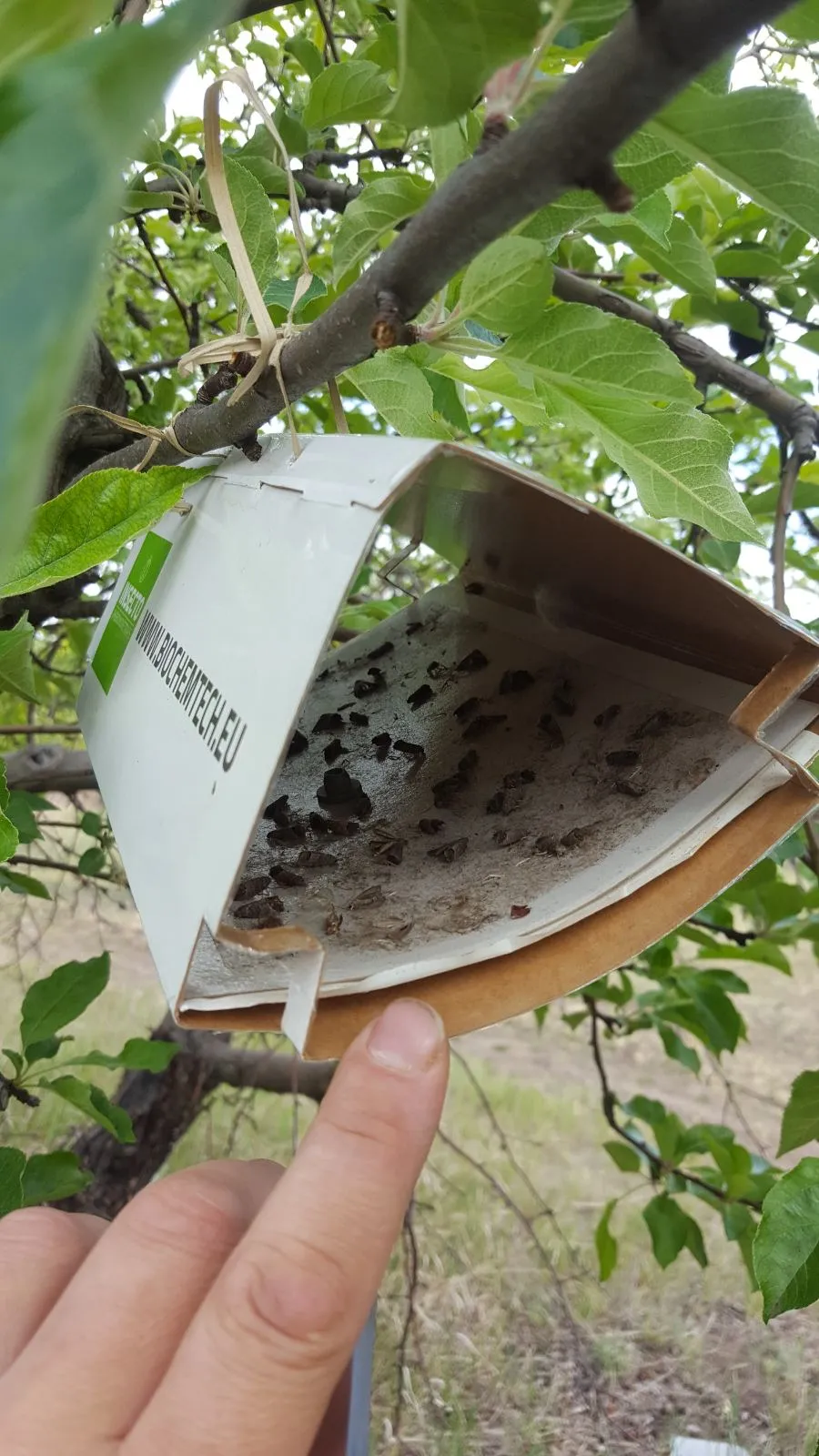
- Pheromone Traps: Hang pheromone traps in the orchard canopy in spring to monitor flight activity and disrupt male mating.
- Fruit Thinning: Thin clusters to a single fruit; codling moths prefer to enter fruits where two fruits touch each other.
- Trunk Bark Scraping: Carefully scrape away loose, flaky bark on older apple trunks in winter to expose and destroy overwintering cocoons.
Chemical & Professional Control
- Timing Insecticides: Spray contact pyrethroids (like permethrin or bifenthrin) precisely 150-250 growing degree-days after the first moth flight.
- Spinosad Sprays: Apply spinosad foliar sprays directly after petal fall to target young hatching crawlers before fruit entry.
- Granulovirus Biological: Spray Cydia pomonella granulovirus (CpGV) protectively, a highly selective bio-virus that kills feeding larvae.
Frequently Asked Questions
Why is the codling moth called the classic 'worm in the apple'?
The codling moth larva is the actual insect responsible for the famous 'wormy apple.' Unlike surface chewing pests, the newly hatched codling moth caterpillar tunnels directly into the center of the apple to feed on the developing seeds. Its presence is marked by a brown, frass-filled entry hole on the apple skin.
What is the best way to trap codling moths without chemicals?
Wrapping corrugated cardboard bands around the tree trunks in mid-summer is highly effective. Mature larvae crawl down the trunk in search of flaky bark crevices to spin their winter cocoons. They crawl into the cardboard channels instead. Orchardists simply remove and burn the cardboard bands in autumn.
When is the most critical window to spray for codling moths?
The most critical window is immediately after eggs hatch in spring and summer, before the tiny larvae enter the fruit. Once they bore through the skin, they are shielded from all contact sprays. Orchardists use pheromone traps to detect the first adult flight, then spray 10-14 days later as eggs hatch.
Recommended diagnostics based on crop family and symptoms:
Remedy Disclaimer & Safety Notice
This disease guide is for educational screening purposes only. Pathogen behavior, severity, and host susceptibility can vary dramatically based on seed variety, weather conditions, and regional microclimates. Chemical pesticides and organic treatments are subject to strict regional environmental regulations and registration mandates. Please verify all chemical registrations and review manufacturer safety labels carefully with local certified agronomists or agricultural extension service offices before applying.