
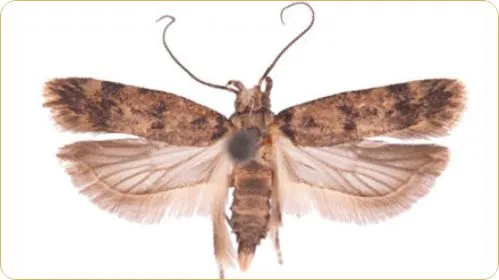
Pink Bollworm
Pectinophora gossypiella
About Pink Bollworm
The Pink Bollworm (*Pectinophora gossypiella*) is one of the most destructive and economically devastating insect pests of cotton (*Gossypium*) crops worldwide, especially in cotton-growing belts of India, China, and the Americas. Belonging to the family Gelechiidae of the order Lepidoptera, this highly specialized moth pest attacks the reproductive organs of the cotton plant. The primary damage is executed by the caterpillar larvae, which chew their way into developing flower buds and cotton bolls. By feeding on the internal seeds, oil glands, and soft lint, the larvae stunt boll growth, stain fiber, and destroy the valuable commercial lint, causing severe economic ruin to cotton farmers.
Spotting a Pink Bollworm infestation early requires careful observation of floral and boll symptoms, as the pest spends its feeding life hidden inside the plant. An early diagnostic sign is the 'rosetted flower'—where the petals of cotton blossoms fail to open fully, remaining twisted, twisted, and webbed shut by the feeding larvae inside. Young larvae are tiny and cream-colored, but mature larvae grow up to 12 mm and develop highly distinctive, alternating bright pink-to-red bands on their body segments. In harvested cotton, a classic symptom is the 'double-seed'—two cotton seeds silk-lined and glued together by a larva preparing for hibernation.
The life cycle of the Pink Bollworm is optimized for hot, dry summer climates where cotton crops thrive. Female moths lay tiny, flat eggs on leaves, flower buds, or green bolls. Upon hatching, the larvae immediately bore into a boll within 20–30 minutes, making them immune to external contact insecticides. The larvae feed for 3–4 weeks before either pupating or entering a long state of dormancy (diapause) inside hollowed-out cotton seeds, enabling them to survive winters.
| Host Crop / Plant | Severity Rating | Agricultural Impact |
|---|---|---|
| Bt Cotton (Bollgard I & II) | Extreme (⭐⭐⭐) | Heavy resistance developed in India; total lint ruin |
| Okra (Abelmoschus esculentus) | High (⭐⭐) | Larvae bore into seed pods, causing black rot |
| Hibiscus & Hollyhock | Medium (⭐) | Flower damage, distorted ornamental blossoms |
Managing the Pink Bollworm requires an integrated pest management (IPM) strategy because larvae are completely protected inside cotton bolls from surface chemicals. Control relies heavily on cultural practices, such as maintaining a strict 3-month 'close season' with no cotton grown to break the pest's reproductive cycle, and deep autumn plowing to expose diapausing larvae. Synthetic pheromone traps (using Gossyplure) are used to disrupt mating and monitor adult moth flights. When chemical control is necessary, apply systemic insect growth regulators or target contact synthetic pyrethroids exactly during egg-laying peak before larvae enter bolls. For detailed crop pest guides, check our Plant Disease Identifier Hub, or explore related threat profiles like Cotton Bollworm, Cutworms, and Armyworms.
Taxonomy & Features
- Cotton-Specific Target: A highly specialized lepidopteran pest that targets Malvaceae plants, specifically targeting cotton lint and seed oil.
- Rosetted Cotton Blossoms: Larvae web young cotton flower petals together, preventing blossoms from opening and creating a rosette shape.
- Pink-Banded Caterpillars: Mature larval stages display a highly diagnostic, beautiful but destructive pink-to-red banding across body segments.
- Internal Boll Tunneling: Larvae spend their entire feeding phase protected inside bolls, leaving tiny entry holes that quickly seal over.
- Double-Seed Hibernation: Before entering diapause, larvae spin silk cocoons that fuse two cotton seeds together, a key diagnostic feature.
- Bt Resistance Threat: The pest has developed severe physiological resistance to early transgenic Bt cotton (Bollgard II) in many Indian states.
Seasonal Outbreak Calendar
Outbreak risk and activity timeline for Pink Bollworm based on seasonal climate patterns:
Names in Different Languages
Affected Plant Species
Vegetables & Crops
- Okra (Lady's Finger - highly susceptible)
Flowers & Ornamentals
- Hibiscus (Rose of Sharon)
- Hollyhock (Alcea rosea)
- Abutilon (Flowering Maple)
Fruits & Berries
- None documented (Pathogen strictly targets commercial fiber, seed oil, and ornamental Malvaceae crops)
Prevention & Cure
Natural & Organic Methods
- Pheromone Disruption: Install synthetic Gossyplure pheromone traps to confuse male moths and prevent successful mating.
- Deep Autumn Plowing: Plow fields deeply after harvest to expose resting larvae and cocoons to cold winters and bird predators.
- Close Season: Enforce a strict 90-day cotton-free close season over entire districts to starve emerging spring moths.
- Refuge Planting: Plant non-Bt cotton refuge borders to slow down insect resistance development to genetic crops.
Chemical & Professional Control
- Synthetic Pyrethroids: Apply Cypermethrin or Deltamethrin sprays exactly at peak moth flight before larvae enter bolls.
- Insect Growth Regulators: Use Novaluron to disrupt larval skin-shedding and halt development inside the flower buds.
- Organophosphates: Apply Quinalphos or Chlorpyriphos as a protective foliar spray to target young larvae hatching on leaves.
Frequently Asked Questions
Why is the Pink Bollworm so much harder to control than other caterpillars?
Unlike other caterpillars that feed openly on leaves, the Pink Bollworm larva hatches and bores directly inside the cotton boll within 30 minutes. Once inside, it is completely protected from rain, wind, and contact insecticide sprays, making early detection and prevention critical.
Does Bt cotton control the Pink Bollworm in India?
While transgenic Bt cotton (Bollgard II) initially provided 100% control, the Pink Bollworm has developed widespread resistance in several Indian states (like Gujarat and Maharashtra). Farmers must now combine Bt crops with strict IPM, pheromone traps, and refuge crop planting.
How do I recognize a Pink Bollworm moth?
Adult moths are very small (7-9 mm long with a 15-20 mm wingspan), greyish-brown, with dark mottling and fringed rear wings. They are strictly nocturnal, hiding under leaves or clods of soil during the day, and are rarely seen without pheromone traps.
Recommended diagnostics based on crop family and symptoms:
Remedy Disclaimer & Safety Notice
This disease guide is for educational screening purposes only. Pathogen behavior, severity, and host susceptibility can vary dramatically based on seed variety, weather conditions, and regional microclimates. Chemical pesticides and organic treatments are subject to strict regional environmental regulations and registration mandates. Please verify all chemical registrations and review manufacturer safety labels carefully with local certified agronomists or agricultural extension service offices before applying.