
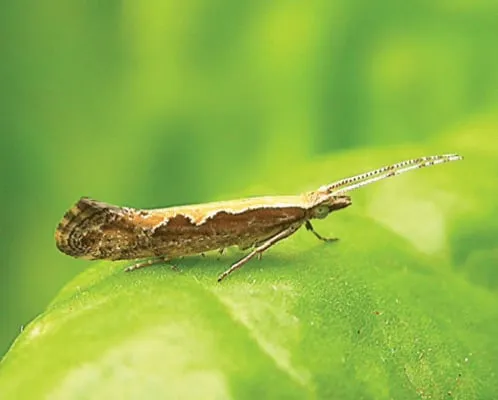
Diamondback Moth
Plutella xylostella
About Diamondback Moth
The Diamondback Moth (Plutella xylostella) is a globally distributed and highly destructive agricultural pest belonging to the moth family Plutellidae. It is a specialist feeder that exclusively attacks plants in the mustard family (Brassicaceae, also known as crucifers). The adult moth is small and slender, marked by distinctive light-colored diamond patterns along its folded wings. While the adults are harmless nectar feeders, their small, pale-green, highly active caterpillars are devastating leaf chewers. They skeletonize foliage, ruin marketable crop heads, and stunt growth. Because of its short generation time, high fecundity, and ability to thrive in varied climates, it represents one of the most expensive insect pests to control worldwide.
Identifying a Diamondback Moth infestation involves checking the leaf surfaces of brassica crops for characteristic feeding damage. Early larval stages mine inside leaf tissues, creating tiny white spots. As they grow, larvae chew small, irregular patches from the leaf underside, leaving the clear upper leaf epidermis intact—a classic symptom known as 'windowpane' damage. Eventually, they chew completely through, leaving skeletonized holes. Look for tiny, tapered green caterpillars (up to 12 mm) that violently wriggle and spin down on a silk thread when disturbed. In cauliflower and broccoli, larvae will bore directly into developing heads, rendering them completely unmarketable.
Diamondback Moths thrive in warm, dry weather (20°C to 28°C) but can survive extreme cold by overwintering as adults in crop residues. Females lay up to 150 tiny yellow eggs on leaves. The caterpillars hatch in 3 to 6 days, feed aggressively for 10 to 14 days, and then spin a loose, gauze-like white cocoon on the leaf undersides to pupate. The entire cycle can take as little as 14 to 21 days in hot weather, leading to up to 8 to 12 overlapping generations per year, causing massive population flare-ups.
| Crop/Plant Type | Severity Rating | Impact Description |
|---|---|---|
| Cabbage & Broccoli | Extreme (⭐⭐⭐) | Boring into crop heads, total quality loss and rot |
| Kale & Brussels Sprouts | High (⭐⭐) | Severe leaf skeletonization and unmarketable foliage |
| Radish & Mustard Greens | Medium (⭐) | Leaf damage, reduced root size, cosmetic defects |
Successful management of Diamondback Moth requires an integrated pest management (IPM) strategy that prioritizes non-chemical controls. Organic techniques include spraying Bacillus thuringiensis var. kurstaki (Btk), releasing predatory Trichogramma wasps, and using overhead sprinkler irrigation to disrupt adult mating and knock caterpillars off leaves. Chemical treatments, such as chlorantraniliprole or emamectin benzoate, are effective but should be rotated carefully to prevent further insecticide resistance. For comprehensive agricultural pest solutions, visit our Plant Disease Identifier Hub, or explore related threat profiles like Stem Borer, Leafhopper, and Cucumber Beetle.
Taxonomy & Features
- Diamond Rest markings: Adults feature three light-colored, diamond-shaped patterns along folded wings.
- Windowpane Chew: Caterpillars chew leaf undersides, leaving only a thin transparent upper leaf skin.
- Wriggle Retreat: Larvae thrash violently and drop down on a silken thread when disturbed.
- Brassica Specialist: Exclusively targets and feeds on members of the cruciferous mustard family.
- Short Cycle Boom: Completes generations from egg to adult in 14 days under standard hot weather.
- Gauze-Like Cocoons: Pupates inside delicate, open-mesh, spindle-shaped white silk cocoons on leaves.
Seasonal Outbreak Calendar
Outbreak risk and activity timeline for Diamondback Moth based on seasonal climate patterns:
Names in Different Languages
Affected Plant Species
Vegetables & Crops
- Cabbage
- Broccoli
- Cauliflower
- Kale
- Brussels Sprouts
- Radish
- Mustard Greens
Flowers & Ornamentals
- Sweet Alyssum
- Stocks (Matthiola)
- Wallflowers
- Honesty Plant
Fruits & Berries
- Canola Crops
Prevention & Cure
Natural & Organic Methods
- B.t. Kurstaki Spray: Apply Bacillus thuringiensis var. kurstaki (Btk) organic spray to foliage to destroy the larval gut upon ingestion.
- Companion Planting: Plant trap crops like mustard greens around primary cole crops to attract egg-laying adult moths away.
- Predatory Wasps: Release tiny parasitic wasps (Trichogramma or Diadegma) to seek and destroy diamondback moth larvae naturally.
- Overhead Irrigation: Use strong overhead sprinkler irrigation during twilight hours to disrupt adult mating flights and knock larvae off leaves.
Chemical & Professional Control
- Spinosad Foliar Spray: Spray organic spinosad formulations which deliver highly effective control against chewing caterpillars.
- Chlorantraniliprole Spray: Apply modern anthranilic diamide sprays (such as Coragen) which offer excellent target-specific larval control.
- Emamectin Benzoate: Apply emamectin benzoate on commercial brassicas showing high pressure to quickly halt caterpillar feeding.
Frequently Asked Questions
What is the most obvious sign of Diamondback Moth larvae?
The larvae are bright green, tapered at both ends, and exhibit a highly active 'wriggling' motion, rapidly dropping from leaves on a silk thread when disturbed.
Why is Diamondback Moth such a major global agriculture problem?
It has developed widespread resistance to almost all synthetic insecticides, including synthetic pyrethroids, organophosphates, and even some Bt strains.
How does the Diamondback Moth get its name?
The adult moth features three light-colored, diamond-shaped markings along its back when its wings are folded together at rest.
Recommended diagnostics based on crop family and symptoms:
Remedy Disclaimer & Safety Notice
This disease guide is for educational screening purposes only. Pathogen behavior, severity, and host susceptibility can vary dramatically based on seed variety, weather conditions, and regional microclimates. Chemical pesticides and organic treatments are subject to strict regional environmental regulations and registration mandates. Please verify all chemical registrations and review manufacturer safety labels carefully with local certified agronomists or agricultural extension service offices before applying.