
Mexican Bean Beetle
Epilachna varivestis Mulsant
About Mexican Bean Beetle
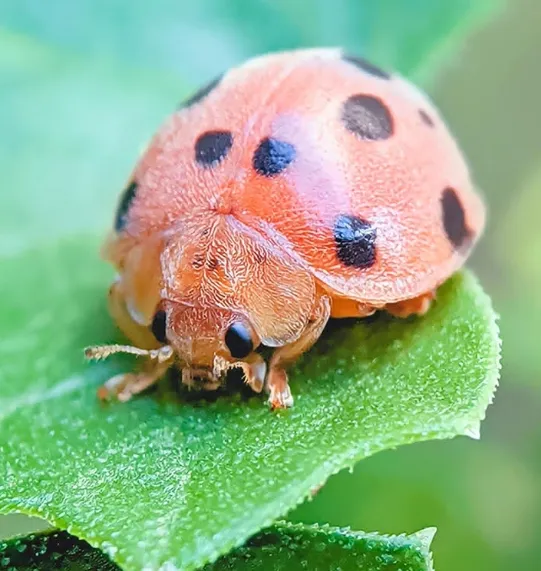
The Mexican Bean Beetle (*Epilachna varivestis*), belonging to the lady beetle family *Coccinellidae* under the order *Coleoptera*, is a highly destructive chewing agricultural pest. Unlike most ladybugs which are beneficial predators of aphids, this phytophagous species is a notorious pest of legumes. Both the adult beetles and their spiny, yellow larvae feed aggressively on foliar tissues, skeletonizing the leaves and severely weakening the crop's photosynthetic capacity.
Identifying the Mexican bean beetle involves recognizing both the adult beetle and larval stages. Adults are oval, orange-brown to coppery-yellow, approximately 6–8 mm long, with 16 black spots arranged in three rows across their wing covers (elytra). The larvae are bright yellow, oval, and covered in distinctive, branching black spines. Damage is characterized by lace-like leaf skeletonization, where the pests chew the soft green tissue between leaf veins, leaving only a dry, brown fibrous network.
This bean beetle targets commercial field beans and backyard legumes.
| Crop/Plant Type | Severity Rating | Impact Description |
|---|---|---|
| Snap Beans & Lima Beans | Extreme (⭐⭐⭐) | Complete leaf skeletonization, chewed pods, blossom loss, and total crop failure |
| Soybeans & Cowpeas | High (⭐⭐) | Significant foliar defoliation, reduced pod fill, and lower seed weight |
| Alfalfa & Clover | Medium (⭐) | Cosmetic foliage chewing, negligible forage impact except in dense infestations |
Management strategies rely on early detection and a combination of physical, biological, and chemical controls. Handpicking adults, larvae, and yellow egg masses is highly effective in home gardens. Releasing parasitic wasps (*Pediobius foveolatus*) provides excellent biological control. Organic foliar sprays include neem oil, spinosad, and pyrethrins. For thorough legume protection, visit the Plant Disease Identifier Hub, or explore related chewing pest profiles like Japanese Beetle, Flea Beetle, Asparagus Beetle, Colorado Potato Beetle, and Cucumber Beetle.
To avoid mistakenly killing beneficial garden insects or misdiagnosing crop damage, growers must accurately distinguish the Mexican Bean Beetle from other lady beetles and plant pests. While the Mexican Bean Beetle belongs to the lady beetle family Coccinellidae, it is herbivorous rather than predatory, feeding exclusively on bean foliage. In contrast, beneficial ladybugs hunt aphids and do not eat plant leaves. Meanwhile, the closely related Squash Lady Beetle looks similar but feeds only on squashes and melons. The table below outlines key diagnostic features to differentiate these beetles:
| Feature / Trait | Mexican Bean Beetle (Epilachna varivestis) | Beneficial Lady Beetle (Predatory Coccinellid) | Squash Lady Beetle (Epilachna borealis) |
|---|---|---|---|
| Diet & Behavior | Herbivorous Pest (skeletonizes foliage) | Beneficial Predator (hunts aphids & mites) | Herbivorous Pest (skeletonizes leaves & stems) |
| Primary Hosts | Legumes (Snap beans, lima beans, soybeans) | None (found on aphid-infested crops) | Cucurbits (Squash, pumpkin, melons, cucumber) |
| Adult Spot Pattern | 16 small black spots in 3 rows on coppery-orange wing covers; no spots on thorax | Typically 0 to 19 spots (often 12/13); distinct white markings on a black thorax | 14 large black spots on yellow-orange wing covers, plus 4 distinct black spots on the thorax |
| Larval Appearance | Bright yellow, oval-shaped body covered with black-tipped, branching spines | Elongated "alligator-like" blue-black body with orange/yellow markings; no spines | Yellow, slightly larger body covered with branching spines (restricted to cucurbit leaves) |
| Leaf Damage Pattern | Lace-like skeletonization (chewing between veins); pods and flowers also chewed | No leaf damage (leaves remain completely intact) | Foliage feeding starting with a characteristic circular trench cut to block chemical plant defenses |
Taxonomy & Features
- 16-Spotted Orange-Brown Body: Adults resemble coppery-orange ladybugs with 16 distinct black spots arranged in three rows.
- Spiny Yellow Larvae: Oval-shaped, bright yellow larvae are covered with long, black-tipped branching spines.
- Foliar Skeletonization: Chews the leaf tissue between the veins, leaving a characteristic lace-like skeleton.
- Cluster Yellow Eggs: Females lay clusters of 40–50 yellow, oval eggs on the undersides of host leaves.
- Pod & Flower Feeding: When leaves are depleted, beetles chew directly on flower blossoms and green bean pods.
- Parasitic Wasp Bio-Control: The tiny parasitic wasp Pediobius foveolatus provides highly target-specific larval suppression.
Seasonal Outbreak Calendar
Outbreak risk and activity timeline for Mexican Bean Beetle based on seasonal climate patterns:
Names in Different Languages
Affected Plant Species
Vegetables & Crops
- Snap Beans
- Lima Beans
- Soybeans
- Cowpeas
- Mung Beans
- Adzuki Beans
Flowers & Ornamentals
- Sweet Peas
- Wisteria
Fruits & Berries
- None
Prevention & Cure
Natural & Organic Methods
- Parasitic Wasps: Release Pediobius foveolatus wasps to lay eggs inside beetle larvae, killing them.
- Handpicking: Manually pick and crush coppery adults, yellow larvae, and egg clusters from leaves.
- Floating Row Covers: Cover crops with row covers immediately after planting until flowering starts.
Chemical & Professional Control
- Spinosad Sprays: Apply organic spinosad formulations to foliage when larval feeding is first noted.
- Pyrethrin Knockdown: Spray organic pyrethrins during heavy infestations for rapid contact knockdown.
- Carbaryl Treatment: Apply carbaryl or cyfluthrin to leaf surfaces if insect populations exceed economic thresholds.
Frequently Asked Questions
Why does this beetle look so much like a beneficial ladybug?
Both belong to the family Coccinellidae. While 90% of ladybugs are predators that eat aphids, the Mexican Bean Beetle (along with the Squash Beetle) has evolved to feed on plant tissue.
How do I identify Mexican Bean Beetle eggs?
They are bright yellow, oval, and laid in neat clusters of 40 to 50 eggs on the undersides of bean leaves, looking similar to squash bug eggs.
Do row covers protect against bean beetles?
Yes, but only if beans are planted in soil that did not host bean beetles the previous year, as adults overwinter in the soil and leaf litter.
Recommended diagnostics based on crop family and symptoms:
Remedy Disclaimer & Safety Notice
This disease guide is for educational screening purposes only. Pathogen behavior, severity, and host susceptibility can vary dramatically based on seed variety, weather conditions, and regional microclimates. Chemical pesticides and organic treatments are subject to strict regional environmental regulations and registration mandates. Please verify all chemical registrations and review manufacturer safety labels carefully with local certified agronomists or agricultural extension service offices before applying.