
Asparagus Beetle
Crioceris asparagi
About Asparagus Beetle
The Asparagus Beetle (*Crioceris asparagi*), belonging to the leaf beetle family *Chrysomelidae* under the order *Coleoptera*, is a highly specialized chewing insect pest of asparagus (*Asparagus officinalis*) crops. Native to Europe, it has become a major invasive threat in asparagus-growing areas globally. Both the adults and their larvae feed on the tender emerging spears in spring and the fern-like foliage in summer. This feeding severely defoliates the plant and stunts new shoots, reducing the crown's energy storage for the next year.
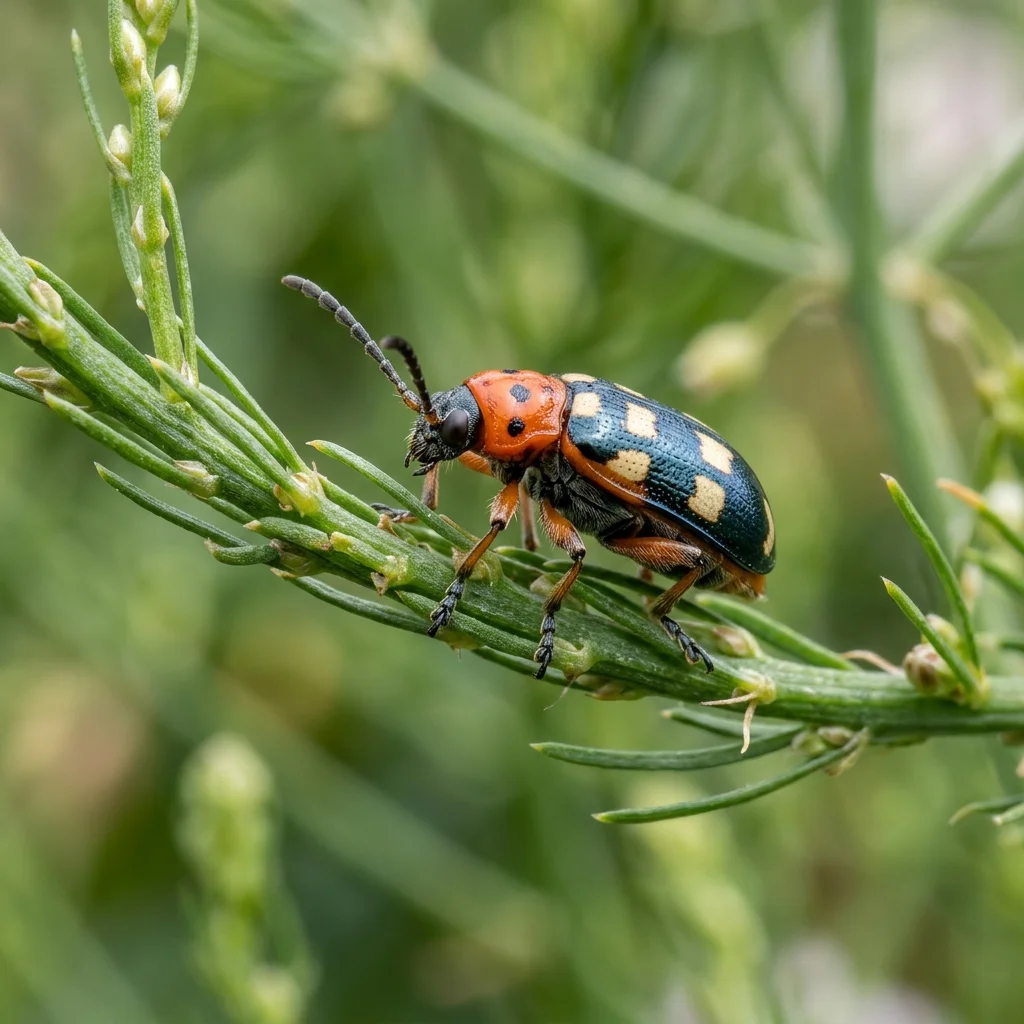
Identifying the asparagus beetle is easy due to the striking appearance of the adults. They are slender (6–8 mm) with a metallic blue-black head and thorax, cream-to-yellow spots on their wing covers, and a reddish-brown border. The larvae are plump, slate-grey, and slug-like with black heads. Damaged spears display chewed tips and hook-like bending (shepherd's crook). Adult beetles lay small, shiny black, cigar-shaped eggs glued upright in rows along the spears or ferns.
The beetle targets cultivated asparagus ferns and wild spears.
| Affected Crops / Plants | Severity Rating | Damage Symptoms |
|---|---|---|
| Asparagus (Emerging Spears) | Extreme (⭐⭐⭐) | Chewed tips, hook-like bending (shepherd's crook), unsightly black eggs, and ruined market value |
| Asparagus (Summer Ferns) | High (⭐⭐) | Severe foliar defoliation, skeletonized needles, and reduced root crown energy storage |
| Wild/Ornamental Asparagus | Medium (⭐) | Minor chewing scars and leaf stippling; serves as a wild host population breeder |
Adult beetles overwinter in crop debris and emerge in early spring to feed on new shoots. The eggs hatch in 3 to 8 days, and larvae feed for 2 weeks before pupating in the soil. Organic management focuses on handpicking beetles, releasing predatory chalcid wasps (*Tetrastichus asparagi*), and using neem oil. Chemical control includes foliar sprays of permethrin or spinosad. For crop health management, consult our Plant Disease Identifier Hub, or read related profiles like Japanese Beetle, Flea Beetle, and Armyworm.
Taxonomy & Features
- Patterned Blue-Black Rind: Slender adult beetles (6-8 mm) display a striking metallic blue-black shell with cream-yellow squares and red margins.
- Cigar-Shaped Black Eggs: Lays small, shiny black, cylinder-like eggs glued vertically in rows on emerging spears.
- Slate-Grey Slug Larvae: Plump, slate-grey, slug-like larvae chew leaves, leaving behind dark sticky frass.
- Shepherd's Crook Spears: Chewing on one side of emerging spears causes them to bend into a hook-like shepherd's crook shape.
- Debris Overwintering: Adult beetles hibernate in hollow dry asparagus stalks and weed litter around garden borders.
- Parasitic Wasp Control: The tiny parasitic wasp Tetrastichus asparagi provides excellent natural control by eating eggs.
Seasonal Outbreak Calendar
Outbreak risk and activity timeline for Asparagus Beetle based on seasonal climate patterns:
Names in Different Languages
Affected Plant Species
Vegetables & Crops
- Asparagus
Flowers & Ornamentals
- Asparagus Fern (Ornamental)
Fruits & Berries
- None
Prevention & Cure
Natural & Organic Methods
- Handpicking: Handpick adults and drop them into a bucket of soapy water during early morning hours.
- Egg Parasite Release: Encourage or release the parasitic wasp Tetrastichus asparagi to destroy egg colonies.
- Diatomaceous Earth: Dust the base of spears with diatomaceous earth to target pupating soil stages.
Chemical & Professional Control
- Permethrin Sprays: Apply contact pyrethroids like permethrin to emerging spears to eliminate feeding adults.
- Spinosad Application: Spray spinosad larvicide to target active slate-grey larvae on summer ferns.
- Carbaryl Treatment: Use carbaryl sprays on mature summer ferns if defoliation exceeds 10% threshold.
Frequently Asked Questions
What is the difference between the common and spotted asparagus beetle?
The common asparagus beetle (Crioceris asparagi) is blue-black with cream spots and red borders, emerging early to feed on spears. The spotted asparagus beetle (Crioceris duodecimpunctata) is orange-red with 12 black spots and feeds primarily on asparagus berries later in summer.
Can I harvest and eat asparagus spears that have beetle eggs glued to them?
Yes. The eggs are harmless and non-toxic. However, they are highly unsightly. You can easily scrape them off with a fingernail or a soft brush, or trim the affected tips before cooking.
How do I manage asparagus beetles in the autumn?
Prune all dry asparagus ferns down to the ground level in late autumn, and clean up all garden litter. This eliminates the hollow stalks where adult beetles overwinter.
Recommended diagnostics based on crop family and symptoms:
Remedy Disclaimer & Safety Notice
This disease guide is for educational screening purposes only. Pathogen behavior, severity, and host susceptibility can vary dramatically based on seed variety, weather conditions, and regional microclimates. Chemical pesticides and organic treatments are subject to strict regional environmental regulations and registration mandates. Please verify all chemical registrations and review manufacturer safety labels carefully with local certified agronomists or agricultural extension service offices before applying.