
Colorado Potato Beetle
Leptinotarsa decemlineata
About Colorado Potato Beetle
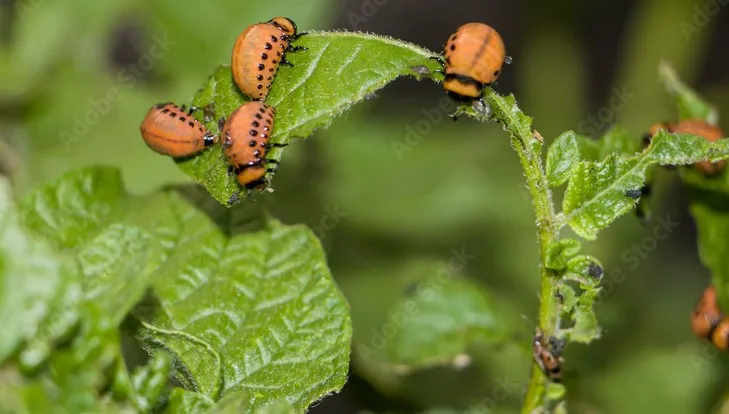
The Colorado Potato Beetle (Leptinotarsa decemlineata) is a highly destructive insect pest belonging to the leaf beetle family Chrysomelidae. Originating in North America, this notorious crop destroyer is globally recognized by its striking, rounded, yellowish-orange body adorned with ten distinctive black longitudinal stripes along its elytra (wing covers). While adults are voracious feeders, the soft-bodied, humpbacked reddish-pink larvae are even more destructive. Both stages feed exclusively on nightshade family (Solanaceae) plants, primarily targeting potatoes, eggplants, and tomatoes. Without swift intervention, their relentless chewing behavior can defoliate entire crop fields in a matter of days, completely destroying photosynthetic capability and causing total yield loss.
Identifying a Colorado Potato Beetle infestation involves checking the upper and lower surfaces of host plant leaves. The most obvious visual symptoms are large, jagged holes in leaves, progressing quickly to complete skeletonization, leaving only tough leaf veins and stems behind. Look for distinct, bright orange-yellow oval eggs laid in neat clusters on leaf undersides. Active feeding areas will also reveal soft, plump, reddish-orange larvae with two rows of black dots along their sides, alongside the striped adult beetles. Heavy accumulations of dark, sticky frass (feces) on foliage are another diagnostic indicator. Young potato plants may experience sudden stunting or collapse due to the loss of leaf canopy.
Colorado Potato Beetles thrive in warm spring and summer conditions (20°C to 30°C), overwintering as adults deep in the soil or surrounding debris. Emerging in spring, females lay up to 800 eggs, which hatch into highly destructive larvae within 4 to 8 days. The larvae feed continuously for 2 to 3 weeks before burrowing into the soil to pupate. The entire life cycle can complete in just 30 days under optimal summer heat, yielding 2 to 3 generations per season and causing devastating population explosions.
| Crop/Plant Type | Severity Rating | Impact Description |
|---|---|---|
| Potato Crops | Extreme (⭐⭐⭐) | Total defoliation and complete tuber yield failure |
| Eggplant & Tomatillo | High (⭐⭐) | Foliage destruction, blossom drop & ruined fruit |
| Tomato & Sweet Peppers | Medium (⭐) | Leaf damage, slow growth, sunburned young fruit |
Successful management of Colorado Potato Beetle requires an integrated pest management (IPM) approach. Natural methods include physical handpicking of larvae and adults, applying organic cold-pressed neem oil to young plants, and spraying Spinosad—a soil-derived organic neurotoxin. Placing physical row covers early in the spring blocks crawling adults. Chemical options, such as acetamiprid or permethrin, can be used for severe agricultural outbreaks, though rotation is essential due to the beetle's rapid resistance development. For complete disease management resources, visit our Plant Disease Identifier Hub, or explore related threat profiles like Cucumber Beetle, Stink Bug, and Leafhopper.
Taxonomy & Features
- Striking Stripe Pattern: Adult beetles feature ten distinct, bold black stripes along their rounded, yellowish elytra.
- Nightshade Host Focus: Exclusively targets and feeds on members of the Solanaceae family, with potatoes being the primary choice.
- Vivid Egg Clusters: Eggs are bright orange-yellow ovals laid in dense, organized clusters on the undersides of leaves.
- Voracious Fat Larvae: Humpbacked, reddish-orange larvae with black spots feed continuously, causing rapid skeletonization.
- Overwintering Hardiness: Adults burrow up to 12 inches deep in agricultural soil to hibernate and emerge early in the spring.
- Rapid Insecticide Resistance: Exceptionally fast genetic adaptation makes this pest notoriously resistant to chemical sprays.
Seasonal Outbreak Calendar
Outbreak risk and activity timeline for Colorado Potato Beetle based on seasonal climate patterns:
Names in Different Languages
Affected Plant Species
Vegetables & Crops
- Potatoes
- Eggplants
- Tomatoes
- Sweet Peppers
- Tomatillos
Flowers & Ornamentals
- Petunias
- Nicotiana (Flowering Tobacco)
- Nightshade Flowers
- Calibrachoa
Fruits & Berries
- Groundcherries
Prevention & Cure
Natural & Organic Methods
- Manual Handpicking: Regularly inspect solanaceous crops daily and hand-pick adult beetles and larvae, submerging them in soapy water.
- Neem Oil Spray: Apply cold-pressed organic neem oil to young foliage to disrupt larval feeding and egg development cycles.
- Beneficial Nematodes: Drench the soil with predatory nematodes (Heterorhabditis bacteriophora) to target overwintering pupae in the soil.
- Straw Mulching: Apply a thick layer of straw mulch around potato plants to obstruct emerging adult beetles from walking onto new shoots.
Chemical & Professional Control
- Spinosad Foliar Spray: Spray spinosad-based insecticides, which target the beetle's nervous system through digestion and contact.
- Acetamiprid Systemic: Treat non-organic crops with acetamiprid or other neonicotinoids under high larval pressure.
- Pyrethroid Barrier: Apply permethrin or bifenthrin sprays on foliage during early spring migration to intercept crawling beetles.
Frequently Asked Questions
Do Colorado Potato Beetles bite humans or pets?
No. Colorado Potato Beetles are entirely harmless to humans and domestic animals; they feed exclusively on plants in the nightshade (Solanaceae) family.
Why are Colorado Potato Beetles so hard to control with chemicals?
Colorado Potato Beetles possess an extraordinary genetic ability to rapidly develop resistance to almost all classes of synthetic chemical insecticides within a few generations.
How do I identify Colorado Potato Beetle eggs?
The eggs are bright orange-yellow, elongated, and laid in tight, neat clusters of 20 to 60 eggs on the undersides of leaves.
Recommended diagnostics based on crop family and symptoms:
Remedy Disclaimer & Safety Notice
This disease guide is for educational screening purposes only. Pathogen behavior, severity, and host susceptibility can vary dramatically based on seed variety, weather conditions, and regional microclimates. Chemical pesticides and organic treatments are subject to strict regional environmental regulations and registration mandates. Please verify all chemical registrations and review manufacturer safety labels carefully with local certified agronomists or agricultural extension service offices before applying.