
Parsley Worm
Papilio polyxenes
About Parsley Worm
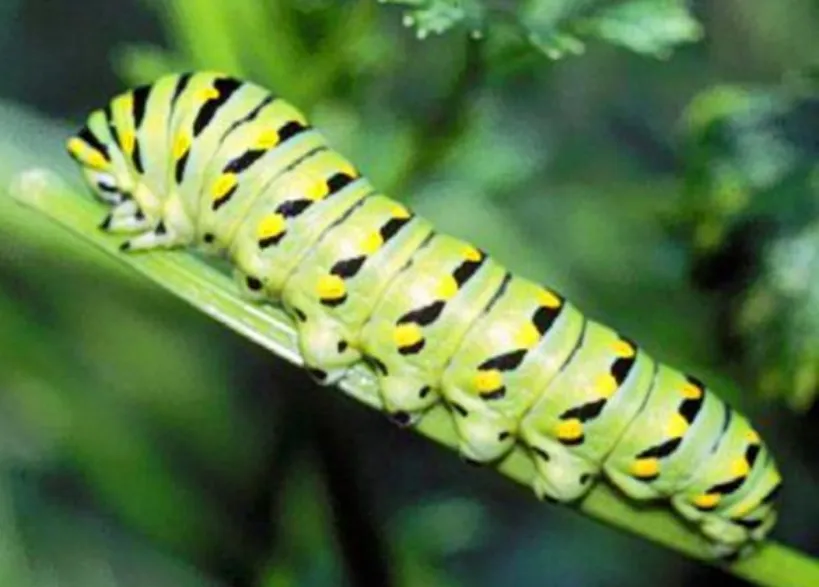
The Parsley Worm (*Papilio polyxenes*), which represents the active larval caterpillar stage of the beautiful Eastern Black Swallowtail butterfly (family *Papilionidae*, order *Lepidoptera*), is a specialized foliar-chewing herbivore pest that targets crops in the carrot and parsley family (*Apiaceae*). While adult butterflies serve as vital garden pollinators, their caterpillars exhibit an insatiable, highly voracious appetite, capable of defoliating entire herbal plants in a matter of days. These worms have evolved high tolerance to toxic furanocoumarins present in their host plants, turning these toxic plant defenses into their own chemical defense system against predatory birds.
Identifying a parsley worm infestation is straightforward due to their distinctive, highly striking appearance and defensive posture. Mature caterpillars (reaching up to 2 inches or 5 cm in length) display vibrant lime-green bodies banded with bold black stripes dotted with bright yellow or orange spots. When threatened or disturbed, they exhibit a fascinating, high-alert defense mechanism: they arch their head back and project a bright orange, Y-shaped glandular organ called an osmeterium from behind their head capsule, releasing a pungent, citrusy, and carrot-like foul odor designed to repel predatory wasps and birds. On plants, their chewing damage starts as stripped leaflet margins, quickly progressing to entirely bare stems.
Parsley worms are highly host-specific pests that exclusively feed on members of the *Apiaceae* (umbellifers) family, though they occasionally feed on garden rue. They pose a significant threat to home herb gardens where young plants can be completely defoliated.
| Affected Crops / Plants | Severity Rating | Damage Symptoms |
|---|---|---|
| Parsley, Dill, Fennel | Extreme (⭐⭐⭐) | Rapid defoliation, skeletonized stems, severed growing tips |
| Celery, Carrots, Parsnips | High (⭐⭐) | Chewed foliage, reduced root development in young seedlings |
| Queen Anne's Lace, Rue | Medium (⭐) | Minor cosmetic foliar loss, leaf margin chewing |
The life cycle of the parsley worm begins when adult female swallowtail butterflies lay tiny, spherical yellow eggs on leaf surfaces. Within 4 to 9 days, tiny dark larvae emerge, initially mimicking unpalatable bird droppings before developing their iconic green-and-striped look through five distinct instar stages over 2 to 3 weeks. Once fully grown, they crawl away to pupate inside a brown or green chrysalis, emerging as adult butterflies in 10 to 14 days, or overwintering if late in the season. Organic control is best achieved by hand-picking and relocating caterpillars to wild host plants like Queen Anne's Lace, using floating row covers to exclude egg-laying butterflies, or applying biological *Bacillus thuringiensis* (Bt) to young foliage for severe outbreaks. Spinosad is an effective chemical option, though pyrethroids should be avoided to protect pollinators. For complete guidance on managing leaf chewing pests, check our Plant Disease Identifier Hub, or explore similar chewing pest profiles like Cabbage Worms, Japanese Beetles, and Flea Beetles.
If you notice green caterpillars feeding on your garden herbs, it is crucial to accurately differentiate the Parsley Worm (*Papilio polyxenes*) from other common defoliating larvae like the Cabbage Worm (*Pieris rapae*) or Tomato Hornworm (*Manduca quinquemaculata*). The Parsley Worm is easily identified by its bold lime-green body with transverse black stripes, yellow spots, and a retractable orange Y-shaped odor organ (osmeterium) behind its head. In contrast, Cabbage Worms are uniform velvety green with a faint yellow dorsal line and target brassicas, while Tomato Hornworms feature V-shaped white side stripes, a distinctive tail horn, and target nightshades. Consult the diagnostic key below to compare chewing caterpillar pests:
| Identification Feature | Parsley Worm (Swallowtail) | Cabbage Worm (Pieris) | Tomato Hornworm (Manduca) |
|---|---|---|---|
| Body Pattern & Color | Lime-green with black transverse bands & yellow/orange spots | Solid velvety green with faint yellow stripe down back | Large green body with 8 white V-shaped lateral stripes |
| Defensive Scent Organ | Bright orange retractable Y-shaped Osmeterium (citrus/foul smell) | None (relies on camouflage on brassica leaves) | None (rears up and thrashes front body when threatened) |
| Rear Body Feature | Rounded smooth tail end (no horn or spike) | Rounded smooth tail end | Prominent red or black pointed horn spike on tail end |
| Host Plant Family | Strictly Apiaceae (parsley, dill, fennel, carrots, parsnip) | Strictly Brassicaceae (cabbage, kale, broccoli, cauliflower) | Strictly Solanaceae (tomatoes, peppers, eggplants) |
| Adult Insect Form | Beneficial Eastern Black Swallowtail Butterfly | Small white butterfly with black wing spots | Large Five-Spotted Hawk Moth (Sphinx moth) |
Taxonomy & Features
- Vibrant Aposematic Coloration: Bright lime-green body marked with distinct black transverse bands containing warning yellow or orange spots.
- Osmeterium Scent Defense: A bright orange, Y-shaped defensive organ everted from behind the head when disturbed, releasing a pungent carrot-citrus odor.
- Rapid Foliage Defoliation: Extremely voracious leaf-chewing behavior, starting from fine leaf tips and leaving only the tough, skeletonized midribs.
- Bird-Dropping Instar Mimicry: Young larvae (1st to 3rd instars) are dark black with a white saddle mark, perfectly mimicking unpalatable bird droppings.
- Substantial Caterpillar Size: Mature caterpillars grow up to 2 inches (5 cm) long in 2-3 weeks before migrating to find a dry pupal site.
- Apiaceae Host Specialization: Strictly targets plant species within the carrot and parsley family (Apiaceae), plus limited members of the Rutaceae (rue) family.
Seasonal Outbreak Calendar
Outbreak risk and activity timeline for Parsley Worm based on seasonal climate patterns:
Names in Different Languages
Affected Plant Species
Vegetables & Crops
- Parsley (Curly and Flat-leaf)
- Dill (Anethum graveolens)
- Fennel (Foeniculum vulgare)
- Carrot (Daucus carota)
- Parsnip
- Celery
Flowers & Ornamentals
- Queen Anne's Lace (Daucus carota)
- Ammi majus (Laceflower)
- Rue (Ruta graveolens)
- Zizia aurea (Golden Alexander)
Fruits & Berries
- None (Exclusively affects Apiaceae and limited Rutaceae)
Prevention & Cure
Natural & Organic Methods
- Relocation: Hand-pick and move caterpillars to wild host plants like Queen Anne's Lace or a dedicated decoy herb patch.
- Decoy Planting: Plant extra dill or fennel at garden margins specifically to attract and feed hungry swallowtail caterpillars.
- Physical Barriers: Install lightweight floating row covers over herbs in spring to prevent adult butterflies from laying eggs.
- Manual Removal: Pick caterpillars off plants directly. Wear garden gloves if sensitive to the strong pungent osmeterium odor.
Chemical & Professional Control
- Bacillus thuringiensis (Bt): Apply biological Bt to foliage to target caterpillars; use selectively as it kills all butterfly larvae.
- Spinosad Sprays: Apply spinosad-based sprays for effective control on heavily infested plants, spraying late evening to protect bees.
- Pyrethroid Sprays: Use synthetic pyrethroids like permethrin only as a last resort on ornamentals due to high pollinator toxicity.
Frequently Asked Questions
Will parsley worms kill my herb plants?
Rarely. Although parsley worms are voracious eaters and can strip an entire dill or parsley branch in a single day, mature and healthy herbs are extremely resilient. They will quickly grow back and produce new foliage once the caterpillar crawls away to pupate.
Should I kill or spray parsley worms in my garden?
Generally, no. Parsley worms are the larval stage of the beautiful Black Swallowtail butterfly, a critical pollinator. Most gardeners recommend manual relocation to decoy weeds or wild plants (like Queen Anne's Lace) rather than eradication with chemical sprays.
How can I tell a parsley worm apart from a monarch caterpillar?
While both caterpillars have bands, Monarch caterpillars have bright yellow, white, and black stripes with long, soft black tentacles at both ends, and they feed exclusively on milkweed. Parsley worms are green with black bands dotted with yellow/orange spots, have no tentacles, and feed on dill, parsley, and carrots.
Recommended diagnostics based on crop family and symptoms:
Remedy Disclaimer & Safety Notice
This disease guide is for educational screening purposes only. Pathogen behavior, severity, and host susceptibility can vary dramatically based on seed variety, weather conditions, and regional microclimates. Chemical pesticides and organic treatments are subject to strict regional environmental regulations and registration mandates. Please verify all chemical registrations and review manufacturer safety labels carefully with local certified agronomists or agricultural extension service offices before applying.