
Crown Gall Disease
Agrobacterium tumefaciens
About Crown Gall Disease
Crown gall is a unique, tumor-inducing bacterial plant disease caused by the soil-borne bacterium Agrobacterium tumefaciens (family Rhizobiaceae). It is highly famous in molecular biology for its natural ability to 'genetically engineer' host plants by physically transferring a piece of its own DNA (the Ti plasmid) into plant cell nuclei. This genetic hijack forces the host cells to divide uncontrollably and produce specialized amino acids (opines) that feed the bacteria. Crown gall has an exceptionally broad host range, affecting over 600 species of woody and herbaceous plants globally, severely weakening their structural and vascular health.
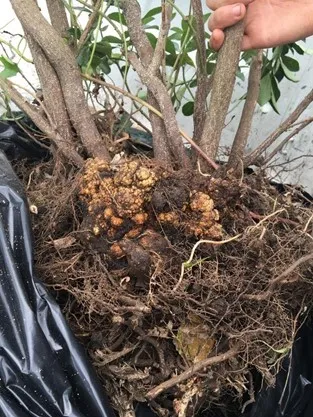
Identifying Crown Gall is highly direct due to the distinctive, gnarled growths it produces. The primary symptom is the presence of rough, woody swellings or tumors (galls) forming on roots and stems near the soil line (the crown), though they can appear on upper branches and graft junctions. Galls start as small, soft, cream-colored swellings that rapidly expand, harden, and turn dark brown or black with a highly cracked, rough surface. As these galls enlarge, they disrupt the flow of water and nutrients, causing stunting, yellowing, and branch dieback. The identification photo displays a large, gnarled black tumor at the base of a rose stem, showing the typical cracked crown gall growth.
The life cycle of Agrobacterium tumefaciens is highly persistent in the soil. The bacteria can survive saprophytically in soil for several years without a host. They enter host plants through physical wounds caused by pruning, grafting, weeding, insect feeding, or winter cracking. Once inside, they attach to cell walls, transfer their T-DNA, and trigger rapid tumor growth. Spread is highly active in moist, alkaline soils and during warm summer months.
| Crop / Plant Type | Severity Rating | Damage Symptoms |
|---|---|---|
| Roses, Grapes & Caneberries (Raspberries) | Extreme (⭐⭐⭐) | Girdled stems, branch dieback, heavy root/crown galling |
| Fruit Trees (Apples, Peaches, Plums) | High (⭐⭐) | Stunted tree growth, poor fruit set, large woody crown tumors |
| Shade Trees (Maples, Elms, Willows) | Medium (⭐) | Localized trunk galls, slow decline in vigor over years |
Managing Crown Gall is difficult because there are no effective chemical curatives to eliminate the bacteria once inside the vascular system. Control relies on strict prevention. For organic protection, apply the non-pathogenic competitor bacterium *Agrobacterium radiobacter* (strain K84) as a biological root dip on new transplants to block infection sites. Ensure all pruning shears and grafting knives are thoroughly sterilized in 70% isopropyl alcohol between cuts. Avoid making low physical wounds on trunks during weeding. Immediately dig up and destroy severely infected plants. For further advice, consult our Plant Disease Identifier Hub, or view profiles on Bacterial Canker, Fire Blight, and Root Rot.
Taxonomy & Features
- Woody Galls: Produces rough, gnarled, dark-brown or black woody tumors at the crown where stem meets soil.
- Genetic Engineering Hijack: Transfers its Ti plasmid DNA into host cell nuclei, forcing uncontrolled tumorous division.
- Vascular Blockage: Swelling galls compress xylem and phloem, restricting water and nutrient transport to upper branches.
- Persistent Soil Bacterium: Agrobacterium tumefaciens can survive saprophytically in soil for several years without hosts.
- Wound Entry Pathogen: Enters solely through physical openings caused by grafting, pruning, weeding, or winter cracking.
- K84 Biological Defense: Best prevented on new bare-root transplants using competitive Agrobacterium radiobacter dips.
Seasonal Outbreak Calendar
Outbreak risk and activity timeline for Crown Gall Disease based on seasonal climate patterns:
Names in Different Languages
Affected Plant Species
Vegetables & Crops
- Beets
- Turnips
- Carrots
Flowers & Ornamentals
- Roses
- Chrysanthemums
- Dahlias
- Carnations
- Geraniums
Fruits & Berries
- Grape
- Raspberry
- Blackberry
- Apple
- Peach
- Plum
- Pear
- Cherry
Prevention & Cure
Natural & Organic Methods
- Biological Dip (K84): Soak bare-root transplants in competitive Agrobacterium radiobacter (strain K84/NoGall) to block entry sites.
- Pruning Tool Sterilization: Dip pruning shears, grafting knives, and digging shovels in 70% isopropyl alcohol between every plant.
- Gentle Cultivation: Avoid using weed whackers or lawn mowers close to tree trunks to prevent bark wounds that facilitate infection.
- Soil Solarization: Solarize empty garden beds with clear plastic during hot summer months to reduce bacterial populations.
Chemical & Professional Control
- Copper Hydroxide: Apply copper-based paint or sprays on graft junctions and pruning cuts as a protective barrier.
- Bleach Soil Wash: Wash empty pots and planting benches thoroughly with a 10% sodium hypochlorite (bleach) solution.
- Streptomycin Dusts: Dust severe trunk grafting cuts on commercial woody liners with agricultural streptomycin to prevent bacterial entry.
Frequently Asked Questions
Can Crown Gall bacteria infect humans?
No, while Agrobacterium tumefaciens is highly efficient at transferring its genetic material (T-DNA) into plant host cells, it is completely harmless to humans, animals, and beneficial insects. It only targets plant tissue.
What is the difference between a root gall (Crown Gall) and nitrogen nodules?
Crown Gall galls are large, rough, dark, woody, and permanently attached to the main stem or thick roots, crushing root tissue. Beneficial nitrogen-fixing nodules (found on legumes) are small, soft, pink-to-tan round structures that are easily popped off root hairs with a fingernail.
Should I cut off a crown gall to save my woody tree?
If the gall is on a small side branch, you can prune it off several inches below the tumor. However, if the gall is on the main trunk near the soil line, cutting it off will wound the tree further and spread the bacteria. It is best to dig up and destroy the tree to prevent the soil from becoming heavily infested.
Recommended diagnostics based on crop family and symptoms:
Remedy Disclaimer & Safety Notice
This disease guide is for educational screening purposes only. Pathogen behavior, severity, and host susceptibility can vary dramatically based on seed variety, weather conditions, and regional microclimates. Chemical pesticides and organic treatments are subject to strict regional environmental regulations and registration mandates. Please verify all chemical registrations and review manufacturer safety labels carefully with local certified agronomists or agricultural extension service offices before applying.