
Citrus Greening
Candidatus Liberibacter asiaticus
About Citrus Greening
Citrus Greening (also known as Huanglongbing or HLB), caused by the systemic phloem-limited bacterial pathogen *Candidatus Liberibacter asiaticus*, is the most destructive, lethal, and economically catastrophic disease of citrus crops globally. Classed under the class *Alphaproteobacteria* in the phylum *Proteobacteria*, this fastidious bacterium cannot be cultured in vitro. It is introduced directly into the tree's phloem vessels by the feeding of the Asian citrus psyllid vector. Once inside, the bacteria multiply and block the phloem tubes, stopping nutrient distribution. This leads to tree starvation, systemic twig dieback, and tree mortality.
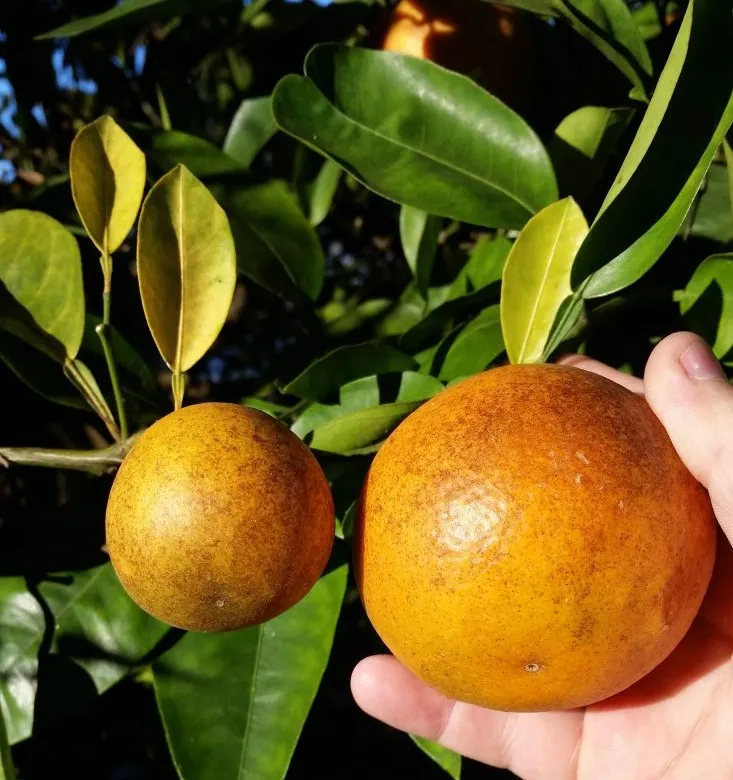
Identifying citrus greening involves checking foliage and fruit for distinct physiological symptoms. Foliage displays a highly diagnostic 'blotchy mottle'—asymmetrical, irregular yellow-and-green patterns on the leaves, where the yellowing on one side of the leaf vein does not match the other side. This blotchy mottle differs from symmetrical zinc deficiency yellowing. Slicing open developing fruits reveals the key indicators: the fruit remains small, hard, and lopsided, with a curved core and a bitter, salty taste. The fruit fails to ripen correctly, remaining green at the bottom end ('color inversion').
Citrus greening attacks all cultivated citrus varieties and related rutaceous ornamental hosts, presenting an extreme, systemic threat to global citrus groves.
| Affected Citrus Crops | Severity Rating | Damage Symptoms |
|---|---|---|
| Sweet Oranges, Grapefruit | Extreme (⭐⭐⭐) | Asymmetrical blotchy mottle, lopsided green fruits, bitter taste, tree death |
| Limes, Lemons, Tangelo | Extreme (⭐⭐⭐) | Twig dieback, chlorotic leaf mottling, poorly colored bitter fruit, stunted shoots |
| Mandarins, Kumquat, Curry Leaf | High (⭐⭐) | Minor leaf yellowing, localized twig dieback, slightly higher tolerance |
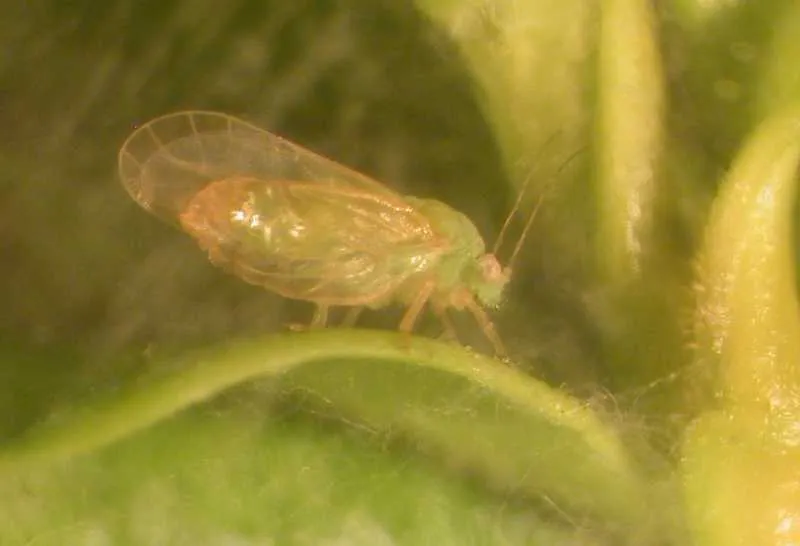
The bacterium is vectored and spread from tree to tree exclusively by the Asian citrus psyllid (*Diaphorina citri*), which feeds on flush shoots and injects the pathogen during sap sucking. The psyllid population peaks in spring and summer on new growth. The disease also spreads via infected budwood grafting, with no direct tree-to-tree wind spread. Organic management focuses on immediately uprooting and burning symptomatic infected trees to remove the local reservoir, controlling psyllids using neem oil, and releasing parasitic wasps (*Tamarixia radiata*). Chemical control relies on intensive psyllid spraying. For complete citrus guides, visit our Plant Disease Identifier Hub, or explore similar threat profiles like Citrus Canker, Psyllids, and Sooty Mold. For specialized diagnosis of related crop threats, see our guide on Asian Citrus Psyllid.
Taxonomy & Features
- Lethal Phloem Blockage: Pathogen multiplies systemically inside the water-conducting phloem vessels, blocking nutrient flow and starving the tree.
- Asymmetrical Blotchy Mottle: Diagnostic leaf yellowing is completely asymmetrical—yellow and green patchiness on one side of leaf does not match the other.
- Lopsided Bitter Fruit: Ripening fruits are small, hard, lopsided, have a distinct curved core, and taste intensely bitter and salty.
- Color Inversion Ripening: Fruit skins fail to ripen correctly, remaining bright green at the bottom stylar end while yellowing at the stem end.
- Psyllid Insect Vector: Exclusively vectored and injected into the phloem during sap-sucking by the Asian citrus psyllid (Diaphorina citri).
- Uprooting Control: Since there is no cure, immediate tree uprooting and canopy destruction represents the only quarantine containment.
Seasonal Outbreak Calendar
Outbreak risk and activity timeline for Citrus Greening based on seasonal climate patterns:
Names in Different Languages
Affected Plant Species
Vegetables & Crops
- None
Flowers & Ornamentals
- Orange Jasmine (Murraya paniculata - host vector reservoir)
Fruits & Berries
- Sweet Orange (Valencia, Hamlin)
- Grapefruit
- Key Lime
- Lemon
- Tangelo
- Mandarin
- Tangerine
- Curry Leaf (Murraya koenigii)
Prevention & Cure
Natural & Organic Methods
- Psyllid Predators: Release tiny ectoparasitic wasps (Tamarixia radiata) which lay eggs on psyllids, achieving high natural biological control.
- Infected Tree Uprooting: Inspect groves weekly; immediately uproot, herbicide-treat, and burn symptomatic trees to remove the infection reservoir.
- Neem Oil Sprays: Apply foliar sprays of 1% neem oil combined with horticultural soaps during flush cycles to deter egg-laying psyllids.
- Clean Budwood: Only purchase certified disease-free citrus trees grafted from verified pathogen-free nursery budwood stocks.
Chemical & Professional Control
- Systemic Neonicotinoids: Apply soil drenches of imidacloprid or thiamethoxam around young trees to control feeding psyllids systemically.
- Foliar Insecticide Rotation: Spray insecticides (like spinetoram or pyrethroids) on new leaf flushes in spring to knock down psyllid swarms.
- Antibiotic Trunk Injection: Inject oxytetracycline into the trunk of mature trees to temporarily suppress bacterial levels (highly restricted).
Frequently Asked Questions
Why is Citrus Greening considered the worst disease of citrus in the world?
Citrus Greening is caused by a fastidious bacterium that invades and blocks the tree's phloem vascular network. There is currently no cure, no effective chemical spray, and no resistant cultivar. Once infected, the tree decline is permanent; the fruits become bitter and useless, and the tree dies within 3 to 5 years, systematically wiping out entire citrus industries.
How do I distinguish Citrus Greening from standard nutrient deficiencies?
The key is leaf symmetry. Symmetrical yellowing (where both sides of the leaf vein display matching yellow bands) indicates a zinc, iron, or nitrogen deficiency. Citrus Greening leaf symptoms are strictly 'asymmetrical'—a blotchy green-and-yellow mottle where the yellow pattern on one half of the leaf blade does not match the other half.
What is 'color inversion' in greening-infected fruit?
Normal citrus fruits ripen and turn yellow or orange starting from the bottom end (stylar end) upward toward the stem. Fruits infected with Citrus Greening display 'color inversion': they begin turning yellow or orange at the top stem end, while the bottom stylar end remains dark green. Squeezing the fruit exposes a curved core and tiny, dark, aborted seeds.
Recommended diagnostics based on crop family and symptoms:
Remedy Disclaimer & Safety Notice
This disease guide is for educational screening purposes only. Pathogen behavior, severity, and host susceptibility can vary dramatically based on seed variety, weather conditions, and regional microclimates. Chemical pesticides and organic treatments are subject to strict regional environmental regulations and registration mandates. Please verify all chemical registrations and review manufacturer safety labels carefully with local certified agronomists or agricultural extension service offices before applying.