
Apple Scab
Venturia inaequalis
About Apple Scab
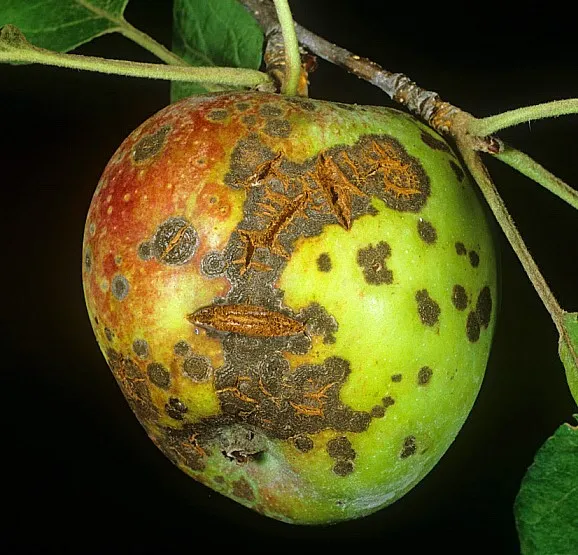
Apple scab is arguably the most economically significant fungal disease affecting apple trees (Malus domestica) and ornamental crabapples worldwide. Caused by the ascomycete fungus Venturia inaequalis, this disease primarily targets the foliage and the developing fruit, leading to significant yield loss and reduced fruit quality. The infection manifests as unsightly, olive-green to dark brown velvety lesions that can eventually become corky and scabby as they age. Beyond its impact on the visual appeal of the fruit, apple scab can cause severe premature defoliation if left unchecked, reducing the tree's photosynthetic capacity and overall vigor for subsequent growing seasons.
Identification of apple scab relies on spotting the characteristic fuzzy, olive-colored lesions that appear on both the upper and lower surfaces of leaves shortly after bud break. As the disease progresses, these spots darken and take on a more defined, velvety appearance due to the production of fungal spores. On the fruit, symptoms begin as small, dark, circular spots that eventually expand and become brown and corky. In severe cases, the fruit may crack or become misshapen as it grows around the dead, scabby tissue. Identifying these symptoms early in the spring is vital for preventing a secondary outbreak during the summer months.
The life cycle of Venturia inaequalis is highly dependent on seasonal weather patterns and moisture.
| Crop/Plant Type | Severity Rating | Impact Description |
|---|---|---|
| Apples & Crabapples | Extreme (⭐⭐⭐) | Corky fruit cracks, fuzzy leaf spots, severe defoliation, and complete fruit crop loss |
| Pears & Quinces | High (⭐⭐) | Twig and fruit scab lesions, leaf yellowing, and moderate defoliation |
| Hawthorns & Mountain Ash | Medium (⭐) | Cosmetic foliar spotting, minor leaf browning on ornamental shrubs |
Managing apple scab effectively requires an integrated strategy that combines genetic resistance, sanitation, and timely protective treatments. Planting scab-resistant cultivars such as 'Liberty' or 'Enterprise' is the most sustainable long-term solution. For existing susceptible trees, sanitation is paramount; removing and destroying fallen leaves in the autumn significantly reduces the 'inoculum' available for the following spring. Organic and commercial growers often rely on protective fungicide applications, particularly during the critical window from 'Green Tip' to 'Petal Fall,' to prevent the primary ascospores from establishing an infection. For comprehensive tree health guidelines, visit our Plant Disease Identifier Hub, or read related threat profiles like Powdery Mildew, Fire Blight, and Cedar-Apple Rust.
Taxonomy & Features
- Velvety Foliar Lesions: Early infections appear as olive-green, fuzzy, or 'velvety' spots on both the upper and lower surfaces of leaves.
- Corky Fruit Deformity: As the fruit matures, lesions become dark, sunken, and corky, often causing the fruit to crack as it expands.
- Early Defoliation Stress: Severe infections trigger premature leaf drop, which weakens the tree and reduces flower bud formation for the following year.
- Primary Ascospore Release: Fungal spores are launched from overwintered leaf litter during spring rains, initiating the season's first infections.
- Bilateral Leaf Exposure: Unlike many other leaf spots, apple scab lesions are clearly visible and diagnostic on both sides of the leaf tissue.
- Pin-Point Scab: Late-season infections can appear as tiny, dark, 'pin-point' spots on the fruit, which may even develop during storage.
Seasonal Outbreak Calendar
Outbreak risk and activity timeline for Apple Scab based on seasonal climate patterns:
Names in Different Languages
Affected Plant Species
Vegetables & Crops
- None (Exclusively affects Rosaceae tree fruits)
Flowers & Ornamentals
- Crabapples (Ornamental)
- Mountain Ash
- Hawthorn
Fruits & Berries
- Apples (McIntosh, Honeycrisp, etc.)
- Pears (Venturia pirina)
- Loquat
Prevention & Cure
Natural & Organic Methods
- Sanitation: Rake and remove all fallen leaves and fruit in autumn to eliminate the primary source of overwintering spores.
- Sulfur Fungicides: Apply wettable sulfur or liquid lime sulfur during the 'green tip' stage through petal fall.
- Potassium Bicarbonate: Use bicarbonate-based sprays to alter the pH on the leaf surface.
- Compost Tea: Foliar applications of aerated compost tea can help suppress scab.
Chemical & Professional Control
- Myclobutanil: A highly effective systemic fungicide (e.g., Nova or Immunox) that provides both protective and curative action.
- Captan: A broad-spectrum protectant fungicide commonly used in commercial orchards.
- Dithianon: Often used in rotating spray programs to prevent resistance.
Frequently Asked Questions
Can I eat apples with scab spots?
Yes, apple scab is purely a surface blemish and does not produce toxins harmful to humans. You can simply peel the affected areas or eat the fruit as is; however, the texture under the scab might be slightly corky.
Is apple scab the same as cedar-apple rust?
No. Apple scab causes dark, velvety or corky spots, while cedar-apple rust produces bright orange or yellow spots with tiny tubes on the underside of the leaf.
When is the most critical time to spray for apple scab?
The period from when the first green tissue appears (Green Tip) until shortly after the petals fall (Petal Fall) is the most critical window for preventing primary infection.
Recommended diagnostics based on crop family and symptoms:
Remedy Disclaimer & Safety Notice
This disease guide is for educational screening purposes only. Pathogen behavior, severity, and host susceptibility can vary dramatically based on seed variety, weather conditions, and regional microclimates. Chemical pesticides and organic treatments are subject to strict regional environmental regulations and registration mandates. Please verify all chemical registrations and review manufacturer safety labels carefully with local certified agronomists or agricultural extension service offices before applying.