
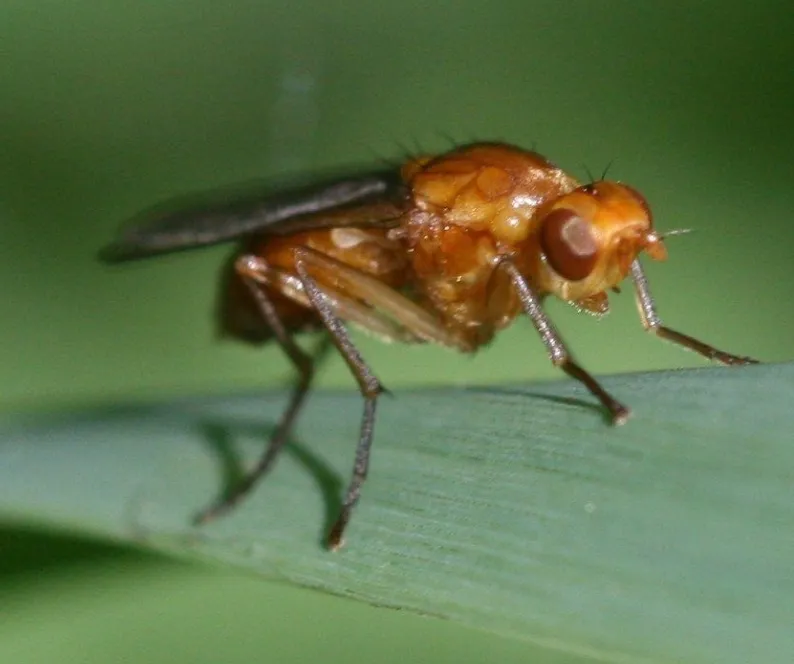
Carrot Rust Fly
Psila rosae
About Carrot Rust Fly
The Carrot Rust Fly (*Psila rosae*) is a major agricultural pest belonging to the family *Psilidae*. While the adult fly is a small, relatively harmless-looking insect with a shiny black body and yellow head, its larval stage is a devastating threat to crops in the *Apiaceae* (Umbelliferae) family. The pest is particularly notorious in temperate regions of Europe, North America, and New Zealand, where it can cause total crop loss in commercial and home gardens alike by tunneling deep into the edible taproots of host plants.
Identification of an infestation often begins above ground, where the foliage of infected plants may turn yellow, orange, or reddish-purple and eventually wilt or die back. Upon pulling the crop, the primary symptom is revealed: the taproot is crisscrossed with irregular, rusty-brown tunnels filled with larval excrement. These tunnels not only ruin the aesthetic and commercial value of the root but also create entry points for secondary pathogens like soft rot bacteria, leading to rapid decay during storage.
Rust fly larvae target commercial root vegetables and wild host weeds.
| Crop/Plant Type | Severity Rating | Impact Description |
|---|---|---|
| Carrots & Parsnips | Extreme (⭐⭐⭐) | Densely tunneled roots, secondary soft rot decay, complete loss of marketability |
| Celery & Parsley | High (⭐⭐) | Tunneling in lower stem stalks, root crown decay, and foliar stunting |
| Dill & Fennel | Medium (⭐) | Minor root feeding and crown spotting on garden herbs |
Management of *Psila rosae* requires an integrated approach. Because the larvae are protected deep within the soil and root tissue, foliar chemical treatments are often ineffective. Successful control strategies focus on exclusion—using fine insect mesh to prevent egg-laying—and cultural timing, such as sowing later in the season to avoid the first generation of adult flies. For root safety advice, see our Plant Disease Identifier Hub, or read related profiles like Onion Maggot, Cabbage Maggot, and Wireworm.
Taxonomy & Features
- Rusty Larval Tunnels: The most diagnostic feature is the presence of winding, rusty-brown tunnels throughout the taproot.
- Foliage Discoloration: Leaves of infected plants often turn yellow, bronze, or reddish-purple before wilting.
- Shiny Black Adults: Adult flies are approximately 6-8mm long with a shiny black body, yellow legs, and a distinct yellow head.
- Root Hair Destruction: Early-stage larvae consume fine root hairs, leading to stunted growth and nutrient deficiency.
- Low-Flying Habit: Adults typically fly no higher than 2-3 feet off the ground, often congregating near field borders or hedges.
- Secondary Soft Rot: Infested roots frequently develop secondary bacterial rot, causing them to become mushy and foul-smelling.
Seasonal Outbreak Calendar
Outbreak risk and activity timeline for Carrot Rust Fly based on seasonal climate patterns:
Names in Different Languages
Affected Plant Species
Vegetables & Crops
- Carrot (Nantes, Chantenay)
- Parsnip
- Celery
- Celeriac
- Parsley
- Fennel
Flowers & Ornamentals
- Queen Anne's Lace (Daucus carota)
- Ammi majus (Bishop's Weed)
- Dill Flowers
Fruits & Berries
- None
Prevention & Cure
Natural & Organic Methods
- Insect Mesh Barriers: Cover crops with ultra-fine mesh (0.6mm) immediately after sowing to prevent adult flies from reaching the soil to lay eggs.
- Companion Planting: Interplant carrots with strong-smelling crops like Onions, Leeks, or Garlic to mask the scent of the host plant from the flies.
- Neem Oil & Garlic Spray: Apply Neem oil or garlic-based repellents to the base of the plants to discourage egg-laying.
Chemical & Professional Control
- Soil Drenches: Apply approved soil-acting insecticides containing pyrethroids during the peak egg-laying period.
- Deltamethrin Foliar Spray: Targeted foliar applications during the peak flight of adult flies (monitored via yellow sticky traps).
- Seed Treatment: Use professional seed coatings treated with systemic insecticides to protect young seedlings.
Frequently Asked Questions
Can I eat carrots that have rust fly tunnels?
Yes, the carrots are safe to eat if you cut away the damaged sections. However, the tunnels are often bitter, and the root may be prone to rot, so they should be consumed quickly after harvest.
Why do my carrots have rust fly even though I used a cover?
Adult flies are very small and weak fliers, but they can crawl through gaps in the mesh or lay eggs if the mesh is touching the foliage. Ensure the cover is securely buried at the edges and supported by hoops.
Are there any carrot varieties resistant to rust fly?
Yes, some varieties like "Flyaway" and "Resistafly" have been bred to be less attractive to the fly or more tolerant of tunneling, though no variety is 100% immune.
Recommended diagnostics based on crop family and symptoms:
Remedy Disclaimer & Safety Notice
This disease guide is for educational screening purposes only. Pathogen behavior, severity, and host susceptibility can vary dramatically based on seed variety, weather conditions, and regional microclimates. Chemical pesticides and organic treatments are subject to strict regional environmental regulations and registration mandates. Please verify all chemical registrations and review manufacturer safety labels carefully with local certified agronomists or agricultural extension service offices before applying.