
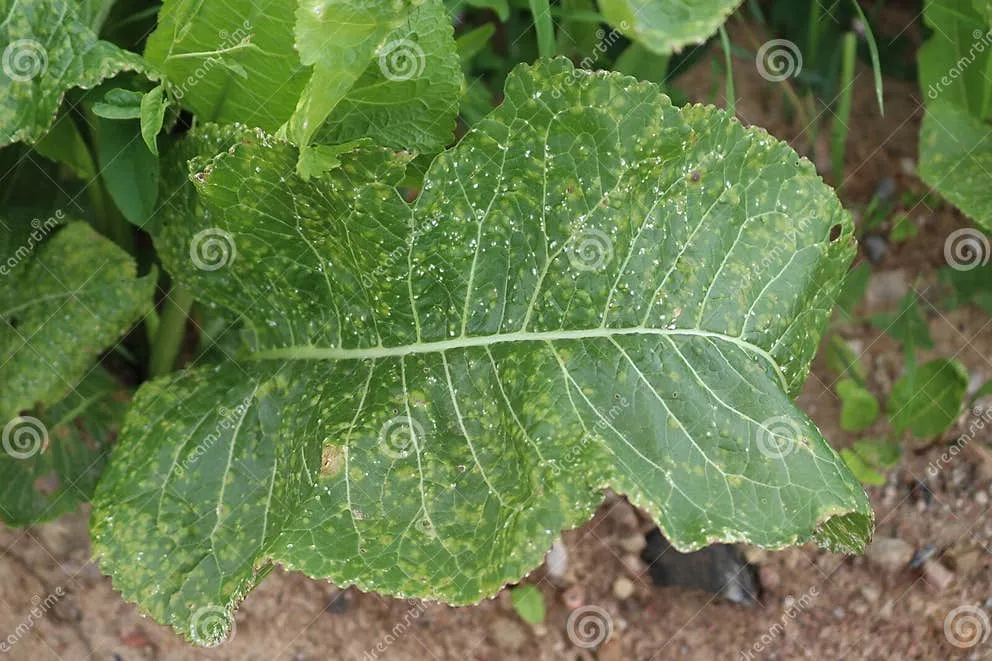
White Rust (Crucifer)
Albugo candida
About White Rust (Crucifer)
White Rust of crucifers, also known as white blister, is a destructive plant disease caused by the specialized Oomycete pathogen *Albugo candida* (not a true fungus, but a water mold). It attacks wild and cultivated cruciferous crops in the Brassicaceae family, including mustard, radish, cabbage, and broccoli. The pathogen behaves as an obligate biotrophic parasite, causing systemic swelling and leaf blister symptoms that reduce crop yields, stunt growth, and ruin the marketability of edible leafy greens.
Identifying white rust is simple due to the characteristic chalk-white blisters (pustules) that appear on the undersides of leaves. These pustules contain powdery masses of sporangia that break through the leaf skin. The upper leaf surface opposite the blisters displays yellow spots. In systemic infections, flower stalks and stems become grossly swollen, twisted, and deformed—a symptom commonly referred to as 'staghead'.
The oomycete targets cultivated brassica crops and wild mustards.
| Crop/Plant Type | Severity Rating | Impact Description |
|---|---|---|
| Mustard & Radish | Extreme (⭐⭐⭐) | Massive leaf blisters, foliar yellowing, staghead sterility in seed stalks, and total yield loss |
| Broccoli & Cauliflower | High (⭐⭐) | Swollen flower heads, distorted stems, and unmarketable heads |
| Cabbage & Kale | Medium (⭐) | Lower leaf spotting and minor cosmetic damage to outer wrapper leaves |
The oomycete overwinters as thick-walled survival spores (oospores) in crop residue or soil, or as active mycelium in volunteer weeds. During cool, wet spring weather (10°C to 18°C), oospores germinate to release swimming zoospores that spread via water splash and wind. Organic control focuses on crop rotation, planting resistant cultivars, and applying organic copper sprays. Chemical options include foliar sprays of metalaxyl or mefenoxam. For brassica disease guides, check our Plant Disease Identifier Hub, or explore similar threat profiles like Downy Mildew, Cabbage Maggot, and Clubroot.
Taxonomy & Features
- Chalky White Blisters: Circular, raised, chalky-white blisters (pustules) erupting on leaf undersides, releasing powdery spores.
- Staghead Deformity: Systemic infection causes flower stems and seed heads to swell, twist, and deform into sterile 'staghead' structures.
- Chlorotic Foliar Spots: Upper leaf surfaces develop bright yellow spots directly opposite the white blisters on the underside.
- Water Mold Biology: Pathogen is an oomycete (water mold) and not a true fungus, requiring water films for zoospores to swim.
- Cool Wet Weather Lover: Thrives in cool, wet environments with heavy dew, fog, or frequent spring rain splash.
- Metalaxyl Seed Treatment: Systemic oomycete fungicides like metalaxyl provide excellent protection when used as seed dressings.
Seasonal Outbreak Calendar
Outbreak risk and activity timeline for White Rust (Crucifer) based on seasonal climate patterns:
Names in Different Languages
Affected Plant Species
Vegetables & Crops
- Radish
- Broccoli
- Cabbage
- Mustard
- Horseradish
- Kale
- Brussels Sprouts
Flowers & Ornamentals
- Alyssum
- Wallflower
Fruits & Berries
- None
Prevention & Cure
Natural & Organic Methods
- Crop Rotation: Rotate cruciferous crops with non-brassica species for at least 3 years.
- Weed Control: Eradicate wild mustard and shepherd's purse weeds, which act as host reservoirs.
- Copper Sprays: Apply organic liquid copper hydroxide sprays at the first sign of foliage spotting.
Chemical & Professional Control
- Metalaxyl Treatment: Treat seeds with metalaxyl (Apron XL) to prevent early-season seedling infection.
- Mefenoxam Foliar: Apply systemic mefenoxam sprays to control active oomycete infections on high-value seed crops.
- Pyraclostrobin Barrier: Use strobilurin fungicides to prevent spore entry during humid spring days.
Frequently Asked Questions
Is white rust a true rust disease?
No. True rusts are caused by Basidiomycete fungi. White rust is caused by Albugo candida, which is an Oomycete (water mold), more closely related to downy mildews than true rusts.
What is the 'staghead' symptom in white rust?
Staghead is a severe, systemic symptom where the infection invades the flower stems. It causes them to swell, bend, and distort into a thick, antler-like shape that is sterile and produces no seeds.
Can I eat radish leaves that have white rust blisters?
While the oomycete is not toxic to humans, infected leaves are tough, bitter, and visually unmarketable. It is best to discard blistered foliage and only consume the roots.
Recommended diagnostics based on crop family and symptoms:
Remedy Disclaimer & Safety Notice
This disease guide is for educational screening purposes only. Pathogen behavior, severity, and host susceptibility can vary dramatically based on seed variety, weather conditions, and regional microclimates. Chemical pesticides and organic treatments are subject to strict regional environmental regulations and registration mandates. Please verify all chemical registrations and review manufacturer safety labels carefully with local certified agronomists or agricultural extension service offices before applying.