
Bacterial Spot
Xanthomonas euvesicatoria
About Bacterial Spot
Bacterial Spot is a highly destructive and economically devastating plant disease caused by several species of gram-negative bacteria in the genus *Xanthomonas* (most notably *Xanthomonas euvesicatoria* and *Xanthomonas perforans*). This pathogen primarily targets solanaceous crops, showing a strong, highly destructive affinity for tomatoes and peppers. Unlike bacterial speck, bacterial spot thrives in hot, wet, and highly humid climates. The bacteria enter host plants through stomata and wounding sites, multiplying within intercellular spaces to secrete enzymes that digest cell walls, leading to leaf dropping, fruit rot, and severe sunburned yields.
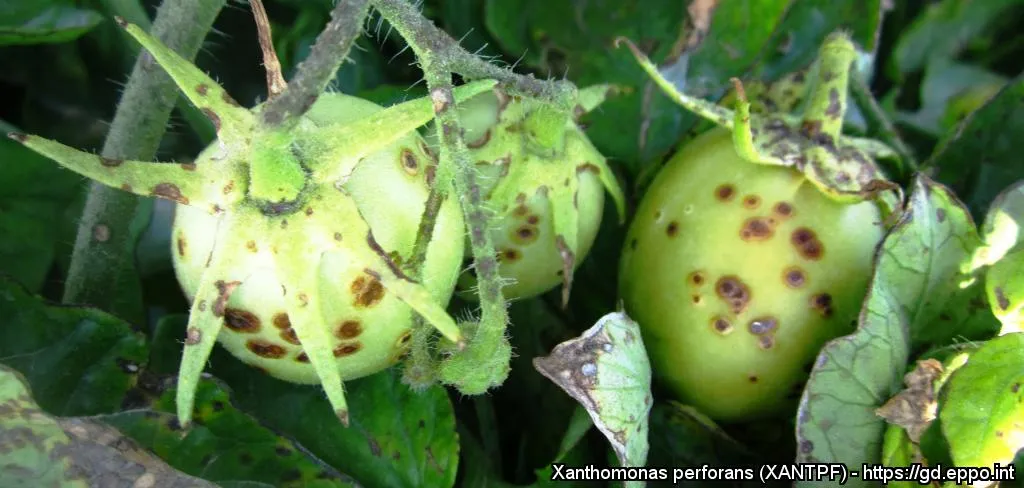
Identifying Bacterial Spot involves observing lesions on both leaves and fruit. On leaves, symptoms start as small, water-soaked circular spots. These spots quickly turn dark brown or black, becoming angular as they are bounded by leaf veins. When humidity is high, the spots ooze bacteria, appearing greasy. On fruit, symptoms are highly distinct: green tomatoes and peppers develop small, raised, brown, scab-like, or blister-like lesions that grow up to 6 mm. These scabs become sunken with cracked margins, opening the fruit to secondary fruit-rotting pathogens.
Xanthomonas bacteria thrive in warm temperatures (24°C to 35°C) coupled with high humidity and frequent rainfall. The pathogen overwinters on seed coats, weed hosts, and crop residues. It spreads through wind-blown splashing rain, overhead irrigation, and handling wet plants.
| Crop / Plant Type | Severity Rating | Lesion & Scab Symptoms |
|---|---|---|
| Sweet Bell Peppers | Extreme (⭐⭐⭐) | Severe leaf spotting, rapid defoliation, large scab-like fruit blisters |
| Beefsteak Tomatoes | Extreme (⭐⭐⭐) | Sunken brown fruit scabs, leaf drop, sunscalded fruit |
| Hot Chili Peppers | High (⭐⭐) | Defoliation, twig spotting, reduced yield weight |
Managing Bacterial Spot relies on clean seeds and protective bactericidal barriers. Grow crops in well-drained soil, space plants widely to improve airflow, and avoid overhead watering. For organic control, apply copper hydroxide sprays regularly during wet, warm weather, or spray with *Bacillus subtilis* to protect leaf surfaces. Crop rotation (avoiding solanaceous hosts for 2-3 years) is critical to starve soil-borne bacteria. Chemical options include tank-mixing copper with mancozeb to overcome resistant *Xanthomonas* strains. For advanced vegetable protection, browse our Plant Disease Identifier Hub, or read related files on Bacterial Speck, Early Blight, and Late Blight.
When summer temperatures rise above 24°C (75°F) and rain is frequent, tomato and pepper crops are highly susceptible to Bacterial Spot. Often confused with cool-season Bacterial Speck, Bacterial Spot is caused by *Xanthomonas* pathogens and leads to severe defoliation. A key diagnostic difference is that Bacterial Spot produces larger, raised scab-like blisters (up to 6 mm) on green fruit that later crack and sink, unlike the tiny, flat pinpoint specks produced by Bacterial Speck. The following comparison table outlines how to distinguish Bacterial Spot from other solanaceous bacterial threats:
| Feature / Trait | Bacterial Speck (Pseudomonas) | Bacterial Spot (Xanthomonas) |
|---|---|---|
| Primary Pathogen | Pseudomonas syringae pv. tomato | Xanthomonas euvesicatoria (and related spp.) |
| Optimal Temperature | Cool & Wet: 13°C to 24°C (55°F to 75°F) | Hot & Humid: 24°C to 35°C (75°F to 95°F) |
| Foliar Leaf Lesions | Tiny circular pinpoint spots surrounded by a bright, translucent neon-yellow halo. | Small water-soaked circular spots that quickly turn dark brown, greasy, and angular. |
| Fruit Scabbing | Pinpoint black speckles (<2 mm) on the skin, flat or slightly raised (sandpaper-like). | Raised brown scab-like blisters (up to 6 mm) that become sunken with cracked borders. |
| Crop Host Range | Highly host-specific to tomatoes; sweet and hot peppers are rarely affected. | Both tomato and pepper plants are highly susceptible to severe defoliation. |
Taxonomy & Features
- Water-Soaked Spots: Leaves develop small, greasy circular lesions that dry out and turn dark brown or black.
- Raised Scab Lesions: Immature green fruits develop rough, raised, brown scab-like lesions growing up to 6 mm.
- Sunken Fruit Margins: Mature scabs become dry, cracked, and sunken, introducing secondary soft rot fungi.
- Hot Climate Affinity: Thrives in hot, wet, and highly humid summer weather (24-35°C), unlike bacterial speck.
- Severe Leaf Dropping: High leaf spotting causes rapid leaf drop, exposing developing fruits to sunburn.
- Streptomycin Seed Guard: Sowing seeds pre-treated with agricultural streptomycin effectively breaks the overwintering seed cycle.
Seasonal Outbreak Calendar
Outbreak risk and activity timeline for Bacterial Spot based on seasonal climate patterns:
Names in Different Languages
Affected Plant Species
Vegetables & Crops
- Tomato (Highly susceptible)
- Bell Pepper (Highly susceptible)
- Chili Pepper
- Eggplant
- Tomatillo
Flowers & Ornamentals
- None documented
Fruits & Berries
- None documented
Prevention & Cure
Natural & Organic Methods
- Certified Seed Stocks: Always purchase certified pathogen-free seeds to prevent Xanthomonas entry.
- Airflow Pruning: Prune lower leaves and increase plant spacing to promote quick foliar drying.
- Copper Barrier: Spray organic-approved copper hydroxide before warm rainy spells begin.
- Crop Rotation: Practice a strict 3-year rotation away from tomatoes and peppers to break the soil cycle.
Chemical & Professional Control
- Copper-Mancozeb Mix: Spray a tank-mix of copper and mancozeb to combat copper-resistant bacterial strains.
- Famoxadone-Mancozeb: Use as a protective chemical barrier to inhibit spore and bacterial movement.
- Streptomycin Seed Treatment: Treat seeds with agricultural streptomycin to eradicate surface-borne bacteria.
Frequently Asked Questions
How does bacterial spot spread through a pepper garden?
Bacterial spot bacteria swim in water. When rain splashes or overhead irrigation drops hit infected leaves, millions of bacterial cells are carried in water droplets to healthy adjacent leaves. Handling wet foliage also spreads the bacteria instantly.
Can I save pepper seeds from a plant with bacterial spot?
No. Saving seeds from infected plants is highly discouraged because Xanthomonas bacteria overwinter directly on the seed coat. Sowing these seeds next season will guarantee a severe, early outbreak that can kill your seedlings.
Is there a variety of pepper resistant to bacterial spot?
Yes. Several bell pepper varieties (such as 'Playmaker', 'X3R Red Knight', and 'Aristotle') have been bred with specific genes that provide resistance to races 1, 2, 3, or more of Xanthomonas. Always check seed labels for resistance codes.
Recommended diagnostics based on crop family and symptoms:
Remedy Disclaimer & Safety Notice
This disease guide is for educational screening purposes only. Pathogen behavior, severity, and host susceptibility can vary dramatically based on seed variety, weather conditions, and regional microclimates. Chemical pesticides and organic treatments are subject to strict regional environmental regulations and registration mandates. Please verify all chemical registrations and review manufacturer safety labels carefully with local certified agronomists or agricultural extension service offices before applying.