How to Test Watermelon for Adulteration (Erythrosine, Nitrates, Ethrel)
⚡ Quick 60-Second Watermelon Dye & Chemical Verdict
Erythrosin Dye & Saccharin Injections: Unripe, pale watermelons are injected via syringe with toxic Erythrosin (Red 40) dye and artificial saccharin to simulate bright red flesh and intense sweetness.
Dab a clean white cotton pad or paper towel directly onto the red flesh. In naturally ripe watermelon, the cotton gets wet with zero pink/red stain. In dye-injected melon, cotton turns bright magenta.
Drop a piece of flesh into a glass of water. Natural watermelon floats with clear water. Chemically dyed melon immediately bleeds artificial red color into the liquid.
Examine the rind before buying. Look for tiny dark puncture holes or yellow crusty syringe marks, usually near the stem or base.
To learn more about food safety tests and home adulteration detection, read our guides on Grapes, Sapota (Chikoo), and Pumpkin (Kaddu).
Drop Watermelon photo here to test purity
or click to browse • Supports JPG, PNG, WEBP • Paste with Ctrl+V
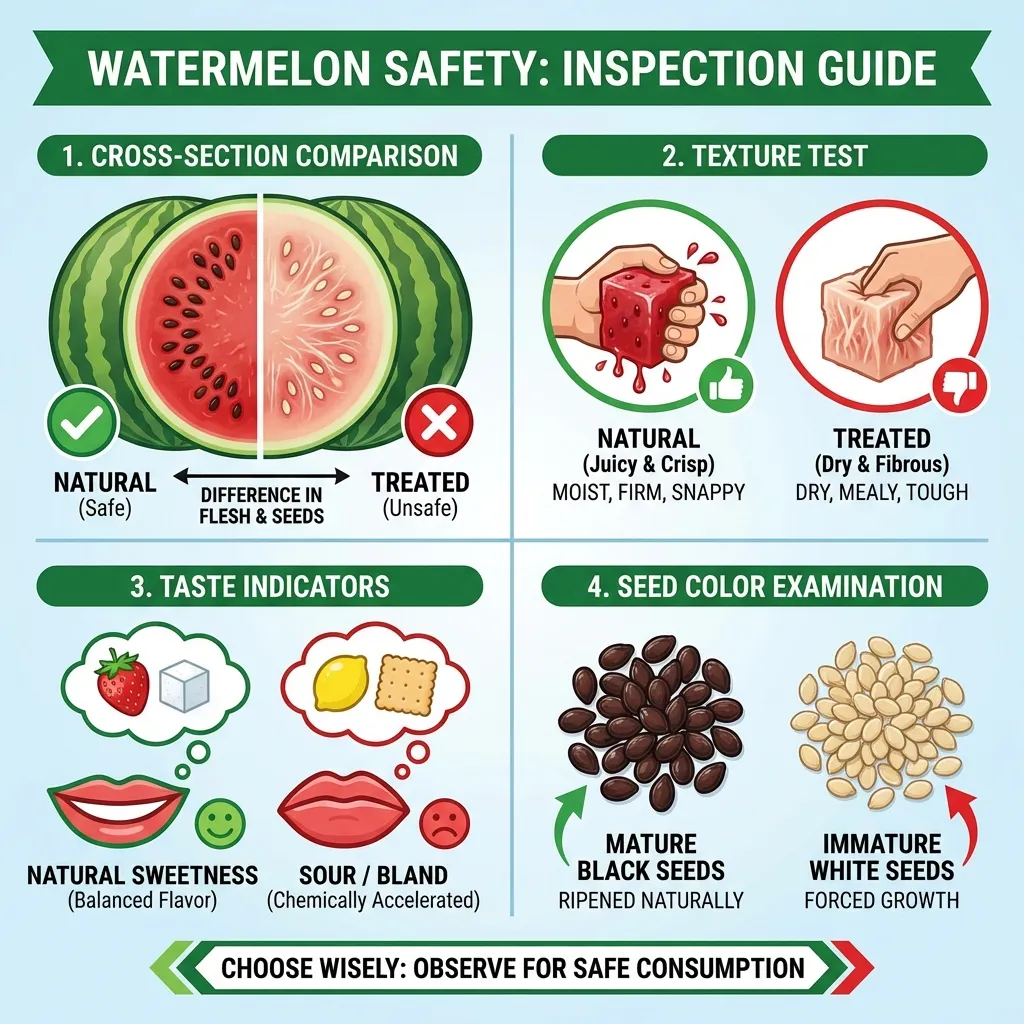
Inspection Guide
Click to enlarge
Watermelon Purity & Injection Audit
Watermelons are high-risk fruits often injected with red dyes (Erythrosine) to make the inside look vibrant and sugar/salt water or nitrates to increase weight.
1. The Cotton Rub Test (Internal):
Cut the watermelon and rub a small piece of cotton on the red pulp. If the cotton picks up a bright pink or red tint, the fruit has been artificially dyed. Natural watermelon juice is a light pinkish-red and does not stain cotton instantly.
2. The Water Test:
Take a small piece of the red pulp and drop it into a glass of water. If the water turns pink or red immediately, artificial color has been added. Natural color leaches very slowly and turns the water a faint, pale pink.
3. The Cavity Check:
Look for a hollow space or "cracks" in the center of the fruit (Heart Hollow). While some natural varieties have this, a large, dry-looking cavity combined with unnaturally vibrant red pulp is a sign of excessive chemical ripening (Ethrel).
4. The Surface Puncture Check:
Examine the skin for small, dark, or slightly rotten spots that look like needle punctures. These are the sites where dyes or nitrate solutions are often injected.
Quick Safety Tips
- Perform the pulp rub test - artificial dyes stain cotton instantly
- Check for rapid color release in water
- Avoid watermelons with suspicious puncture marks on the skin
- Select watermelons with a creamy-yellow field spot (indicates natural ripening)
Primary Chemical Concerns
Health Risks & Impacts
Multilingual Local Names
Common Storage Pests
Rind Borers
low riskSmall larvae that feed on the outer rind and can tunnel inside.
Detection
- Small holes on the skin
- Internal rot patches
Prevention
- Wash and dry the surface before storage
- Store in a cool place
Corrective Action: What to do?
Cut away affected rind; discard if rot has reached the center.
Regulatory Corner: FSSAI (Food Safety and Standards Authority of India) / Prevention of Food Adulteration Standards
Regulation: Food Safety and Standards (Food Products Standards) Regulations 2011, Clause 2.3.6 & Section 44: Prohibition on Synthetic Injections
Legal Limit:Erythrosine / Red 2G dye injections: 0.0% (Zero tolerance); Saccharin / artificial sweetener injections: 0.0% (Strictly prohibited); Carbofuran / pesticide MRL: Max 0.05 ppm; Foreign matter: Max 0.5%
Report Adulteration to FSSAI (Food Safety and Standards Authority of India) / Prevention of Food Adulteration Standards