
How to Test Grapes for Adulteration (Ethrel Spray, Ethephon, Chemical Ripening Agents)
⚡ Quick 60-Second Grapes Fungicide & Pesticide Verdict
Copper Sulfate & Systemic Pesticides: Grapes rank on the EWG Dirty Dozen list. Bunches are heavily sprayed with blue copper sulfate fungicides, organophosphates, and post-harvest sulfur pads.
Inspect the white powdery coating. Natural grape bloom is an organic waxy yeast layer that wipes off cleanly. Chemical spray leaves patchy, chalky, or bluish-green stains.
Soak grape bunches in 1 tsp salt + 1 tsp baking soda in cold water for 15 minutes, then rinse. This degrades up to 95% of acidic surface fungicides.
Pluck a single grape. Naturally fresh grapes cling firmly to green, supple stems. Chemically stressed or decaying grapes fall off easily with shriveled, brittle brown stems.
To learn more about food safety tests and home adulteration detection, read our guides on Plum and Watermelon.
Drop Grapes photo here to test purity
or click to browse • Supports JPG, PNG, WEBP • Paste with Ctrl+V
Inspection Guide
Click to enlarge
Grape Chemical Treatment Detection
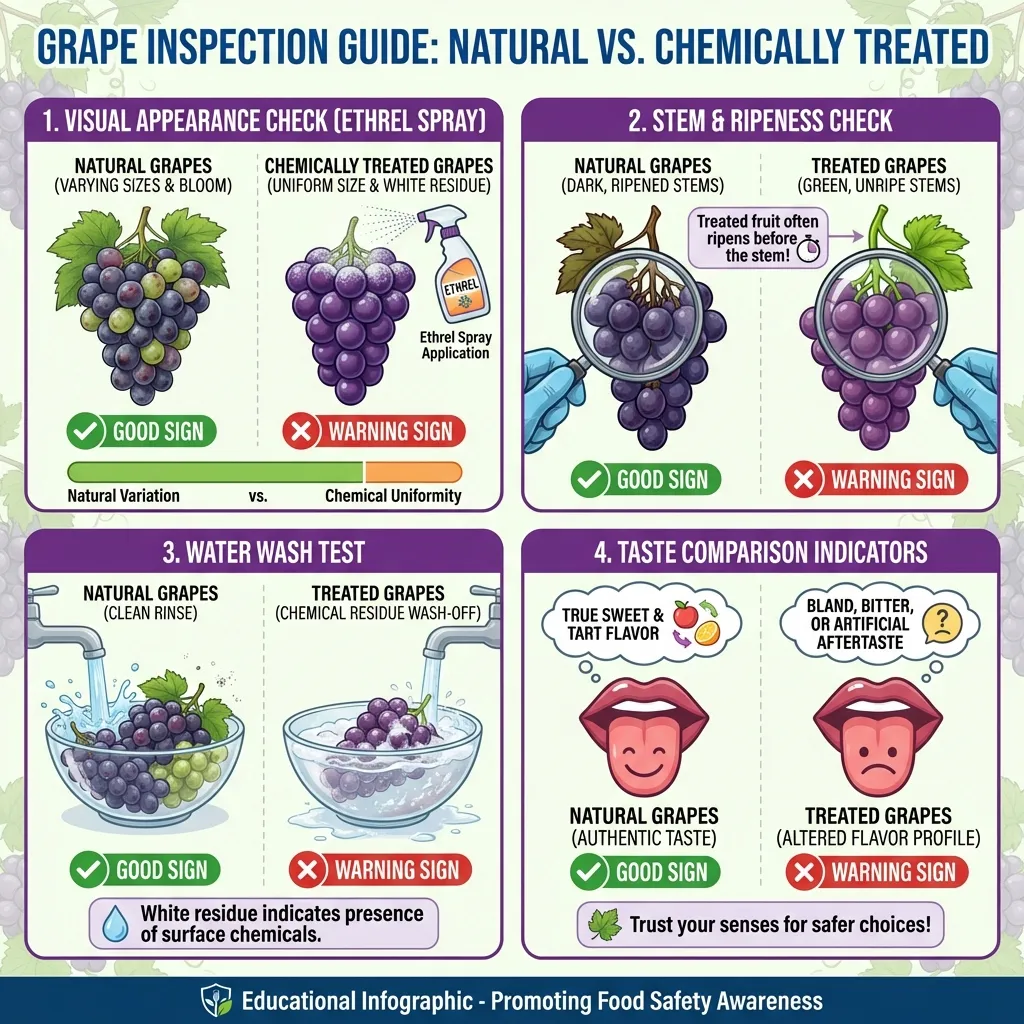
Grapes are commonly treated with Ethrel/Ethephon spray for uniform ripening and color enhancement.
1. The White Residue Check:
Examine the grape surface and stems carefully. If you see white powdery residue on the grapes or stems, it indicates Ethrel spray treatment. Natural grapes have a thin natural bloom (waxy coating) but no white powder.
2. The Stem Color Test:
This is a critical indicator. Natural grapes ripen gradually - when the fruit is ripe, the stems should also turn brown/dark. If the grapes are fully ripe (dark purple/red) but the stems are still bright green, it's a clear sign of chemical treatment.
3. The Wash Test:
Wash the grapes under water and observe the runoff. If white or yellowish residue washes off easily, creating a cloudy wash water, it indicates chemical coating. Natural grapes' bloom doesn't wash off this easily.
4. The Size and Shape Uniformity:
Chemically treated grapes often have abnormally uniform size - every grape looks identical. Natural grape bunches have size variations with some smaller and some larger grapes.
5. The Taste Test:
Natural ripe grapes are sweet and tart with authentic grape flavor. Chemically ripened grapes often taste bland, bitter, or have an artificial aftertaste despite looking ripe.
Quick Safety Tips
- Check for white powdery residue on surface
- Green stems with ripe fruit = chemical treatment
- Always wash thoroughly under running water
- Natural grapes have size variations in bunch
Primary Chemical Concerns
Health Risks & Impacts
Multilingual Local Names
Common Storage Pests
Fruit Flies
low riskSmall insects attracted to the sugars of ripe grapes.
Detection
- Small hovering insects
- Soft, leaking berries in the bunch
Prevention
- Store in the refrigerator
- Keep dry
Corrective Action: What to do?
Remove and discard leaking or fermented berries to prevent the whole bunch from spoiling.
Regulatory Corner: FSSAI (Food Safety and Standards Authority of India) / APEDA (GrapeNet Guidelines) / Codex
Regulation: Food Safety and Standards (Contaminants, Toxins and Residues) Regulations 2011, Schedule 2 & APEDA ResMon Standards
Legal Limit:Gibberellic acid (growth regulator): Max 1.0 ppm; Forchlorfenuron (CPPU): Max 0.01 ppm; Copper sulfate fungicide residue: Max 5.0 ppm; Sulfur dioxide (SO2) pad residue: Max 10.0 ppm
Report Adulteration to FSSAI (Food Safety and Standards Authority of India) / APEDA (GrapeNet Guidelines) / Codex