How to Test Tapioca for Adulteration (Cyanogenic Glycosides, Post-harvest Rot, Mold Growth)
⚡ Quick 60-Second Sago / Tapioca (Sabudana) Verdict
Chemical Bleaching & Optical Whiteners: Tapioca sago pearls (sabudana) are frequently treated with harsh industrial chemicals, including Sulfuric Acid, Bleaching Powder (Sodium Hypochlorite), and toxic optical fluorescent whiteners (Tinopal) to give dark cassava starch an artificial pure pearl-white luster.
Heat a few dry pearls on a clean metal spoon over flame. Pure natural sago swells like popcorn and turns golden-brown without harsh chemical smoke. Chemically bleached sago turns black instantly and emits pungent acrid sulfur fumes.
Soak pearls in cold water for 1 hour. Pure sabudana swells into soft, translucent, resilient pearls that mash smoothly between fingers. Starch/chalk-adulterated sago disintegrates into chalky sludge.
Examine pearls under UV light / direct sunlight. Pure sago has a natural off-white, slightly creamy hue. Fluorescent neon-blue glow indicates toxic optical brightening dyes.
Drop Tapioca (Cassava) photo here to test purity
or click to browse • Supports JPG, PNG, WEBP • Paste with Ctrl+V
Inspection Guide
Click to enlarge
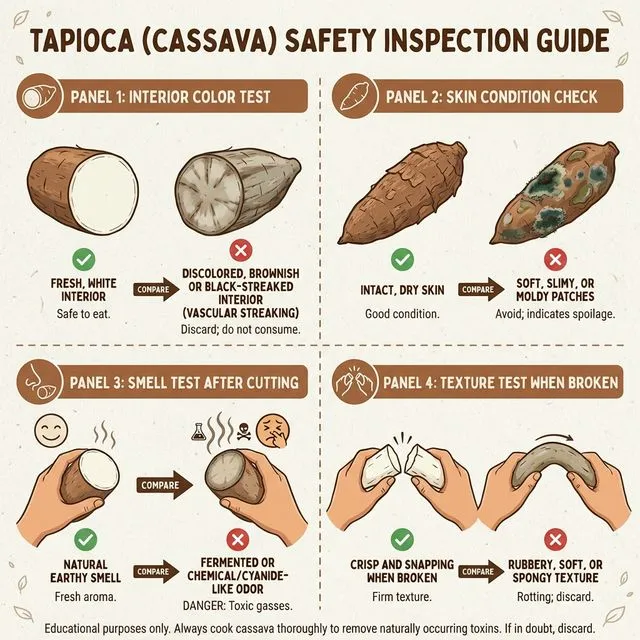
Tapioca (Cassava) Safety Inspection
Tapioca roots must be fresh. Old or bruised roots develop vascular streaking and can increase cyanide precursor levels.
1. The Interior Cut Check:
Cut the root. The flesh should be pure, brilliant white. If you see black or bluish streaks (vascular streaking), it means the root is spoiled and potentially toxic.
2. The Smell Test:
Fresh tapioca has a clean, earthy smell. Any fermented, alcoholic, or sharp chemical odor is a sign of spoilage and should be discarded immediately.
3. Surface Firmness:
The root should be hard and dry. If the skin feels soft, slimy, or shows mold growth, the internal quality is compromised.
4. Storage check:
Tapioca spoils very fast (2-3 days after harvest). Don't buy roots that look like they've been sitting in the sun or have multiple bruises/breaks.
Quick Safety Tips
- Only buy roots with pure white interior
- Discard roots with black/blue streaks
- Always peel and boil thoroughly (discard water)
- Fresh roots are hard; soft ones are spoiled
Primary Chemical Concerns
Health Risks & Impacts
Multilingual Local Names
Common Storage Pests
Cassava Mealybug (Phenacoccus manihoti)
medium riskPests that can contaminate the root surface with sticky honeydew and mold.
Detection
- White, cottony clusters on the skin
- Sticky residue (honeydew)
- Black sooty mold on the exterior
Prevention
- Scrub the roots thoroughly before peeling
- Avoid buying roots with visible white patches
- Store in a dry area
Corrective Action: What to do?
Surface mealybugs can be removed by deep peeling and washing. However, if the root feels soft or shows mold, **discard it**.
Regulatory Corner: FSSAI (Food Safety and Standards Authority of India)
Regulation: Food Safety and Standards (Food Products Standards) Regulations 2011, Clause 2.4.15: Sago (Sabudana) / Tapioca Sago Standards
Legal Limit:Moisture: Max 12.0%; Total ash: Max 0.4%; Acid insoluble ash: Max 0.1%; Synthetic optical fluorescent whiteners (Tinopal) & Free Sulfuric Acid: 0.0% (Strictly Prohibited)
Report Adulteration to FSSAI (Food Safety and Standards Authority of India)