How to Test Pomegranate for Adulteration (Rhodamine B, Amaranth, Pesticide)
⚡ Quick 60-Second Pomegranate Dye & Gassing Verdict
Rhodamine B Dye Injection & Ethylene Gassing: Pale arils in premature fruit are injected with synthetic red dyes (Rhodamine B / Red 40) or exposed to industrial ripening gases to simulate deep red ruby sweetness.
Crush 2–3 red arils onto a white paper towel. Pure pomegranate juice creates a natural brownish-red or purplish stain. Artificially dyed arils leave a fluorescent pink or bright neon-magenta stain.
Inspect the calyx crown and skin for tiny black puncture marks or crusty residue, which indicate illegal dye syringe injections.
Weigh the fruit in your palm. A tree-ripened pomegranate feels surprisingly heavy for its size, packed with sweet juice arils. Artificially gassed premature fruit feels lightweight and woody.
To learn more about food safety tests and home adulteration detection, read our guides on Apple and Guava.
Drop Pomegranate photo here to test purity
or click to browse • Supports JPG, PNG, WEBP • Paste with Ctrl+V
Inspection Guide
Click to enlarge
Pomegranate Purity & Dye Audit
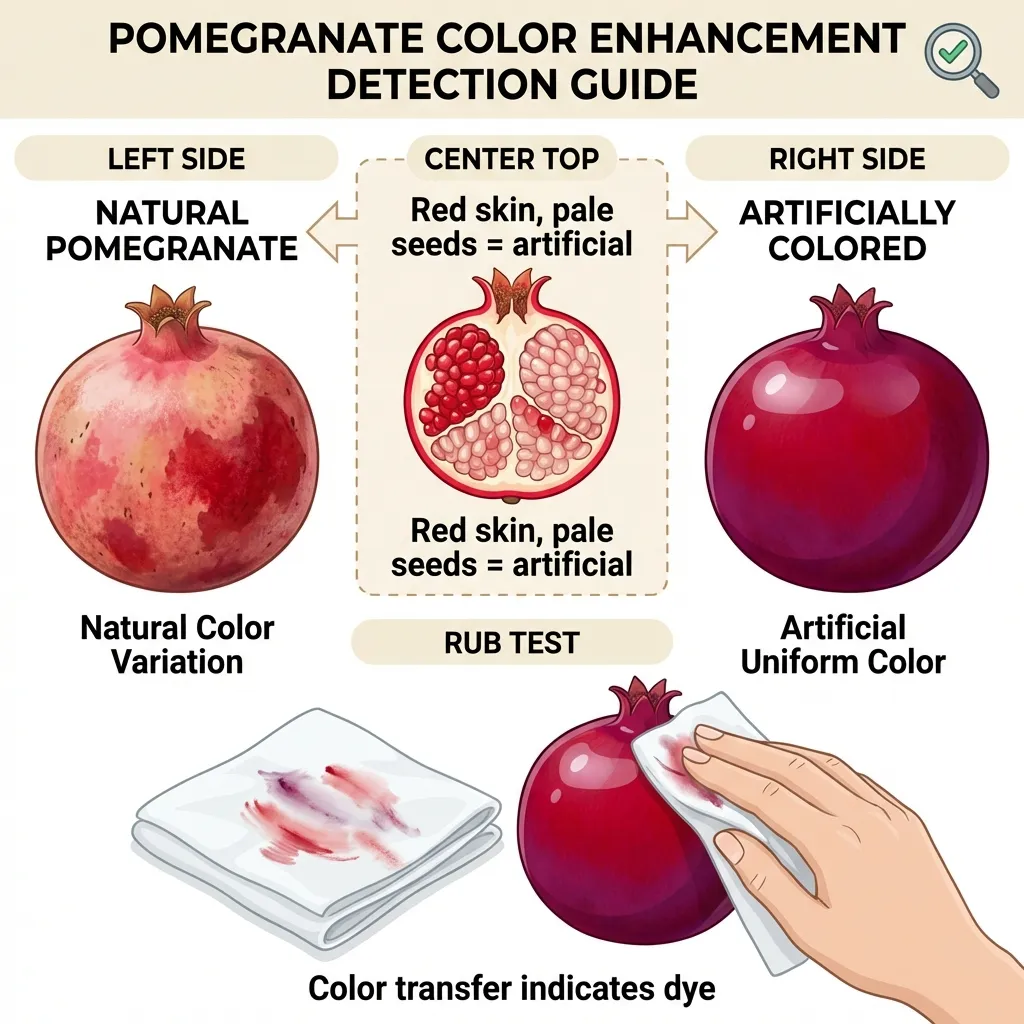
Pomegranates are often dyed with Rhodamine B to make the skin look more vibrant, or the juice is adulterated with synthetic red dyes to mimic high-quality "Ruby" varieties.
1. The Cotton Rub Test (Skin Dye):
Rub a wet cotton ball on the pomegranate skin. If it picks up a bright pink or red color, the fruit has been externally dyed to look fresher.
2. The Juice Solubility Test:
Natural pomegranate juice has a complex, deep ruby-red color. If you drop a bit of juice into a glass of water and it dissolves into a "neon" or "electric" pink instantly without settling, suspect artificial coloring.
3. The Seed Shell Texture:
Open the fruit and examine the arils (seeds). If the red color is on the outer surface of the arils but they look pale or white inside when crushed, it may be a lower-quality variety dyed to look like the premium "Anar."
4. The Stickiness Check:
Natural pomegranate juice contains sugars that feel slightly sticky when dried. If the "juice" feels "watery" and leaves a permanent stain on fabric that is very hard to remove with just water, it likely contains industrial dyes.
Quick Safety Tips
- Perform the skin rub test for Rhodamine B
- Avoid pomegranate juice that looks "neon" pink
- Check if the juice leaves an unusually stubborn stain
- Select fruits that feel heavy for their size - indicates juiciness
Primary Chemical Concerns
Health Risks & Impacts
Multilingual Local Names
Common Storage Pests
Pomegranate Butterfly (Deudorix isocrates)
medium riskCaterpillars that bore into the fruit and eat the seeds.
Detection
- Small entry holes on the skin with dark residue
- Internal rot around the core
Prevention
- Inspect for skin punctures before buying
- Store in a cool, ventilated area
Corrective Action: What to do?
Discard infested fruit as the internal rot can contain harmful fungi.
Ash Weevil (Myllocerus subfasciatus)
medium riskSmall grey snout beetles that chew scalloped leaf margins and shelter under the green fruit calyx caps in harvest crates.
Detection
- Adult ash-grey weevils hiding beneath the green calyx cap
- Small feeding wounds and surface rot on the fruit shoulder
Prevention
- Inspect and wipe calyx caps before storing in mesh crates
- Store produce in cool, well-ventilated areas (10°C to 12°C)
Corrective Action: What to do?
Remove and discard calyx; trim any surface feeding marks before cooking.
Regulatory Corner: FSSAI (Food Safety and Standards Authority of India) / Codex Stan 310-2013
Regulation: Food Safety and Standards (Food Products Standards) Regulations 2011, Clause 2.3.6: Fresh Fruits & Codex Fresh Fruit Standards
Legal Limit:Non-permitted artificial dyes (Rhodamine B, Erythrosine): 0.0% (Strict zero tolerance); Ethephon ripening residue: Max 0.5 ppm; Foreign matter: Max 0.5%
Report Adulteration to FSSAI (Food Safety and Standards Authority of India) / Codex Stan 310-2013