How to Test Rajma for Adulteration (Congo Red, Rhodamine B, Mineral Oil)
⚡ Quick 60-Second Rajma Purity & Dye Verdict
Artificial Coal-Tar Dyeing & Toxic Phytohaemagglutinin: Faded, stale, or low-grade white beans are artificially dyed with Rhodamine B or coal-tar red dyes to mimic premium dark red Kashmiri rajma.
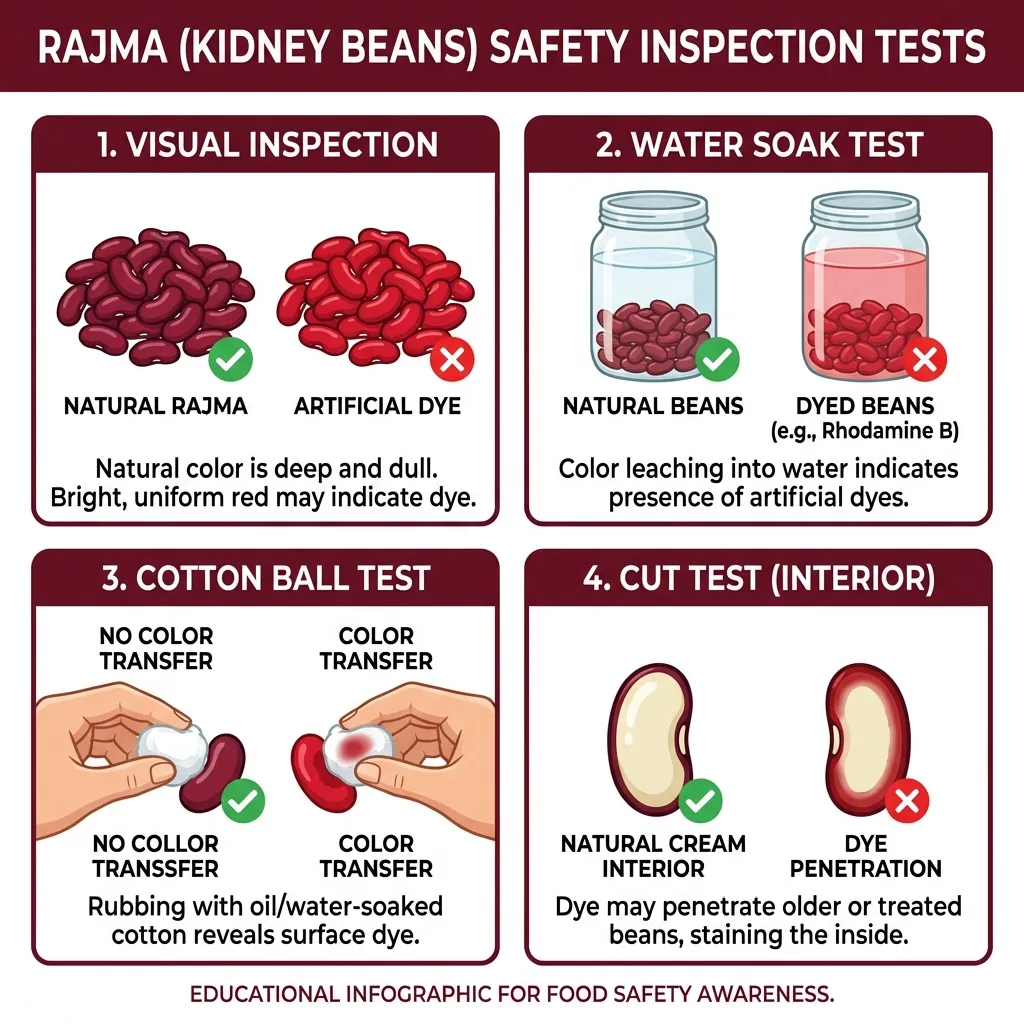
Soak 2 tbsp rajma in a glass of cold water for 15 minutes. Pure kidney beans retain their red pigment inside the seed coat. Artificially dyed rajma releases bright red or magenta dye into the water.
Moisten a white cotton pad in rubbing alcohol and rub firmly on the bean skin. If the pad stains bright red or pink, non-permitted industrial dyes are confirmed.
Kidney beans naturally contain high levels of toxic lectin (phytohaemagglutinin). Always soak overnight and boil vigorously for at least 10 minutes; slow-cooking at low heat increases lectin toxicity five-fold.
To learn more about food safety tests and home adulteration detection, read our guides on Masoor Dal (Red Lentils) and Ragi (Finger Millet).
Drop Rajma (Kidney Beans) photo here to test purity
or click to browse • Supports JPG, PNG, WEBP • Paste with Ctrl+V
Inspection Guide
Click to enlarge
Rajma Purity & Dye Audit
Rajma (kidney beans) are often treated with artificial red dyes like Congo Red or Rhodamine B to look uniformly dark and premium, masking the natural variations of the beans.
1. The Cotton Rub Test:
Rub a handful of dry rajma seeds with a wet cotton ball. If the cotton picks up a red or pink tint, artificial dye has been applied. Natural rajma color does not rub off easily.
2. The Water Soak (Color Bleed):
Soak Rajma in warm water for 15 minutes. If the water turns bright red or pink immediately, suspect artificial coloring. Natural rajma color leaches very slowly and turns the water a pale, brownish-red.
3. The Surface Shine:
Examine the seeds under bright light. Pure rajma has a natural, slightly dull matte finish. If the seeds look mirror-glossy and feel "slippery" or "greasy," they have been coated with mineral oil or industrial wax.
4. The Grit and Stone Check:
Spread the beans on a white plate. Look for small, matching-colored stones or greyish grit. Some retailers add stone dust or small pebbles to increase the weight of the batch.
Quick Safety Tips
- Perform the cotton rub test for red dye detection
- Avoid rajma that releases bright red color instantly into water
- Choose "Unpolished" rajma to avoid mineral oil and wax treatments
- Wash thoroughly at least 3-4 times to remove surface dust and chemical residues
Primary Chemical Concerns
Health Risks & Impacts
Multilingual Local Names
Common Storage Pests
Bean Weevil
medium riskSmall beetles that lay eggs on the beans and the larvae feed internally.
Detection
- Small round holes in the beans
- Presence of tiny larvae inside
Prevention
- Store in an airtight glass jar
- Keep in a cool, dry place
Corrective Action: What to do?
Discard heavily infested samples; sun-drying can kill early-stage larvae.
Regulatory Corner: FSSAI (Food Safety and Standards Authority of India) / US FDA
Regulation: Food Safety and Standards (Food Products Standards) Regulations 2011, Clause 2.4.6: Pulses & FDA Compliance Policy Guide Sec. 585.450
Legal Limit:Moisture: Max 12.0%; Total ash: Max 5.0%; Non-permitted synthetic red coal-tar dyes (Rhodamine B): 0.0% (Zero tolerance); Damaged or insect-bored beans: Max 3.0%
Report Adulteration to FSSAI (Food Safety and Standards Authority of India) / US FDA