How to Test Groundnut for Adulteration (Aflatoxin, Synthetic Red/Brown Dye, Mineral Oil)
⚡ Quick 60-Second Groundnut (Peanuts in Shell) Purity & Aflatoxin Verdict
Red Ochre (Geru) Shell Dyeing & Aflatoxin Mold: Pods are colored with toxic red earth dyes to mimic prized fresh harvest soils, while internal kernels can harbor deadly carcinogenic Aflatoxin B1 mold.
Wipe an uncracked groundnut pod with a damp white paper towel. Natural clay soil clings as dull grey/brown silt. An instant bright orange-red or terracotta dye transfer indicates artificial red ochre / geru dyeing.
Crack open 10 pods. Kernels with dark greenish-yellow powdery mold, wrinkled black interiors, or bitter paint-like flavors indicate Aspergillus flavus infestation emitting toxic aflatoxins.
Drop shelled kernels into water. Dense, plump, high-oil peanuts sink immediately. Shrivelled, hollow, or insect-damaged nuts float to the surface and should be discarded.
To learn more about food safety tests and home adulteration detection, read our guides on Tea Leaves (Chai Patti) and Masoor Dal (Red Lentils).
Drop Groundnut (Peanuts) photo here to test purity
or click to browse • Supports JPG, PNG, WEBP • Paste with Ctrl+V
Inspection Guide
Click to enlarge
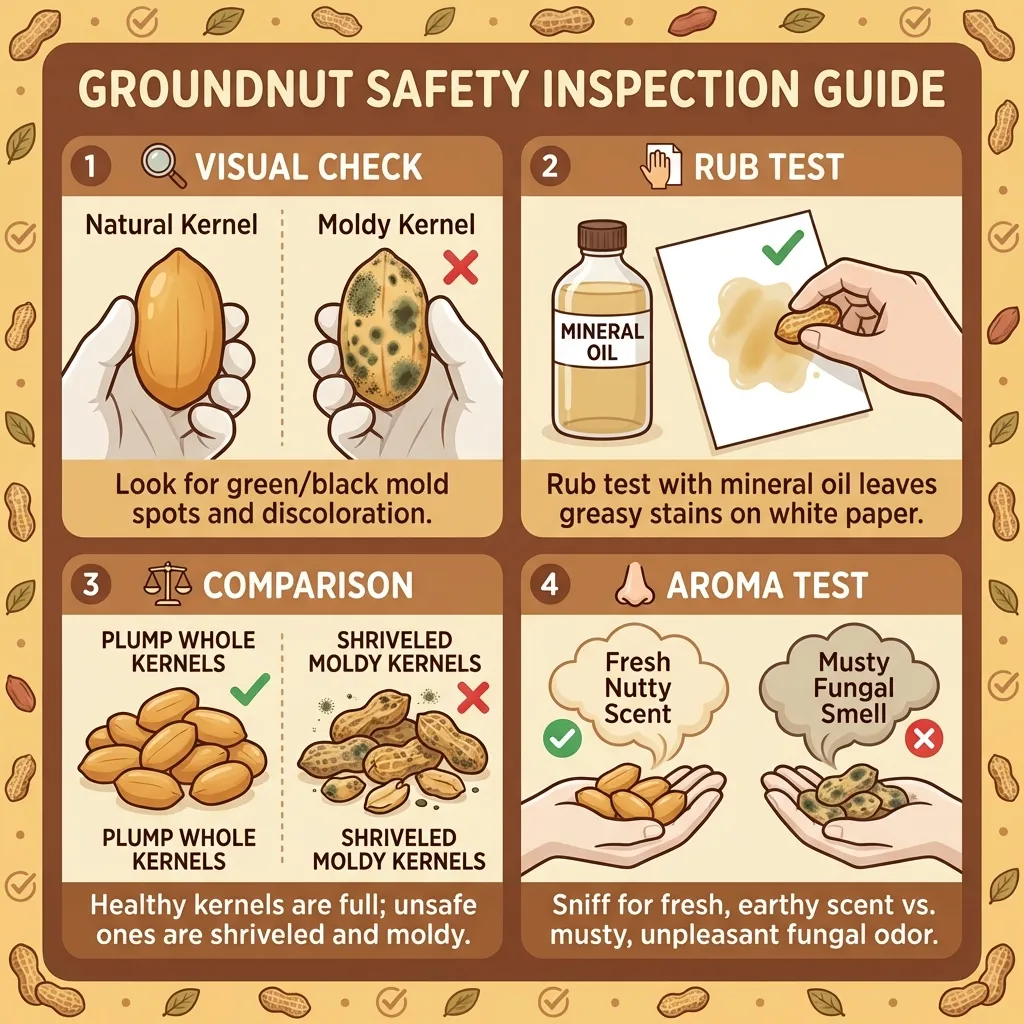
Peanut Safety & Aflatoxin Detection
Peanuts are prone to Aflatoxin, a powerful toxin produced by mold, especially in humid storage conditions. They are also sometimes dyed to look fresh.
1. The Visual "Shrivel" Check (Mold):
Inspect the peanuts closely. Avoid nuts that look shrivelled, have a greenish or yellowish powdery growth, or show black/dark spots. These are clear signs of Aspergillus mold.
2. The Bitter Taste Test:
Taste a small piece. If the peanut tastes bitter, soapy, or "off," spit it out immediately and wash your mouth. Bitterness is a primary indicator of high aflatoxin levels.
3. The Cotton Rub Test (Dyes):
Rub a few peanuts with a piece of wet cotton wool. If the cotton turns red or brown, the peanuts have been artificially dyed to look like the "red-skin" premium variety.
4. The Water Soak Test:
Drop peanuts in water. If the water turns reddish or cloudy immediately, industrial dyes or mineral oil polish have been used.
Quick Safety Tips
- CRITICAL: Discard peanuts that taste bitter or soapy
- Avoid nuts with visible yellowish-green powdery mold
- Rub with wet cotton to check for artificial red dyes
- Store in a cool, dry place to prevent mold growth
Primary Chemical Concerns
Health Risks & Impacts
Multilingual Local Names
Common Storage Pests
Indian Meal Moth (Plodia interpunctella)
high riskSmall moths whose larvae spin silk webbing and contaminate the nuts.
Detection
- Fine silk webbing between peanuts
- Small cream-colored larvae
- Moths flying near the container
Prevention
- Store in airtight glass or metal containers
- Avoid plastic bags for long-term storage
Corrective Action: What to do?
If you see webbing or larvae, the peanuts are heavily contaminated. **Discard them**, as the larvae leave behind waste that can promote fungal growth.
Regulatory Corner: FSSAI (Food Safety and Standards Authority of India) / US FDA (Compliance Policy Guide Sec. 570.375) / Codex Stan 200-1995
Regulation: Food Safety and Standards (Food Products Standards) Regulations 2011, Clause 2.4.6 & FDA CPG Sec. 570.375
Legal Limit:Total Aflatoxins (B1+B2+G1+G2): Max 15.0 ppb (FSSAI) / 20.0 ppb (FDA); Aflatoxin B1: Max 10.0 ppb; Shell dyes / mineral pigments: Prohibited (0.0 ppm); Moisture: Max 7.0%
Report Adulteration to FSSAI (Food Safety and Standards Authority of India) / US FDA (Compliance Policy Guide Sec. 570.375) / Codex Stan 200-1995