How to Test Oats for Adulteration (Glyphosate, Starch, Chalk Powder)
⚡ Quick 60-Second Oats Purity & Glyphosate Residue Verdict
Glyphosate Pre-Harvest Desiccant & Stale Rancidity: Conventional rolled oats frequently contain high residues of herbicide Glyphosate (Roundup) sprayed before harvest, and develop toxic free fatty acids when stored improperly.
Boil 2 tbsp rolled oats in 100ml water for 2 minutes. Pure oats create a wholesome, creamy porridge with a sweet, nutty grain aroma. A sour, musty, or chemical petrol odor indicates oxidized lipids or chemical contamination.
Cool the boiled porridge and add 2 drops dilute iodine. Oats naturally contain starch and turn blue, but an instant pitch-black gummy mass indicates foreign tapioca or potato starch filler.
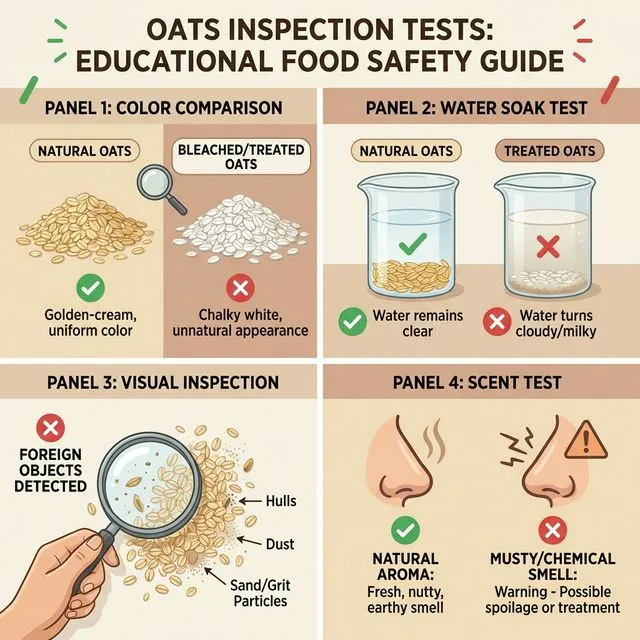
Spread dry oats on white paper. Premium oats consist of clean, uniform flattened flakes. Excessive fibrous hulls, chaff, insect webbing, or powdery dust (>2%) indicates substandard processing.
To learn more about food safety tests and home adulteration detection, read our guides on Chia Seeds and Mustard Oil.
Drop Oats photo here to test purity
or click to browse • Supports JPG, PNG, WEBP • Paste with Ctrl+V
Inspection Guide
Click to enlarge
Oats Purity & Residue Audit
Oats are often contaminated with Glyphosate (used as a desiccant during harvest) or adulterated with starch and chalk to increase weight in cheaper brands.
1. The Water Float Test:
Add a spoonful of oats to a glass of water and stir. Pure rolled oats will absorb water and eventually sink or remain suspended. If a white, milky residue instantly clouds the water, suspect chalk powder or starch fillers.
2. The Texture Rub:
Rub dry oats between your palms. If they leave a white, powdery residue on your skin that doesn't feel like oat flour (grainy), it could be chalk or talc.
3. The Smell Check:
Natural oats have a fresh, nutty, or slightly sweet aroma. A musty, "chemical," or stale smell indicates old stock or the presence of mycotoxins (mold).
4. The Iodine Test (For Starch/Chalk):
Add a drop of iodine solution to a mixture of oats and water. If it turns dark blue or black, it indicates excessive added starch or other grain fillers. Pure oats will show a much milder reaction.
Quick Safety Tips
- Check for white powdery residue (Chalk/Talc)
- Observe water clarity - milky water indicates fillers
- Avoid oats with a musty or medicinal odor
- Select "Organic" or "Glyphosate-Free" certified oats when possible
Primary Chemical Concerns
Health Risks & Impacts
Multilingual Local Names
Common Storage Pests
Indian Meal Moth (Plodia interpunctella)
medium riskCommon pests that infest stored grains and cereals.
Detection
- Webbing on the surface of the oats
- Small white larvae or cocoons
Prevention
- Store in airtight glass or metal containers
- Keep in a cool, dry pantry
Corrective Action: What to do?
Discard infested oats; vacuum and clean the storage area thoroughly.
Regulatory Corner: FSSAI (Food Safety and Standards Authority of India) / US FDA / EPA / Codex Stan 162-1987
Regulation: Food Safety and Standards (Food Products Standards) Regulations 2011, Clause 2.4.15: Oats & EPA 40 CFR 180.364
Legal Limit:Glyphosate tolerance: Max 30.0 ppm (EPA) / Codex MRL limits; Moisture: Max 12.0% by weight; Free fatty acids: Max 5.0% in fat; Ochratoxin A: Max 3.0 ppb; Foreign matter: Max 0.5%
Report Adulteration to FSSAI (Food Safety and Standards Authority of India) / US FDA / EPA / Codex Stan 162-1987