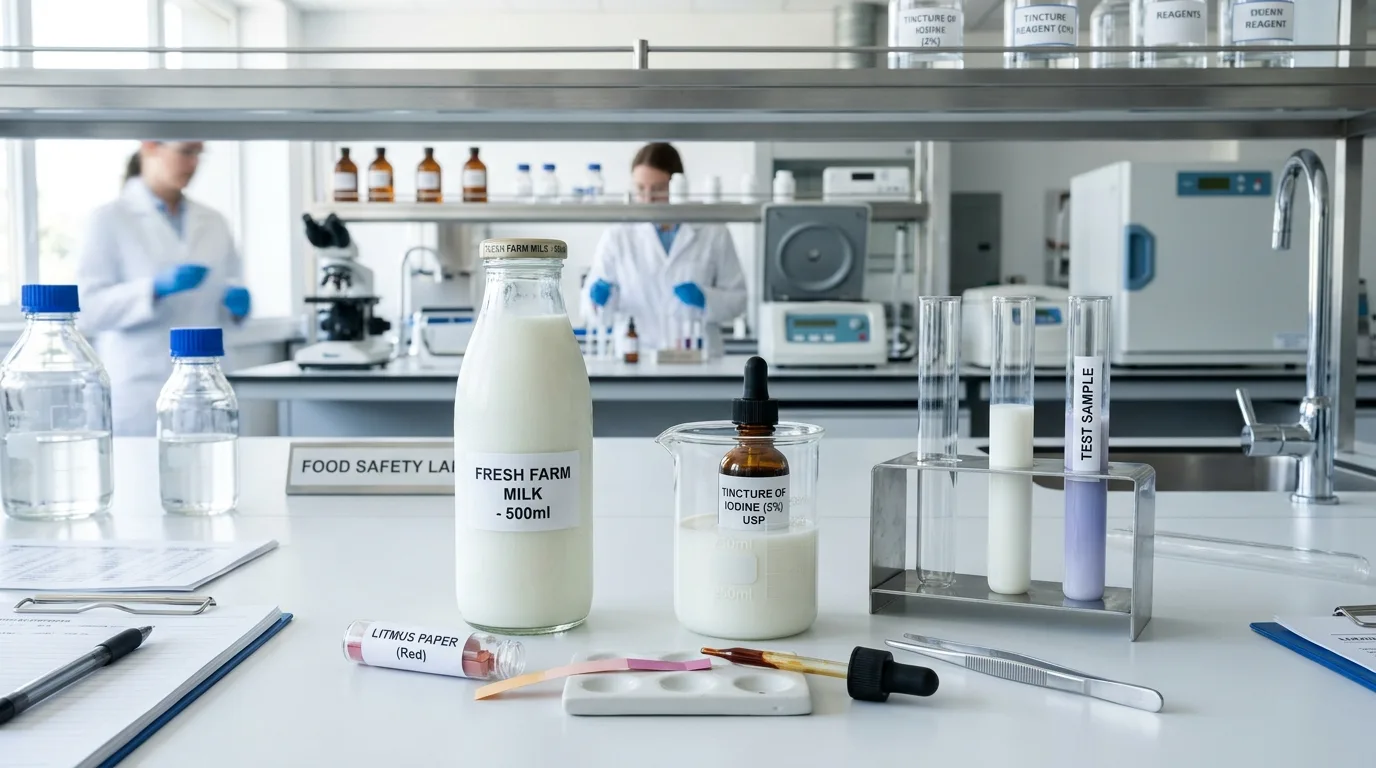
Pruebas de Pureza del Paneer: Detecta Almidón y Leche Sintética
⚡ Veredicto Rápido de 60 Segundos: Pureza del Paneer (Queso Fresco)
Alerta de Adulteración Láctea: El paneer o queso artesanal a menudo se adultera con almidón, harina refinada, aceite de palma y leche sintética para aumentar el rendimiento.
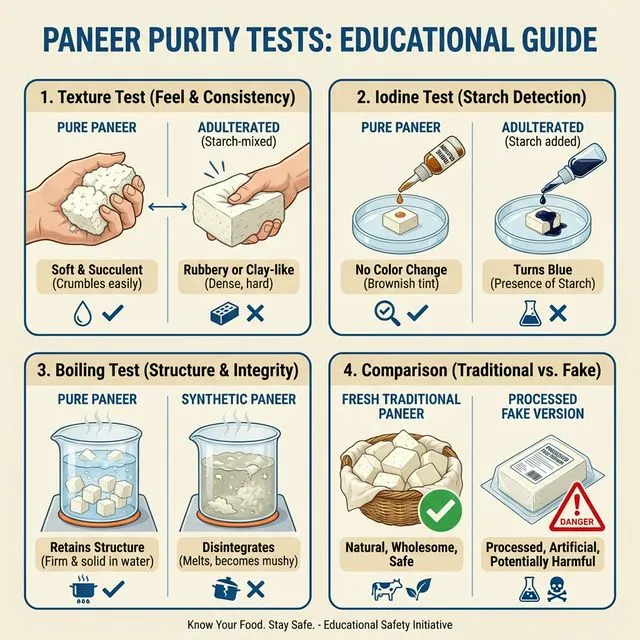
Hierva un cubo de paneer en agua, enfríe y agregue 2 gotas de yodo. Color azul-negro = almidón o harina agregada. Color amarillo/ámbar = leche pura.
Aplaste un trozo entre los dedos. El paneer genuino se desmorona de forma cremosa y suave. El paneer sintético se siente elástico, gomoso o chicloso.
Al dorar un cubo en la sartén, el paneer puro se mantiene tierno; el paneer adulterado se vuelve chicloso como goma o se deshace en grasa.
Drop Paneer (requesón) photo here to test purity
or click to browse • Supports JPG, PNG, WEBP • Paste with Ctrl+V
Inspection Guide
Click to enlarge
Control de pureza del paneer (requesón)
El paneer a menudo se adultera con almidón y leche sintética para aumentar el peso y la apariencia blanca.
1. La prueba de yodo (detección de almidón):
Agrega una gota de yodo a un trozo de paneer. Si se vuelve negro azulado, indica la presencia de almidón o harina.
2. La prueba de ebullición (verificación de textura):
Hervir el paneer en agua durante 5 minutos, dejar enfriar y luego tocar. El paneer natural se mantiene suave y húmedo. El paneer adulterado con almidón se vuelve muy duro, gomoso o correoso cuando se hierve.
3. La prueba de frotamiento de textura:
Frote un pequeño trozo de paneer entre los dedos. El paneer natural se convierte en finas migajas. El paneer sintético se siente gomoso, masticable o se convierte en una pasta pegajosa.
Quick Safety Tips
- El paneer natural se desmorona entre los dedos
- Al hervirlo, el paneer adulterado se vuelve muy duro o gomoso.
- Prueba de yodo para detección de almidón/harina
- El paneer puro tiene un olor fresco y lechoso.
Primary Chemical Concerns
Health Risks & Impacts
Multilingual Local Names
Common Storage Pests
Coliform Bacteria Spoilage
high riskRapid bacterial growth that causes paneer to turn slimy and sour.
Detection
- Slimy surface texture
- Sour or "rotten" smell
- Yellowish discoloration
Prevention
- Store in clean water in the refrigerator
- Change water every 24 hours
- Keep in airtight containers
Corrective Action: What to do?
If paneer feels slimy or smells sour, **discard it immediately**. Consuming spoiled paneer can lead to severe food poisoning.
Regulatory Corner: FSSAI / Codex Alimentarius (Normas para Quesos Frescos)
Regulation: Reglamento de Normas de Productos Alimenticios (Lácteos y Derivados)
Legal Limit:Humedad: Máx. 60.0%; Grasa láctea: Mín. 50.0% en extracto seco; Almidón / Harina / Detergente: 0.0% (Estrictamente Prohibido)
Report Adulteration to FSSAI / Codex Alimentarius (Normas para Quesos Frescos)