
How to Tell if Nectarines Are Ripe: Pesticide Residue & Ripeness Audit
⚡ Quick 60-Second Nectarine Pesticide & Wax Verdict
EWG Dirty Dozen Risk: Nectarines are genetically hairless peaches; lacking fuzz does NOT mean fewer chemicals. Their smooth cuticle allows systemic pesticides and petroleum-based post-harvest waxes to adhere tightly to the fruit surface.
Submerge nectarines in 1 tsp baking soda + 2 cups water for 12–15 min. Gently rub the skin and rinse to strip up to 94% of surface fungicides (Fludioxonil) and organophosphates.
Check background color near stem: warm golden-yellow = tree-ripened sugars. Bright grassy-green = picked premature and artificially gassed with ethylene (bland and sour).
Run a fingernail across the peel. If greasy white wax builds under your nail, industrial synthetic wax was applied to lock in moisture and chemical residues.
Drop Nectarines photo here to test purity
or click to browse • Supports JPG, PNG, WEBP • Paste with Ctrl+V
Inspection Guide
Click to enlarge
Nectarine Purity & Ripeness Audit
Nectarines (nectarinas) are genetically identical to peaches except for a single recessive gene that makes their skin smooth instead of fuzzy. While this smooth skin traps slightly fewer surface spray droplets than peach fuzz, nectarines still absorb high levels of systemic pesticides directly into their flesh. They are also frequently coated with synthetic fungicides to prevent post-harvest mold and treated with chemical ripening agents (like calcium carbide) to force uniform coloration before they are mature.
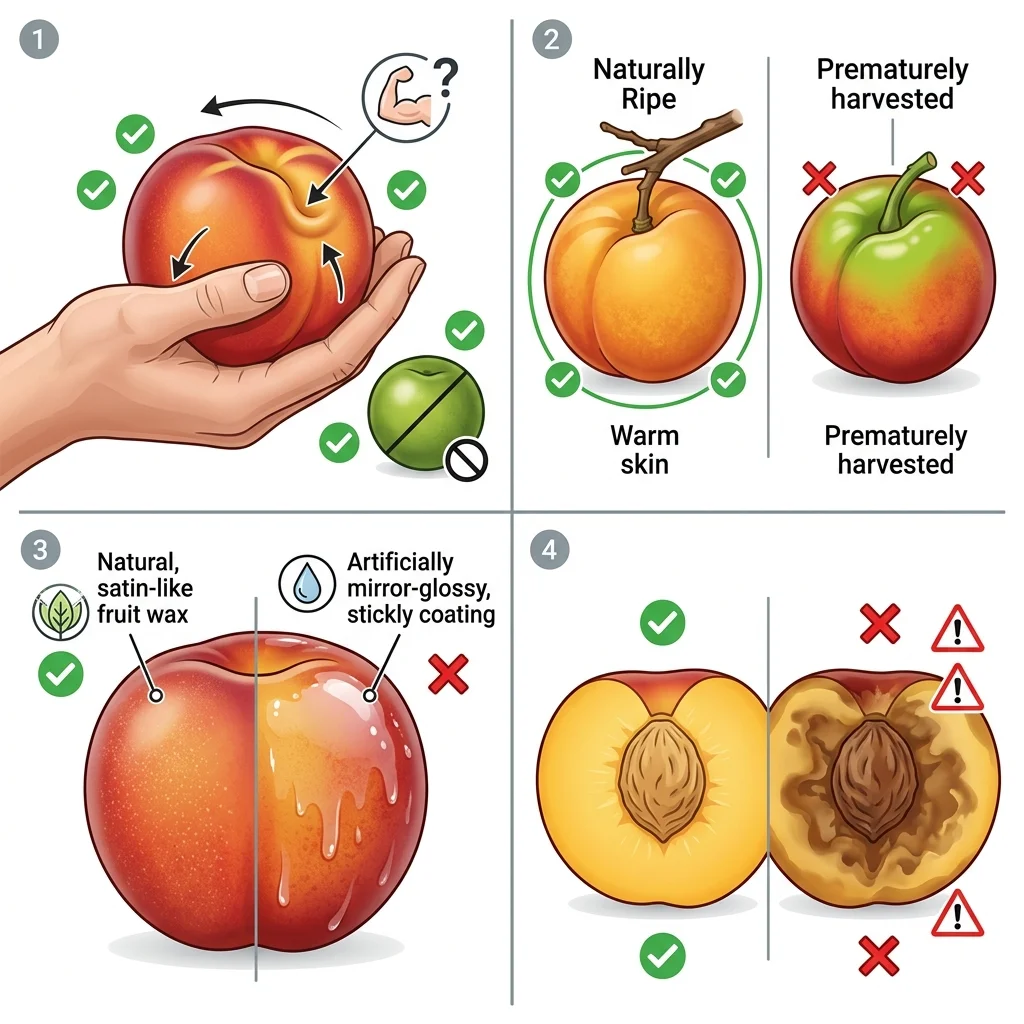
1. The Gentle Squeeze Ripeness Test (Firmness Audit):
Hold the nectarine in the palm of your hand and press gently. A naturally ripe nectarine is slightly soft, giving way to gentle pressure, particularly around the 'seam' or 'shoulder' near the stem. If the fruit is rock-hard, it was picked immature and will not develop its full sweetness. If it is mushy and your finger leaves a permanent dent, it is overripe and starting to decay internally.
2. The Stem-End 'Green Shoulder' Color Check:
Examine the background color of the skin, especially around the stem cavity. A naturally ripened, high-quality nectarine has a rich yellow or creamy-gold background color under its red blush. If the background color is bright green or has a distinct 'green shoulder' around the stem, the fruit was harvested prematurely and chemically forced to ripen using ethylene gas or carbide. These fruits will be sour and lack natural sugars.
3. The Surface Shine and Wax Check:
Naturally fresh nectarines have a soft, matte, or slightly satin finish. If the skin is mirror-glossy, highly reflective, or feels sticky/greasy to the touch, it has been coated with synthetic petroleum-based waxes or mineral oils. These coatings are used to lock in moisture and extend shelf-life, but they trap pesticide residues underneath and cannot be washed off with water alone.
4. Internal Bruising and Core Rot Audit:
Slice the nectarine open. The flesh around the pit should be uniform in color (yellow, white, or red depending on the variety). Avoid nectarines that show dark brown, translucent, or water-soaked flesh around the pit (internal breakdown). This indicates advanced age, improper cold storage, or fungal core rot.
Click to enlarge
Nectarine Freshness & Rot Audit
Freshness ensures the fruit retains its high vitamin C and antioxidant content.
1. Wrinkling Near the Stem:
Inspect the skin around the stem. A slight wrinkling indicates that the fruit has lost moisture and is at peak sweetness, but deep wrinkles and a soft stem indicate advanced age and staling.
2. Sour or Fermented Odor:
Sniff the fruit near the stem. Fresh nectarines have a rich, sweet, floral, and aromatic scent. A sour, vinegary, or alcohol-like fermented smell indicates active bacterial or yeast spoilage.
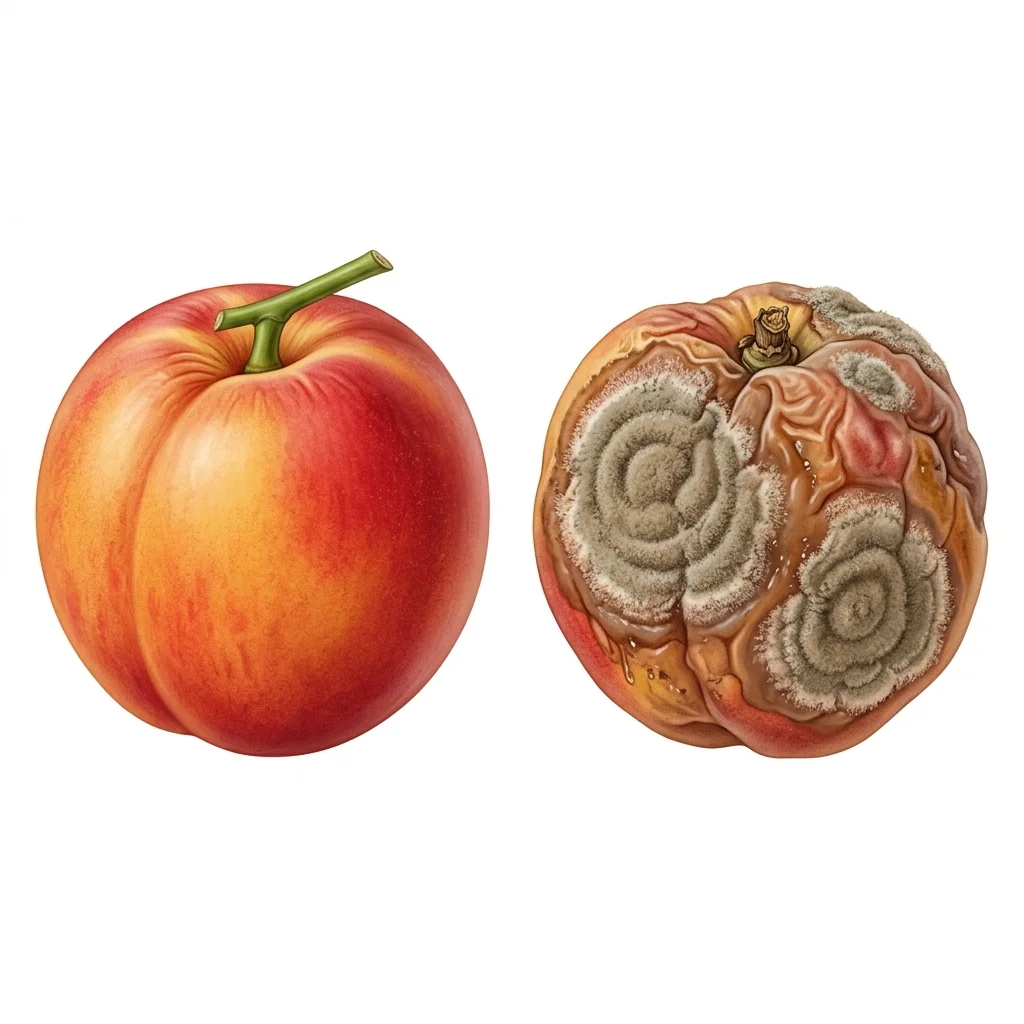
3. Fungal Brown Rot:
Avoid fruits with circular, light brown spots that spread rapidly, showing concentric rings of dusty grey-tan fungal spores. This is Monilinia fructicola (brown rot) and makes the fruit inedible.
Quick Safety Tips
- Look for a rich yellow or gold background color around the stem cavity - a green background indicates premature chemical ripening
- Perform the squeeze test: a safe, naturally sweet nectarine yields slightly to gentle palm pressure without being mushy
- Wash nectarines in a baking soda bath (1 teaspoon per 2 cups of water) for 12-15 minutes to remove surface pesticide residues
- Avoid nectarines with an unnaturally glossy, sticky, or greasy skin, which indicates synthetic wax coatings
Primary Chemical Concerns
Health Risks & Impacts
Multilingual Local Names
Regulatory Corner: US FDA / USDA / FSSAI Schedule 2
Regulation: 21 CFR 180.442 (Fludioxonil Residues) & FSSAI Contaminants and Toxins Regulations
Legal Limit:Fludioxonil: Max 5 ppm; Phosmet: Max 10 ppm; Artificial Calcium Carbide ripening: 0.0% (Prohibited)
Report Adulteration to US FDA / USDA / FSSAI Schedule 2