How to Test Ginger for Adulteration (Sulfuric Acid, Sulfur, Heavy Metals)
⚡ Quick 60-Second Ginger Acid-Wash & Purity Verdict
Acid Washing (Sulfuric/HCl) for Cosmetic Shine: Stale or dirty ginger is washed in commercial sulfuric or hydrochloric acid solutions to remove blemishes and produce bright, golden, spotless skin.
Gently scrape the skin with your fingernail. Naturally grown ginger skin peels off easily with a fresh earthy smell. Acid-washed ginger skin is hardened, tightly fused, or rubbery.
Sniff the freshly cut knobby root. Pure ginger releases sharp, spicy, citrusy gingerol aroma. Acid-treated ginger releases a faint pungent sulfur or chemical stench.
Leave a slice exposed at room temperature. Natural ginger dries and turns fibrous. Acid-washed ginger rapidly turns dark brown or rots internally within 24 hours.
To learn more about food safety tests and home adulteration detection, read our guides on Fennel Seeds (Saunf) and Cinnamon (Dalchini).
Drop Ginger photo here to test purity
or click to browse • Supports JPG, PNG, WEBP • Paste with Ctrl+V
Inspection Guide
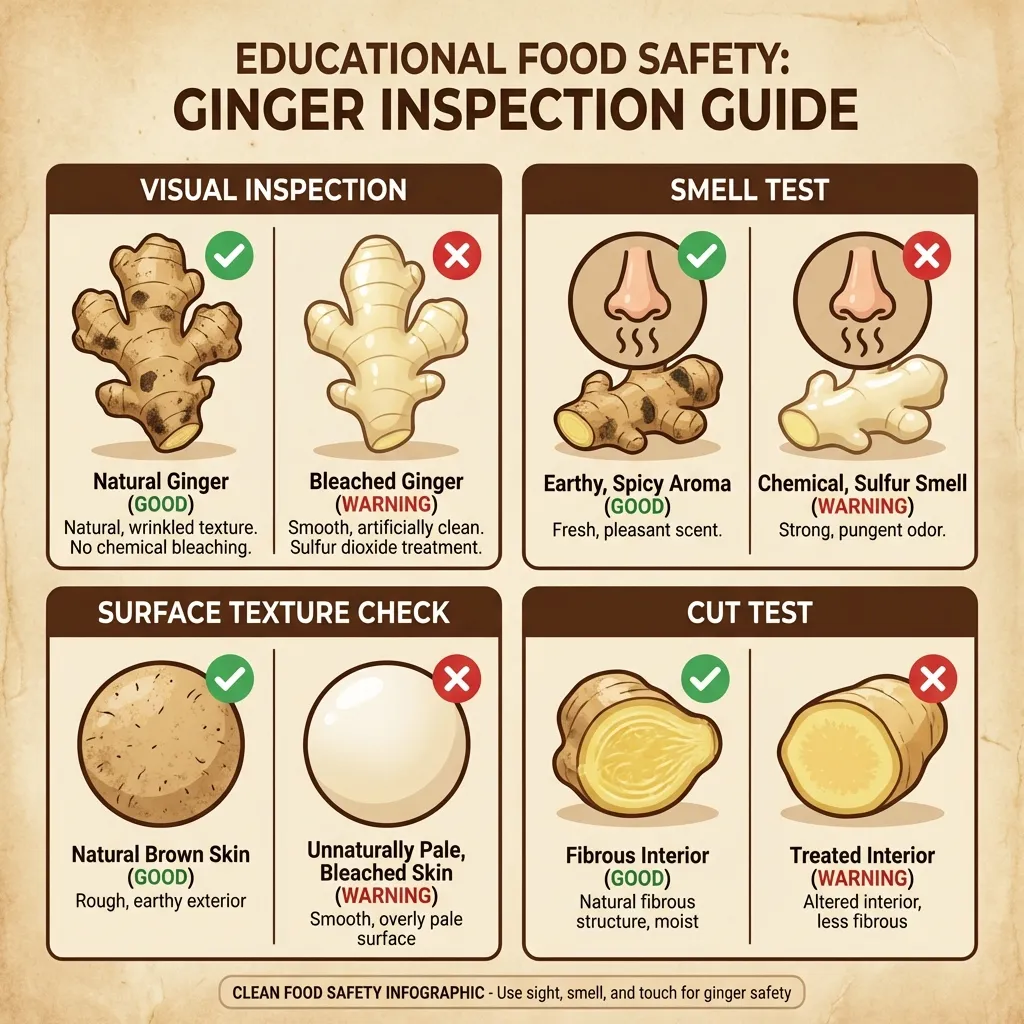
Click to enlarge
Ginger Purity & Acid Wash Audit
Ginger is often washed with diluted sulfuric acid or sulfur to give it a clean, light yellow, and "skinless" appearance that appeals to consumers in urban markets.
1. The Skin Integrity Check:
Naturally fresh ginger has a thin, brownish-beige skin that is slightly rough and does not peel off very easily with just a gentle touch. If the ginger skin is missing or peels off like paper with zero effort, it has likely been acid-washed.
2. The Color and Shine:
Acid-washed ginger looks unnaturally "clean," bright yellow, and slightly shiny. Natural ginger has a duller, earthy appearance and often has bits of dried soil in its crevices.
3. The Smell Test:
Take a deep sniff. Pure ginger has a sharp, pungent, and earthy citrus-like aroma. If you detect a faint "burning match" (sulfur) smell or a sharp chemical odor, it has been fumigated or washed with chemicals.
4. The Water Soak (pH Test):
Soak a piece of ginger in a glass of water for 15 minutes. If the water becomes cloudy or develops an acidic smell, suspect chemical treatment. (If you have pH strips, acid-washed ginger will significantly lower the water's pH).
Quick Safety Tips
- Avoid ginger that looks "too clean" and bright yellow
- Check if the skin peels off too easily - indicates acid wash
- Choose ginger with an earthy, pungent aroma and soil residues
- Always peel ginger deeply before use to remove surface chemical residues
Primary Chemical Concerns
Health Risks & Impacts
Multilingual Local Names
Common Storage Pests
Ginger Maggot / Rhizome Fly
medium riskSmall larvae that tunnel into the ginger rhizome.
Detection
- Small entry holes
- Internal rotting and presence of white maggots
Prevention
- Store in a cool, dry, well-ventilated place
- Avoid moisture build-up
Corrective Action: What to do?
Discard infested parts; the internal rot can be bitter and harmful.
Regulatory Corner: FSSAI (Food Safety and Standards Authority of India) / US FDA
Regulation: Food Safety and Standards (Food Products Standards) Regulations 2011, Clause 2.9.10: Ginger (Sonth, Adrak) Whole and Powder & FDA 21 CFR 182.10
Legal Limit:Volatile oil: Min 1.5% (v/w); Cold water soluble extract: Min 10.0%; Industrial sulfuric acid / hydrochloric acid wash residue: 0.0 ppm; Lime (CaO): Max 2.0% (in bleached ginger only); Heavy metal (Lead): Max 2.5 ppm
Report Adulteration to FSSAI (Food Safety and Standards Authority of India) / US FDA