Dried Chili Peppers Quality & Purity Tests: Detect Sudan Red & Crevice Mold
⚡ Quick 60-Second Whole Dried Chili Dye & Mineral Oil Verdict
Carcinogenic Sudan Red Dyes & Mineral Oil Glaze: Stale or discolored whole red chilies are sprayed with industrial mineral oils and non-permitted azo dyes (Sudan I–IV, Rhodamine B) to restore deep crimson color and glossy shine.
Moisten a cotton swab with rubbing alcohol and rub the outer skin of a chili. Red color bleeding onto the cotton confirms illegal dye treatment (natural capsanthin does not rub off easily in cold solvent).
Place 2-3 chilies in a cup of clear water for 2 minutes. Synthetic dyes immediately bleed red tendrils into the water, whereas pure dried chilies leave water clear.
Natural chilies have a pale, dry yellowish-grey stem. If the stem is stained bright red, whole-batch chemical dipping is confirmed.
To learn more about spice and seasoning safety, read our guides on Cumin Seeds and Chili Powder.
Drop Dried Chili photo here to test purity
or click to browse • Supports JPG, PNG, WEBP • Paste with Ctrl+V
Inspection Guide

Click to enlarge
Dried Chili Sudan Dye & Internal Mold Audit
Dried chili peppers (such as Guajillo, Ancho, and Chipotle) are core ingredients in Mexican and Southwestern cuisines. Due to long storage times, chilis often fade and lose their rich red color. Unscrupulous suppliers sometimes treat them with Sudan Red, a toxic, carcinogenic industrial dye banned globally in food. Additionally, their wrinkled, folded skins easily trap moisture, creating a perfect environment for hidden internal mold growth.
1. The Paper Rub / Oil Cotton Test (Sudan Dye):
Sudan Red is an industrial dye that is oil-soluble and rubs off easily. Take a whole dried chili and rub it firmly against a sheet of clean white paper, or rub it with a cotton ball dipped in a few drops of vegetable oil. Natural dried chilis will not bleed color. If the paper or cotton picks up a bright red, orange, or pink smear, the chili has been dyed with Sudan Red.
2. The Internal Cavity Mold Inspection:
Tear or cut open a few chilis from the batch. Inspect the inner cavity, especially around the seeds and the stem base. Because dried chilis are wrinkled, moisture often gets trapped inside, producing fuzzy white, grey, or yellow fungal mold. Discard the entire chili if any mold is visible, as mold toxins spread invisibly.
3. The Pliability (Leathery Flex) Test:
Gently bend the chili pepper. High-quality, fresh dried chilis are pliable, soft, and leathery, bending easily without breaking. If the chilis are extremely brittle, dry, and shatter or crumble into dust when bent, they are old, stale, and have lost their flavorful essential oils.
4. The Scent and Aroma Check:
Sniff the chilis. Quality dried chilis have a rich, sweet, smoky, or fruity aroma characteristic of their variety (e.g. raisin-like for Ancho, smoky for Chipotle). If they smell musty, earthy, stale-closet, or have a chemical solvent odor, they are moldy or have been chemically treated.
Click to enlarge
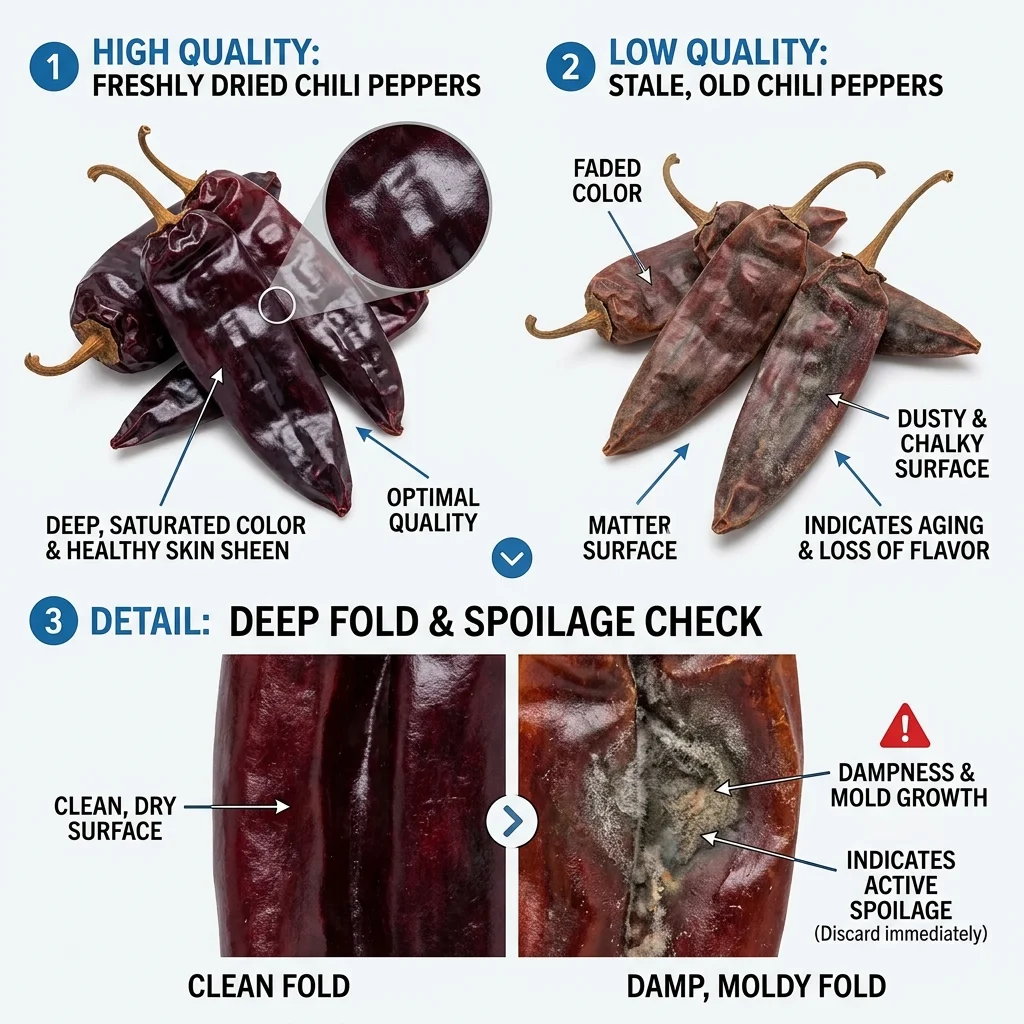
Dried Chili Freshness & Crevice Inspection
Freshness ensures rich capsaicin oils and avoids harmful fungal spores.
1. Skin Sheen:
Fresh dried chilis have a slight, clean sheen and deep, saturated color. Faded, dusty, or chalky chilis are old and stale.
2. Flex and Snap:
Freshly dried chilis yield to pressure like soft leather. Brittle chilis that crack and crumble instantly are old stock.
3. Fold Cleanness:
Inspect the deep folds and wrinkles of the chili skin. Any dampness, sticky residue, or white powdery spots indicate moisture damage and early mold growth.
Quick Safety Tips
- Perform the paper rub or oiled cotton test to check for Sudan Red dye
- Always cut open dried chilis to inspect the internal cavity for mold before blending or cooking
- Choose chilis that are soft, pliable, and leathery rather than brittle and dusty
- Wash dried chilis thoroughly under cold water and pat dry before dry-roasting or rehydrating
Primary Chemical Concerns
Health Risks & Impacts
Multilingual Local Names
Regulatory Corner: FSSAI (Food Safety and Standards Authority of India) / US FDA
Regulation: Food Safety and Standards (Food Products Standards) Regulations 2011, Clause 2.9.5: Whole Dry Chillies & FDA CPG Sec. 585.250
Legal Limit:Moisture: Max 10.0%; Damaged, discolored, or insect-bored pods: Max 3.0%; Non-permitted synthetic red dyes (Sudan I–IV, Rhodamine B): 0.0 ppb; Aflatoxin B1: Max 15 ppb; Total aflatoxins: Max 30 ppb
Report Adulteration to FSSAI (Food Safety and Standards Authority of India) / US FDA