Testes de Qualidade e Pureza de Pimentas Secas: Como Detectar Vermelho Sudão e Mofo
Detecte adulteração cancerígena do corante vermelho do Sudão e mofo em fendas ocultas em pimentas secas inteiras (Ancho, Guajillo, Chipotle).
Para saber mais sobre a segurança de especiarias e temperos, leia nossos guias sobre sementes de cominho e pimenta em pó.
Drop Pimentão Seco photo here to test purity
or click to browse • Supports JPG, PNG, WEBP • Paste with Ctrl+V
Inspection Guide

Click to enlarge
Auditoria interna de corante e molde interno de pimentão seco Sudão
Pimentas secas (como Guajillo, Ancho e Chipotle) são ingredientes essenciais na culinária mexicana e do sudoeste. Devido aos longos tempos de armazenamento, as pimentas muitas vezes desbotam e perdem sua rica cor vermelha. Fornecedores inescrupulosos às vezes os tratam com Sudan Red, um corante industrial tóxico e cancerígeno proibido globalmente em alimentos. Além disso, suas películas enrugadas e dobradas retêm facilmente a umidade, criando um ambiente perfeito para o crescimento interno oculto de fungos.
1. O teste de esfregar papel / algodão com óleo (corante do Sudão):
Sudan Red é um corante industrial solúvel em óleo e facilmente removido. Pegue um pimentão seco inteiro e esfregue-o firmemente contra uma folha de papel branco limpo ou esfregue-o com uma bola de algodão embebida em algumas gotas de óleo vegetal. Pimentas secas naturais não perdem cor. Se o papel ou algodão apresentar uma mancha vermelha, laranja ou rosa brilhante, o pimentão foi tingido com Vermelho Sudão.
2. A inspeção do molde da cavidade interna:
Rasgue ou corte algumas pimentas do lote. Inspecione a cavidade interna, principalmente ao redor das sementes e da base do caule. Como as pimentas secas ficam enrugadas, a umidade geralmente fica presa em seu interior, produzindo mofo fúngico branco, cinza ou amarelo difuso. Descarte o pimentão inteiro se houver algum mofo visível, pois as toxinas do mofo se espalham de forma invisível.
3. O teste de flexibilidade (flexibilidade de couro):
Dobre delicadamente a pimenta. Pimentas secas frescas de alta qualidade são flexíveis, macias e coriáceas, dobrando-se facilmente sem quebrar. Se as pimentas estiverem extremamente quebradiças, secas e quebrarem ou virarem pó quando dobradas, elas estão velhas, estragadas e perderam seus saborosos óleos essenciais.
4. A verificação de aroma e aroma:
Cheire as pimentas. Pimentas secas de qualidade têm um aroma rico, doce, defumado ou frutado característico de sua variedade (por exemplo, semelhante a passas para Ancho, defumado para Chipotle). Se cheirarem a mofo, terra, armário velho ou odor de solvente químico, estão mofados ou foram tratados quimicamente.
Click to enlarge
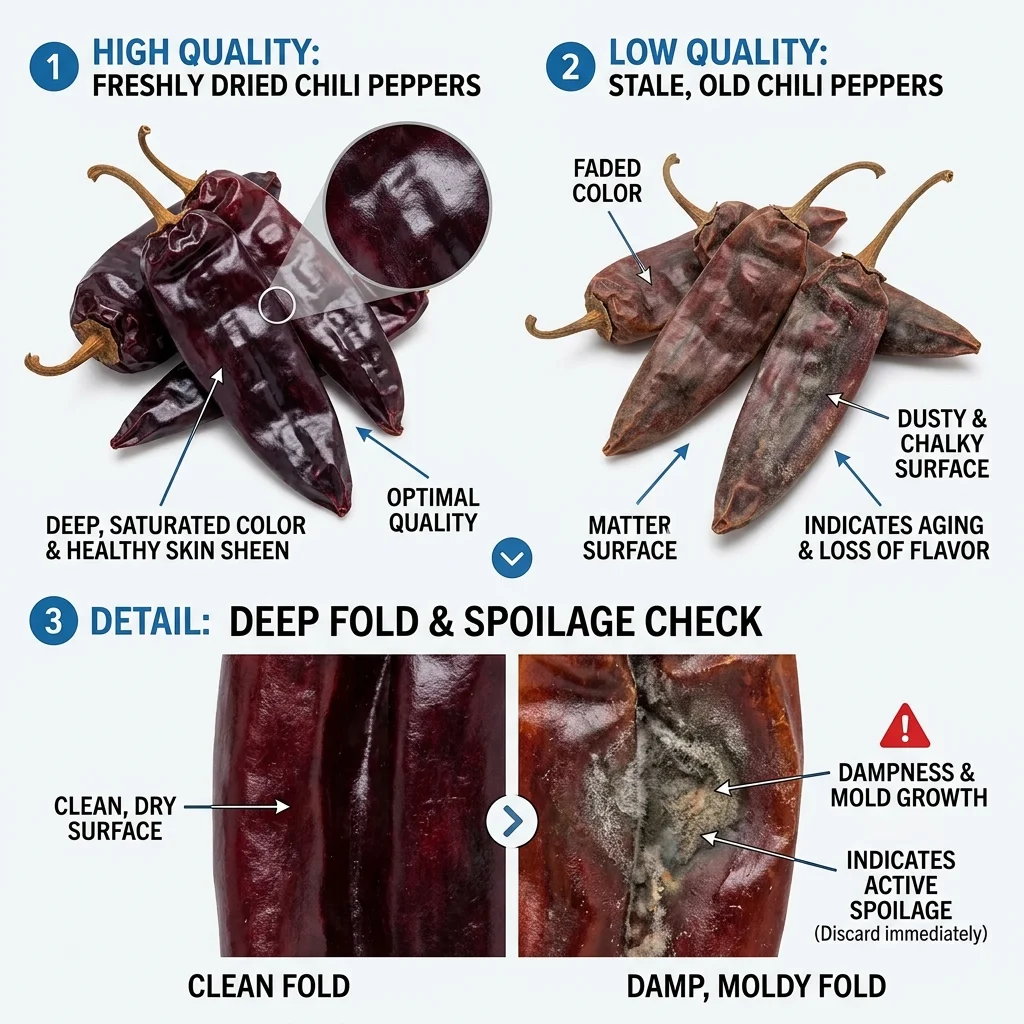
Inspeção de frescor e fendas de pimentão seco
O frescor garante óleos ricos em capsaicina e evita esporos de fungos nocivos.
1. Brilho da pele:
As pimentas frescas e secas têm um brilho leve e limpo e uma cor profunda e saturada. Pimentas desbotadas, empoeiradas ou calcárias são velhas e estragadas.
2. Flexível e instantâneo:
Pimentões recém-secos cedem à pressão como couro macio. Pimentões quebradiços que quebram e esfarelam instantaneamente são estoque antigo.
3. Limpeza de dobras:
Inspecione as dobras e rugas profundas da casca do pimentão. Qualquer umidade, resíduo pegajoso ou manchas brancas em pó indicam danos por umidade e crescimento precoce de mofo.
Quick Safety Tips
- Faça o teste de esfregar papel ou algodão oleado para verificar se há corante vermelho Sudão
- Sempre corte pimentas secas para inspecionar a cavidade interna em busca de mofo antes de misturar ou cozinhar
- Escolha pimentas macias, flexíveis e coriáceas, em vez de quebradiças e empoeiradas
- Lave bem as pimentas secas em água fria e seque antes de torrar a seco ou reidratar
Primary Chemical Concerns
Health Risks & Impacts
Multilingual Local Names
Regulatory Corner: FSSAI (Food Safety and Standards Authority of India) / US FDA
Regulation: Food Safety and Standards (Food Products Standards) Regulations 2011, Clause 2.9.5: Whole Dry Chillies & FDA CPG Sec. 585.250
Legal Limit:Moisture: Max 10.0%; Damaged, discolored, or insect-bored pods: Max 3.0%; Non-permitted synthetic red dyes (Sudan I–IV, Rhodamine B): 0.0 ppb; Aflatoxin B1: Max 15 ppb; Total aflatoxins: Max 30 ppb
Report Adulteration to FSSAI (Food Safety and Standards Authority of India) / US FDA