How to Test Coriander Seeds for Adulteration (Horse Dung Powder, Ergot, Sulfur Dioxide)
⚡ Quick 60-Second Coriander Seeds Purity Verdict
Sulfur Fumigation & Animal Dung Adulteration: Whole and ground coriander is prone to sulfur dioxide fumigation for cosmetic brightness, or powdered with cereal husk, sawdust, and dung powder.
Sprinkle 1 tsp ground coriander on a glass of water. Pure coriander sinks slowly. Sawdust or cereal husks float persistently on the water surface.
Take a handful of whole seeds, cup them in your hands, and sniff deeply. A sharp, burning sulfurous odor reveals industrial sulfur bleaching.
Mix 1/2 tsp ground coriander in warm water and add 2 drops iodine. An instant blue-black tint confirms starch/flour bulking.
To learn more about food safety tests and home adulteration detection, read our guides on Cinnamon (Dalchini) and Mustard Seeds.
Drop Coriander Seeds (Dhania) photo here to test purity
or click to browse • Supports JPG, PNG, WEBP • Paste with Ctrl+V
Inspection Guide
Click to enlarge
Is Your Dhania Pure? 5 Home Tests for Dung and Toxins
Coriander Seeds (Coriandrum sativum), known as Dhania, are targets for horrific adulterants like horse dung powder and toxic ergot seeds. To make old seeds look fresh, they are often bleached with sulfur or dyed with lead-based chemicals. Consuming these can lead to severe infections and neurological damage.
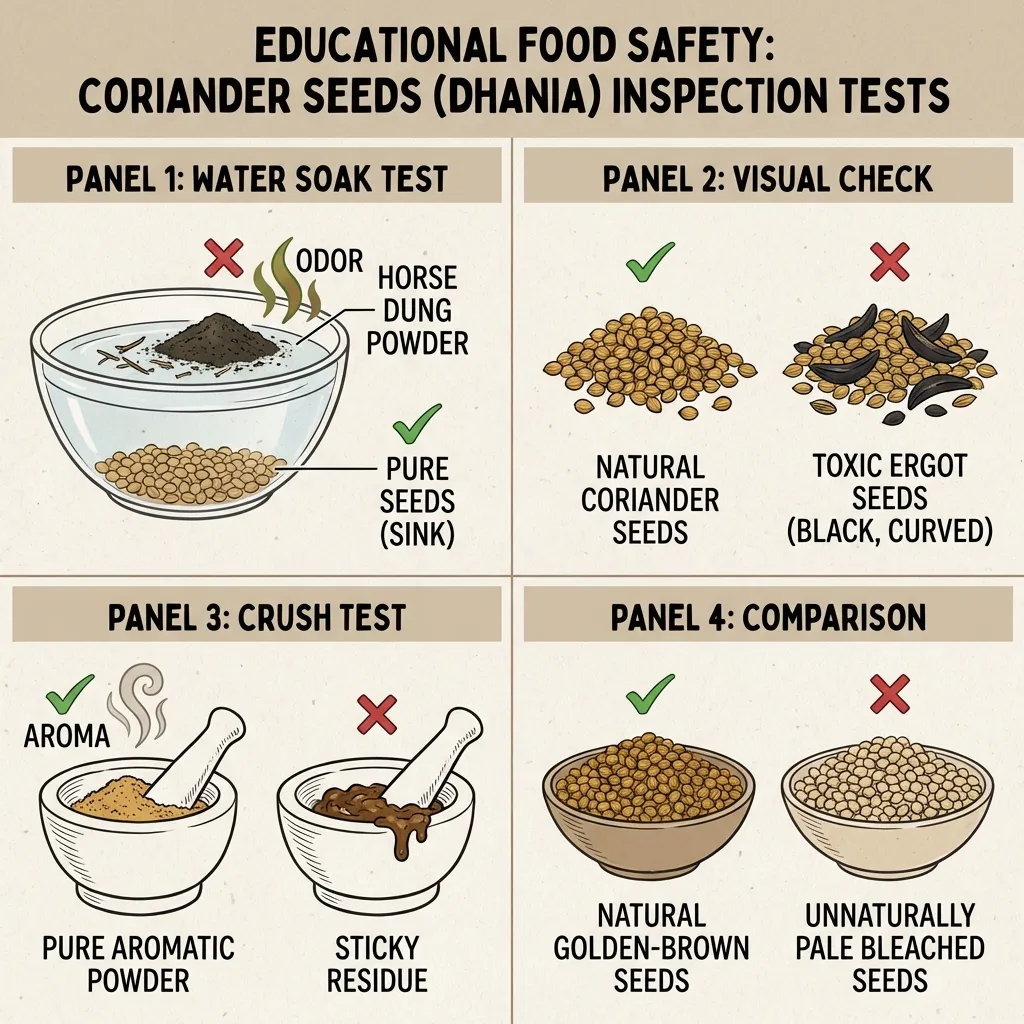
1. The Water Float and Odor Test:
Add a spoonful of seeds to a glass of water. If you see powdery particles floating on the surface that release a foul, animal-like odor, it confirms the presence of horse dung powder. Pure coriander seeds will mostly stay submerged and have a fresh, citrusy aroma.
2. The Visual Ergot Check:
Spread the seeds on a white plate and look for dark, curved, cigar-shaped grains that are slightly larger than the round coriander seeds. These are Ergot—a parasitic fungus that is highly toxic and can cause ergotism. If found, the entire batch must be discarded.
3. The Sulfur Sniff Test:
If the seeds look unnaturally pale or golden-white, smell them closely. A pungent, chemical, or matchstick-like odor indicates sulfur dioxide bleaching used to make old, moldy seeds appear new.
4. The Crush and Oil Check:
Crush a few seeds between two pieces of clean white paper. Pure coriander seeds will release a tiny amount of natural oil and a strong aroma. If the paper remains dry and shows dark or grayish powdery streaks, it indicates the presence of sawdust or dung fillers.
5. The Color Bleed Test:
Soak seeds in warm water. If the water turns bright yellow or green, the seeds have been artificially dyed with industrial colorants. Natural coriander will only give a very pale, yellowish tint to the water after significant time.
Quick Safety Tips
- Soak in water - check for floating powdery particles with a foul odor
- Visual check for dark, curved, cigar-shaped ergot grains
- Avoid seeds that look unnaturally pale or golden-white (bleached)
- Crush on white paper - look for natural oil and avoid dry, gray streaks
- Ensure the seeds have a fresh, citrusy, and characteristic dhania aroma
Primary Chemical Concerns
Health Risks & Impacts
Multilingual Local Names
Common Storage Pests
Cigarette Beetles
medium riskSmall reddish-brown beetles that feed on dried spices.
Detection
- Fine dust at the bottom of the container
- Small holes in the seeds
Prevention
- Store in airtight glass containers
- Keep in a cool, dry place
Corrective Action: What to do?
Sieve out dust and beetles; if infestation is heavy, discard.
Regulatory Corner: FSSAI (Food Safety and Standards Authority of India) / ISO 3516
Regulation: Food Safety and Standards (Food Products Standards) Regulations 2011, Clause 2.9.7: Coriander (Dhania) Whole and Powder
Legal Limit:Volatile oil: Min 0.3% (v/w); Extraneous matter: Max 2.0% by weight; Sulfur dioxide fumigation residue: Max 10 ppm; Dung powder, starch, or cereal husk fillers: 0.0%
Report Adulteration to FSSAI (Food Safety and Standards Authority of India) / ISO 3516