Agave Syrup Purity & Quality Tests: Detect Fake High-Fructose Corn Syrup
⚡ Quick 60-Second Agave Syrup Purity & Corn Syrup Verdict
High Fructose Corn Syrup (HFCS) & Cane Invert Sugar Dilution: Pure blue agave nectar is adulterated with cheap high-fructose corn syrup, cane sugar, and artificial caramel coloring to maximize commercial yield.
Drizzle 1 teaspoon of agave syrup into a tall glass of cold water without stirring. Pure, dense agave nectar drops straight to the bottom in an intact rope/thread. Corn syrup blends disperse and cloud the water column.
Taste a drop of syrup at room temperature. Pure agave nectar has a smooth, clean, neutral-to-fruity sweetness with rapid palate clearance. Syrups with lingering cloying sweetness or burnt-caramel corn flavors are adulterated.
Place one drop on a paper towel. Pure high-fructose agave syrup maintains a tight dome and penetrates paper very slowly; watered-down or glucose-syrup adulterated versions spread quickly in a large wet ring.
To learn more about liquid sweetener safety, read our guides on Honey and Maple Syrup.
Drop Agave Syrup photo here to test purity
or click to browse • Supports JPG, PNG, WEBP • Paste with Ctrl+V
Inspection Guide
Click to enlarge
Agave Syrup Purity & Viscosity Audit
Agave syrup (agave nectar), native to Mexico, is widely marketed as a premium, organic, low-glycemic sweetener. Due to its high production cost, it is a frequent target for food fraud, often adulterated with cheap high-fructose corn syrup (HFCS) or cane sugar syrup. Many commercial syrups are heavily cut or contain no actual agave sap at all, making them dangerous for consumers who rely on its low-glycemic properties.
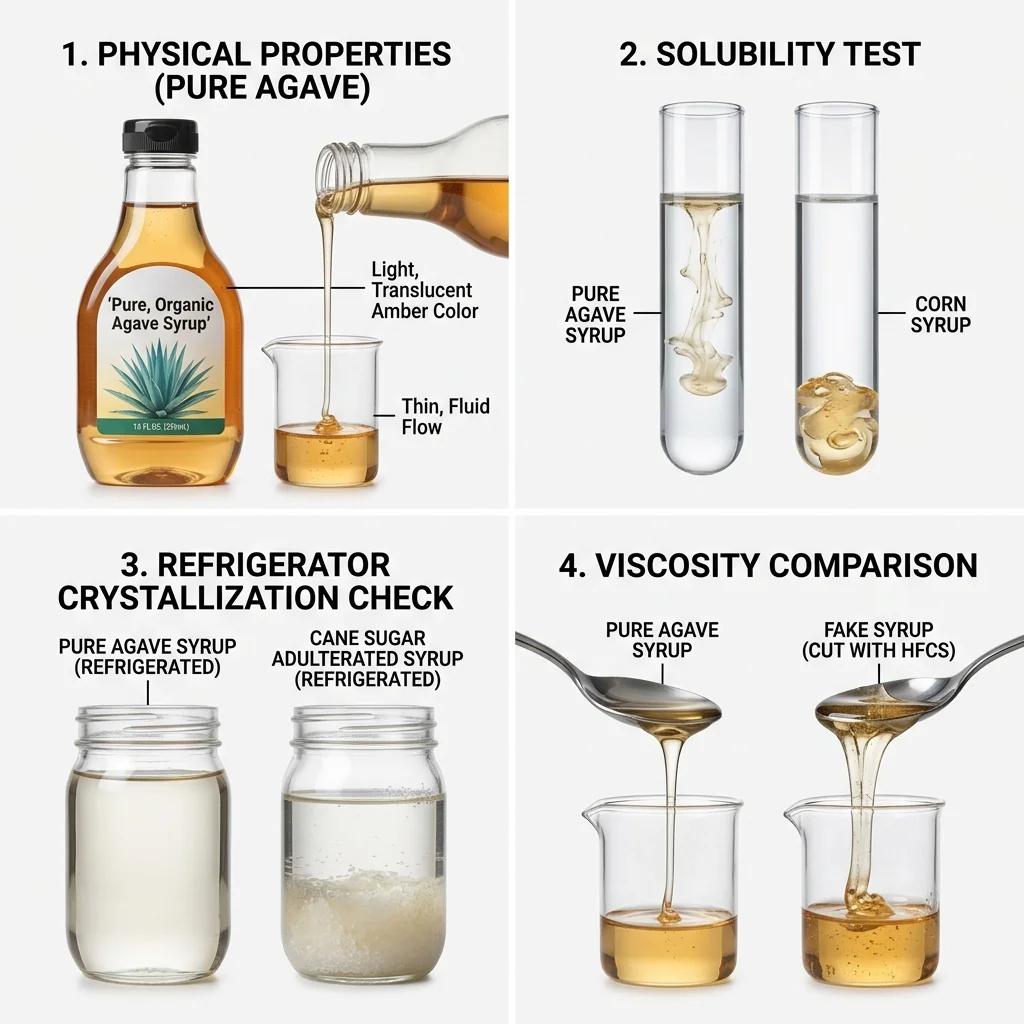
1. The Room-Temperature Viscosity & Flow Test:
At room temperature (20°C / 68°F), pure agave syrup has a unique, relatively thin, fluid viscosity. It flows much faster than honey and does not feel excessively sticky. Adulterated syrup cut with corn syrup is thick, highly sticky, and leaves a heavy, tacky coating on a spoon that does not slide off cleanly.
2. The Water Solubility Test (Purity):
Drop a tablespoon of agave syrup into a glass of cold water without stirring. Pure agave syrup is highly soluble and cohesive; it will begin to dissolve and disperse slowly in cold water, forming soft, wavy, transparent trails as it falls. Fake syrup made from corn syrup or cane sugar will sink as a heavy, solid, sticky blob directly to the bottom and remain clumped, refusing to disperse without vigorous stirring.
3. The Taste and Aroma Audit:
Pure agave syrup has a clean, mild, neutral sweetness with a very subtle, delicate, plant-like or herbal undertone. It has almost no smell. If the syrup has a heavy, sweet aroma of caramel, molasses, or artificial vanilla, or has a flat, cloyingly sweet sugar-water taste, it is adulterated with cane sugar or has been overheated and burnt during commercial processing, destroying its natural prebiotics.
4. Refrigerator Crystallization Check:
Place a small sample of agave syrup in the refrigerator or freezer for 3 hours. Pure agave syrup has a very low freezing point due to its high fructose concentration; it will remain clear and liquid, thickening only slightly. Syrups adulterated with cane sugar or beet sugar will begin to form gritty sugar crystals at the bottom or along the sides of the container.
Click to enlarge
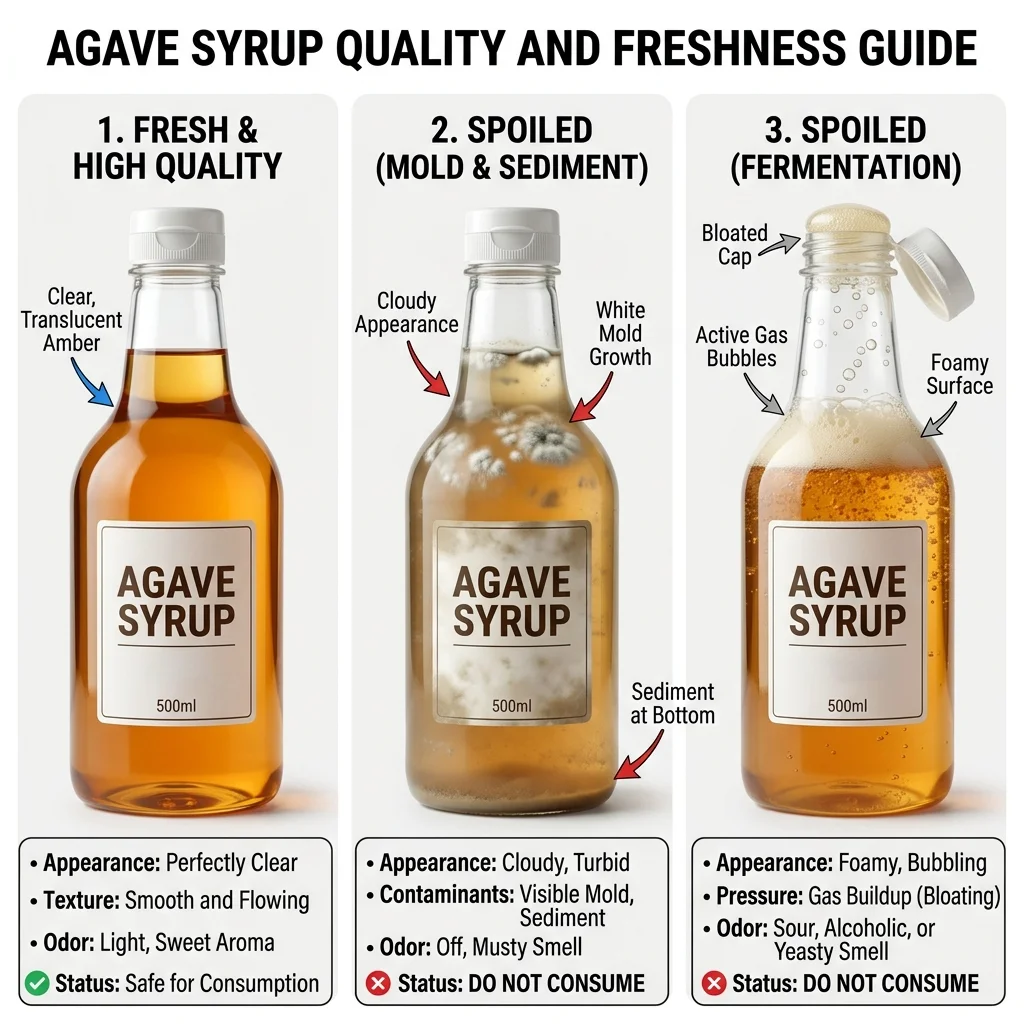
Agave Syrup Freshness & Clarity Audit
Freshness ensures raw organic integrity and prevents bacterial fermentation.
1. Translucent Clarity:
Pure agave syrup is perfectly clear and translucent, ranging from light amber to dark amber. Any cloudiness, sediment, or floating particles indicate bacterial contamination or mold growth.
2. Fermentation Odor:
Sniff the bottle. A sour, yeasty, or alcohol-like fermented smell indicates that wild yeasts have contaminated the sugars and the syrup has spoiled.
3. Container Condition:
Avoid bottles that are bloated, bulging, or release gas when opened, indicating active fermentation inside.
Quick Safety Tips
- Perform the cold water solubility test - pure agave should disperse slightly and not form a sticky, stubborn blob
- Avoid syrups that feel excessively thick, sticky, and behave like heavy corn syrup at room temperature
- Ensure the syrup has a clean, neutral sweetness without strong caramel or vanilla aromas
- Refrigerate a sample to check for gritty crystallization, which indicates cane sugar adulteration
Primary Chemical Concerns
Health Risks & Impacts
Multilingual Local Names
Regulatory Corner: Mexican Official Standard (NOM-002-SAGARPA/SE-2015) / US FDA (21 CFR 168.180)
Regulation: Norma Oficial Mexicana NOM-002-SAGARPA/SE-2015 & US FDA Food Identity Guidelines
Legal Limit:Fructose content: Min 70.0%; Glucose: Max 20.0%; Sucrose: Max 2.0%; Carbon-13 isotope delta ratio: Must fall within -11.0‰ to -13.5‰ (Zero added C4 cane/corn syrups); Hydroxymethylfurfural (HMF): Max 50 mg/kg
Report Adulteration to Mexican Official Standard (NOM-002-SAGARPA/SE-2015) / US FDA (21 CFR 168.180)