
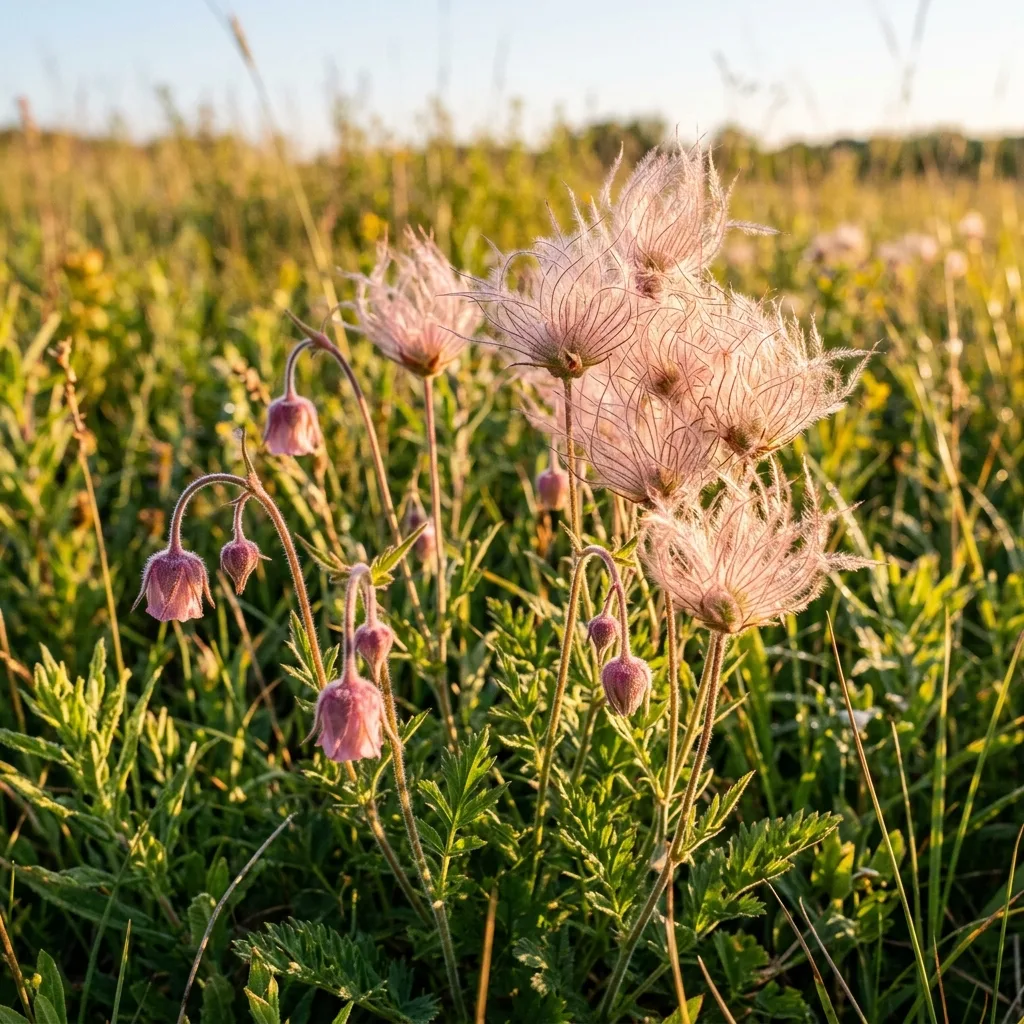
Prairie Smoke
Geum triflorum
How to Identify Prairie Smoke
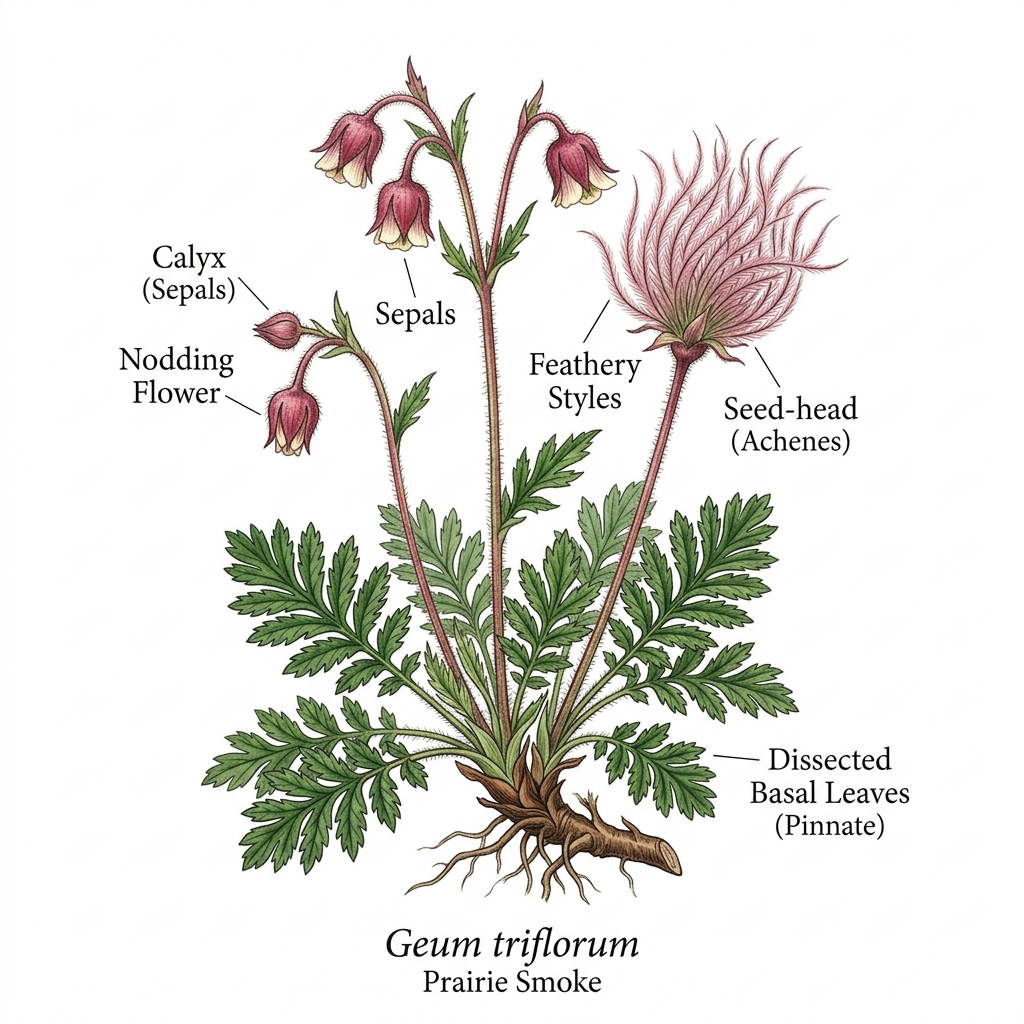
A detailed guide to identifying Prairie Smokes (Geum triflorum) by its key features:
- Drooping Rose-Red Buds: Three nodding, bell-shaped reddish-pink flower buds that remain semi-closed.
- Feathery Smoky Plumes: Wispy, pinkish-purple seed heads that stand upright and resemble puffs of smoke.
- Fern-Like Rosette Leaves: Pinnately cut, hairy leaves clustered in a dense rosette at the soil level.
- Prairie Groundcover: Spreads slowly via rhizomes in dry, sunny soils.
Care & Growing Guide
Prairie Smoke Care Guide:
- Light: Full sun (essential)
- Soil: Dry, well-draining, poor, sandy or rocky — do NOT fertilize or amend
- Water: Drought-tolerant once established; minimal irrigation needed
- Planting: Groups of 5–9 plants create the best 'smoke' effect
Seasonal Blooming & Hardiness
Seasonal Blooming Calendar:
- Peak Bloom (flowers): April–May
- Peak Display (seed heads): May–June
- US Range: USDA Zones 3–7; native to Great Plains, Rocky Mountains, and Upper Midwest
Bloom Timeline
About Prairie Smoke
Prairie Smoke (Geum triflorum) is one of the most enchanting and uniquely beautiful native wildflowers of the North American Great Plains and Rocky Mountain foothills, earning its evocative common name not from its flowers but from its spectacular seed heads — when a colony of Prairie Smoke goes to seed in late spring and early summer, the long, feathery, rose-pink plumes rising from each plant create the illusion of a smoky pink haze drifting across the prairie. Belonging to the Rosaceae family, it is native to dry prairies, rocky hillsides, and open meadows from Michigan to British Columbia and south to New Mexico.
The flowers of Prairie Smoke appear in early spring (April–May), before the seed heads that make the plant famous. They are nodding, bell-shaped, and deep wine-red to rose-pink, borne in clusters of three (giving the plant its species name 'triflorum' — three-flowered) on slender reddish stems. The five petals are relatively inconspicuous compared to the large, prominent calyx (modified sepals) that encloses them, giving the flowers a distinct, lantern-like appearance. As the flowers mature, the styles elongate dramatically to 1.5–2 inches long, creating the feathery, smoke-like plumes that transform the plant from a spring bloomer into a late-season spectacle.
Prairie Smoke is a deeply cold-hardy, drought-tolerant plant adapted to the extreme continental climate of the Great Plains, surviving temperatures from -40°F to extreme summer heat with ease. It develops a deep taproot that anchors it against wind and allows it to access deep soil moisture during summer drought. The semi-evergreen basal rosette of fernlike, pinnately compound leaves provides winter interest and early spring color. It is one of the first plants to emerge and bloom in the prairie spring and is an important early-season nectar source for native bees that are just emerging from winter dormancy.
For gardeners, Prairie Smoke is a superb rock garden and dry prairie plant, perfect for sunny, well-draining, infertile sites where other plants struggle. It thrives in full sun and does not tolerate wet, clay, or rich soils. Plant in groups of 5–9 for the best 'smoky' effect when the seed heads emerge. It spreads slowly by rhizomes to form a small colony and is completely non-toxic to pets. For more Great Plains natives, explore our Flower Identifier.
Floral Formula & Features
Actinomorphic, bisexual; 5 true sepals + 5 epicalyx bracts; 5 free petals; numerous free stamens; numerous free carpels (achenes) each with a persistent elongated feathery style
- Scientific Name & Classification: Geum triflorum (Rosaceae, tribe Colurieae). Named 'triflorum' for its characteristic clusters of three flowers. Native to dry prairies and rocky slopes of North America.
- Identification Markers: Nodding wine-red to rose-pink bell-shaped flowers in threes, spring. Spectacular 1.5–2 inch feathery pink-purple seed plumes in late spring creating a 'smoke' effect. Ferny, pinnately compound basal leaves. Height 8–16 in.
- Floral Formula (⊕ ☿ K5+5 C5 A∞ G∞): Actinomorphic, bisexual; 5 true sepals + 5 epicalyx bracts; 5 free petals; numerous stamens; numerous free carpels (achenes with persistent feathery styles).
- Growing Requirements: Full sun; dry, well-draining, poor, sandy or rocky soil. Drought-tolerant. USDA Zones 3–7. Does NOT tolerate wet, clay, or rich soil. Excellent rock garden and dry prairie plant.
- Cultural Significance: Iconic plant of the North American Great Plains. Named for its extraordinary feathery pink seed plumes that create a smoke-like effect across prairie landscapes in late spring.
- Safety & Toxicity: NON-TOXIC. Completely safe for cats, dogs, and humans. An excellent choice for dry, pet-friendly gardens.
- Common Look-alikes: Occasionally confused with Apache Plume (Fallugia paradoxa) in western ranges, which also has feathery seed heads. Distinguished by Prairie Smoke's pink (not white) coloration and much smaller plant size.
- Internal Links: Perfect with Indian Paintbrush and Butterfly Weed in a dry native prairie planting. Explore our Flower Identifier.
Names in Different Languages
Botanical Classification: Prairie Smoke belongs to the Rosaceae family. Learn how to identify its floral symmetry, stamen arrangement, and structural formulas in our Botanical Family Classification Guide.
Toxicity & Safety
Frequently Asked Questions
What is Floral Formula?
A floral formula is a symbolic representation of a flower's structure using letters, numbers, and special symbols. It provides a concise way to describe the arrangement and number of floral parts.
This formula describes the flower's symmetry, sepals, petals, stamens, and carpels in a standardized format.
Formula Sequence
- Bract: Br or Ebr
- Bracteole: Brl or Ebrl
- Symmetry: % (Radial) or ⊕ (Bilateral)
- Sex: ♀ (Female), ♂ (Male), or ⚥ (Bisexual)
- Calyx/Sepal: K<number> (Free or Fused)
- Corolla/Petal: C<number> (Free or Fused)
- Androecium: A<number> (Free or Fused)
- Gynaecium: G<number> (Superior or Inferior Ovary)
Symbol Meanings
- Numbers: Indicate quantity of parts
- Parentheses (): Parts are fused together
- Plus (+): Parts in different whorls
- Underline: Superior ovary position
- Overline: Inferior ovary position
- ∞: Numerous parts (too many to count)
Understanding floral formulas helps botanists quickly identify and classify flowers based on their structural characteristics.
Similar Flowers
Discover flowers that share botanical characteristics
Similar Characteristics
4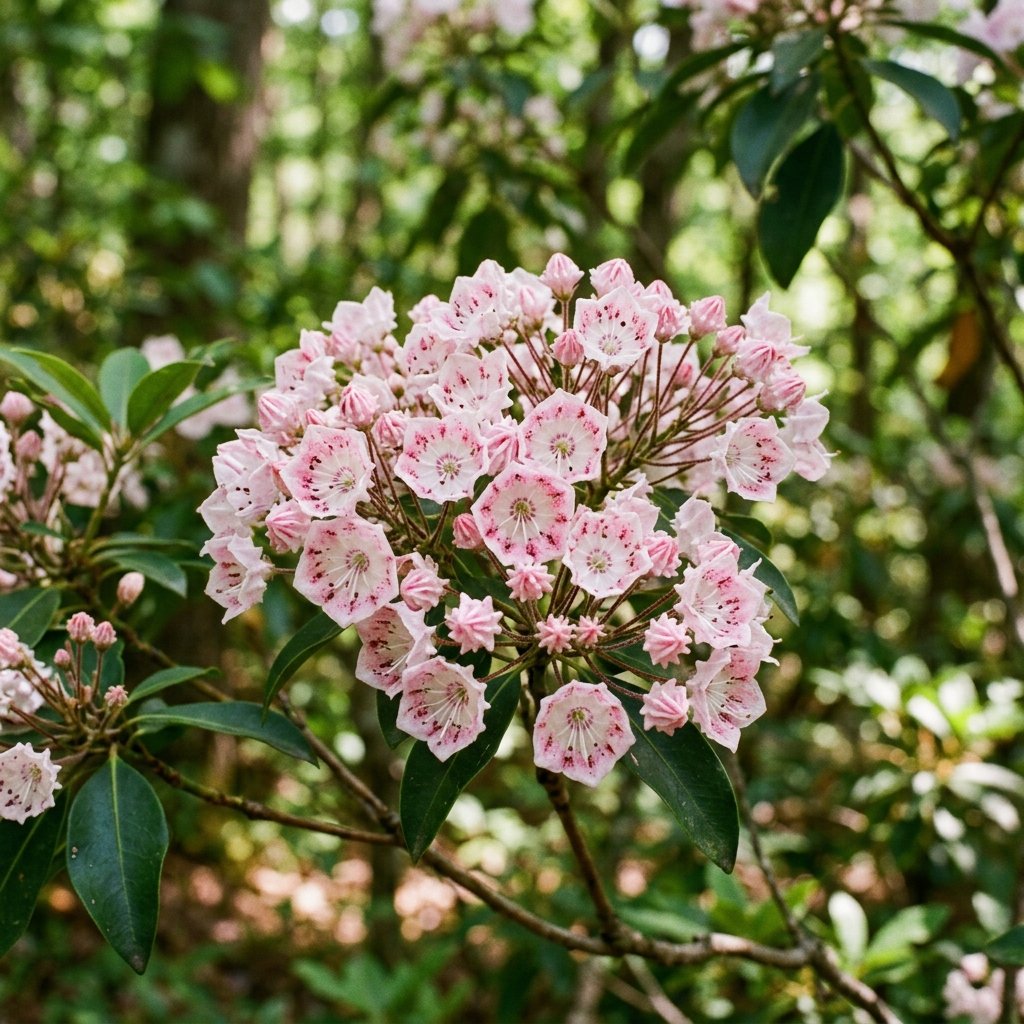
Mountain Laurel
Kalmia latifolia
Mountain Laurel (*Kalmia latifolia*) is one of the most spectacular native flowering shrubs of the eastern United States, producing extraordinary clusters of cup-shaped flowers in shades of white, pink, and deep rose — each blossom decorated with a ring of ten maroon spots and a unique pentagonal...
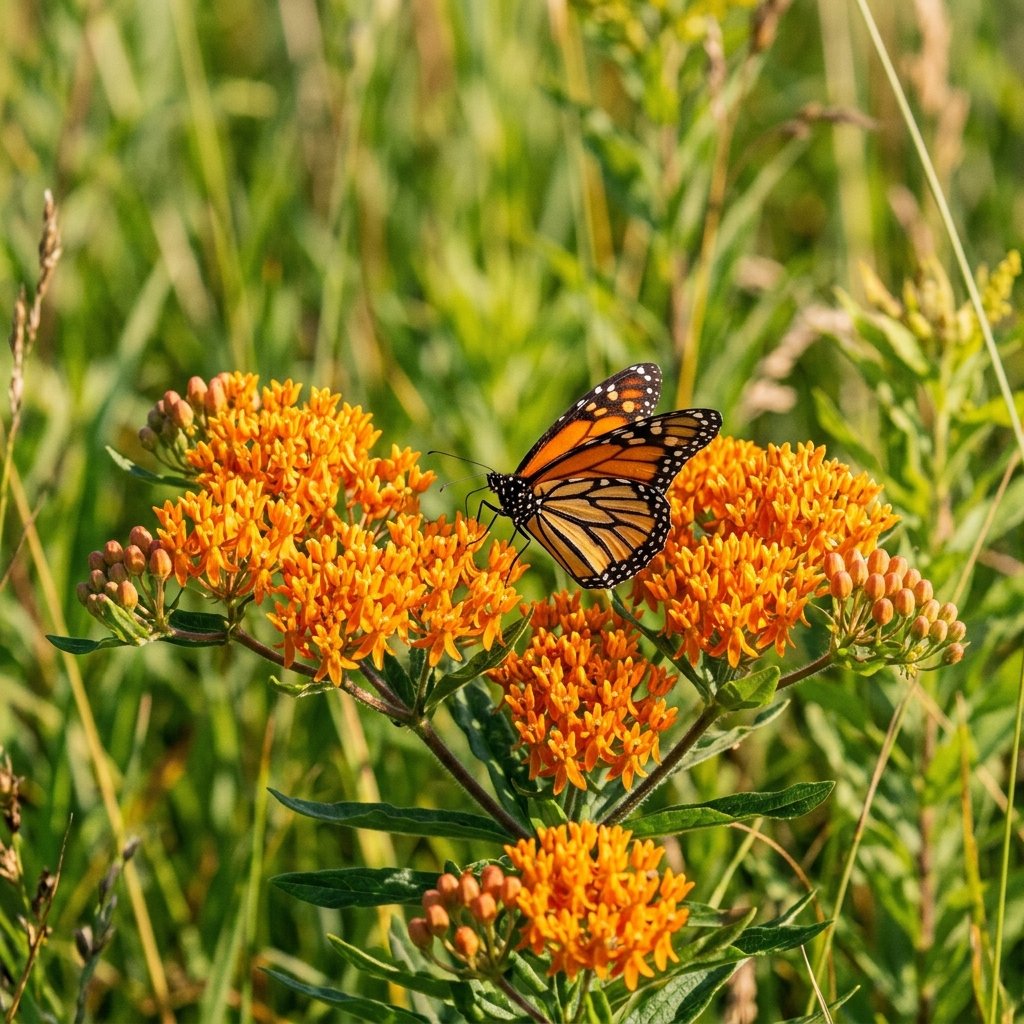
Butterfly Weed
Asclepias tuberosa
Butterfly Weed (*Asclepias tuberosa*) is arguably the most vivid and ecologically vital native wildflower of the American prairie and meadow, blazing in brilliant shades of fiery orange and golden-yellow in midsummer and serving as one of the most important nectar and host plants for the endanger...
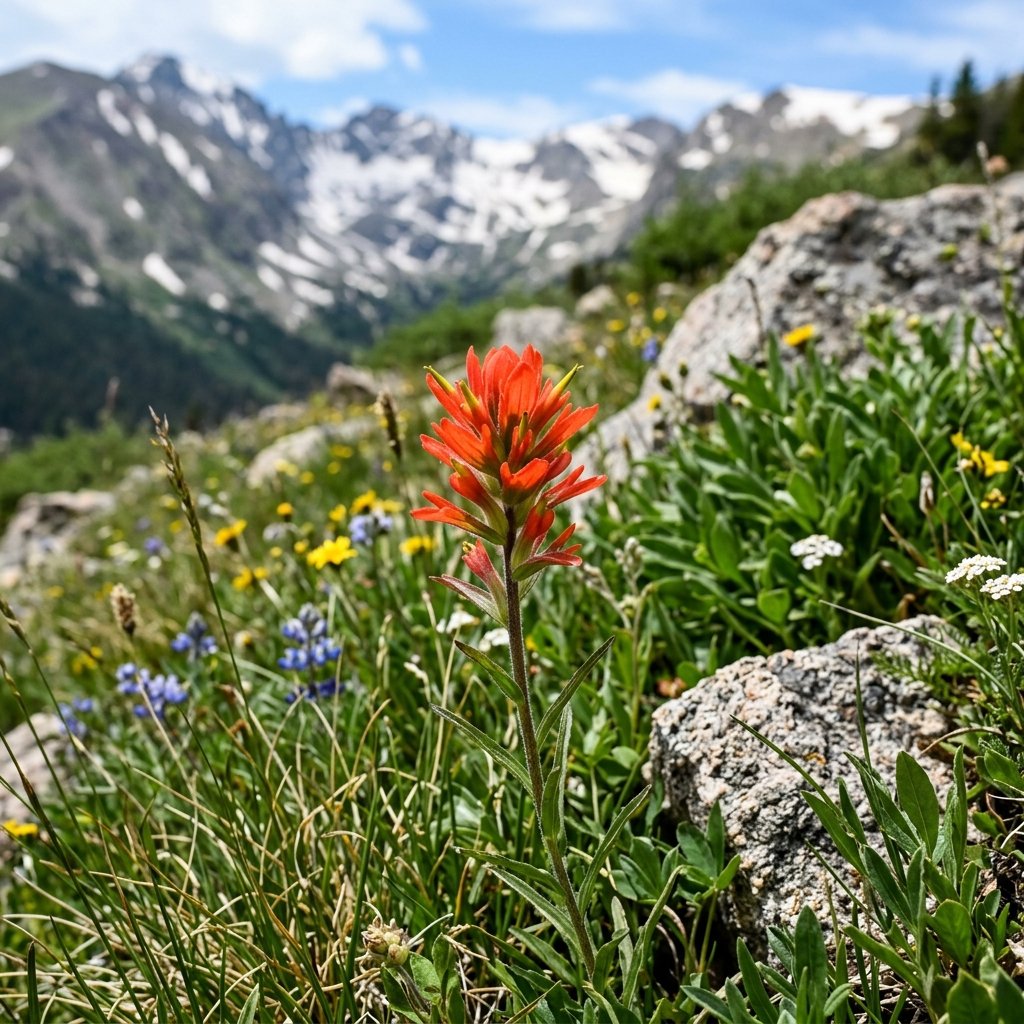
Indian Paintbrush
Castilleja coccinea
Indian Paintbrush (*Castilleja* spp.) is one of the most dramatically beautiful and ecologically fascinating wildflowers of the American West, producing clusters of brilliant red, orange, or yellow bracts that look as though they were dipped in vivid paint. With approximately 200 species native t...
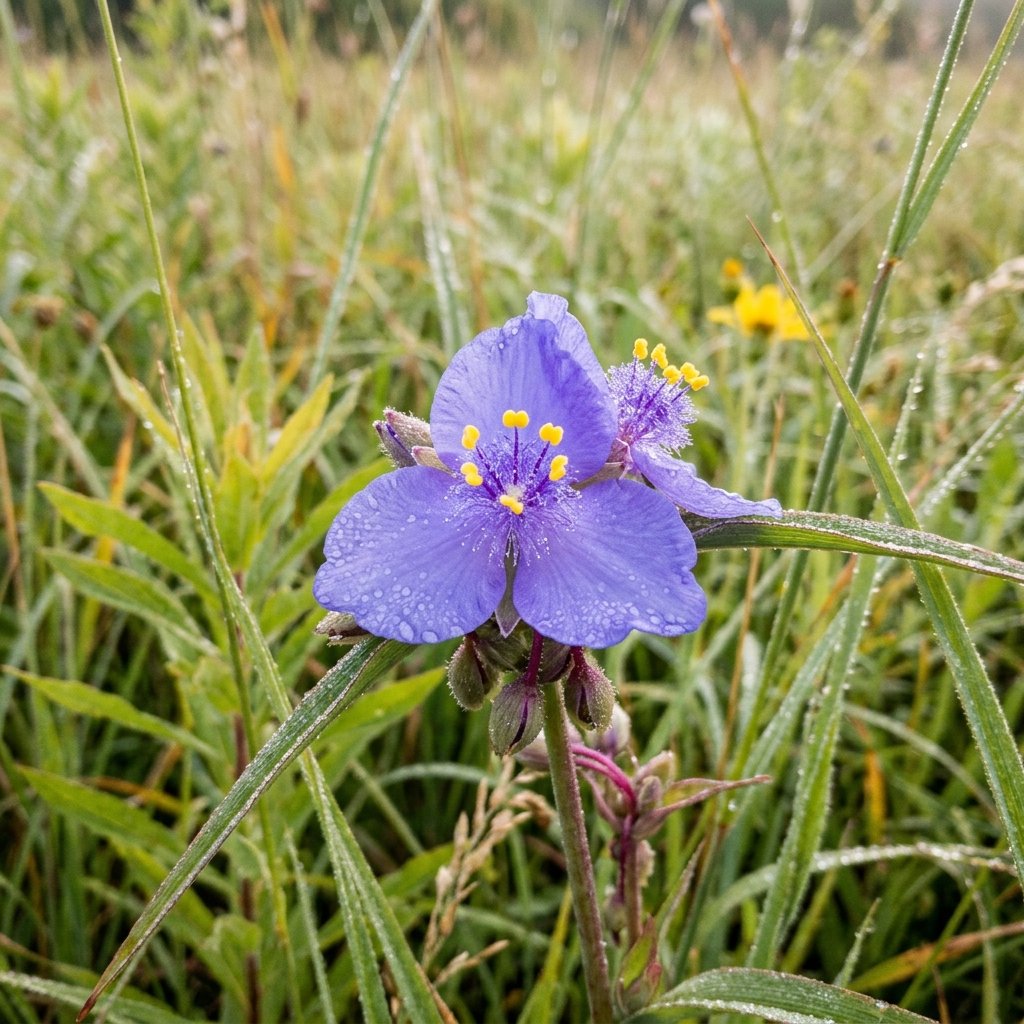
Spiderwort
Tradescantia ohiensis
Spiderwort (*Tradescantia ohiensis* and related species) is a quietly enchanting native wildflower of eastern North America, producing clusters of vivid three-petaled flowers in shades of deep blue-violet, blue, and occasionally white from late spring through summer. Belonging to the Commelinacea...