
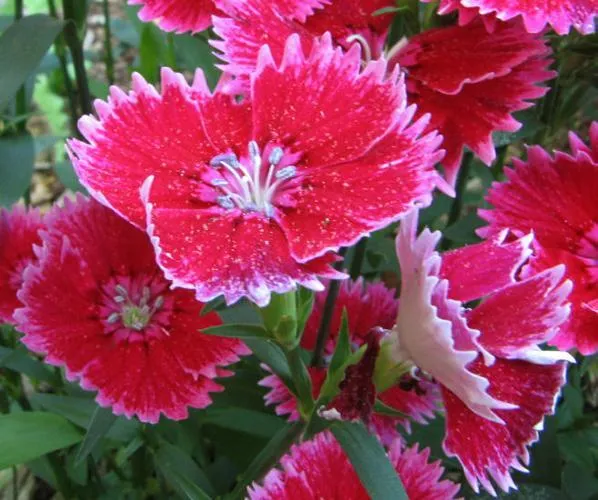
Sweet William (Dianthus barbatus)
Dianthus
How to Identify Sweet William (Dianthus barbatus)
MILDLY TOXIC. Contains triterpenoid saponins that can cause mild vomiting, diarrhea, and contact skin irritation in pets.
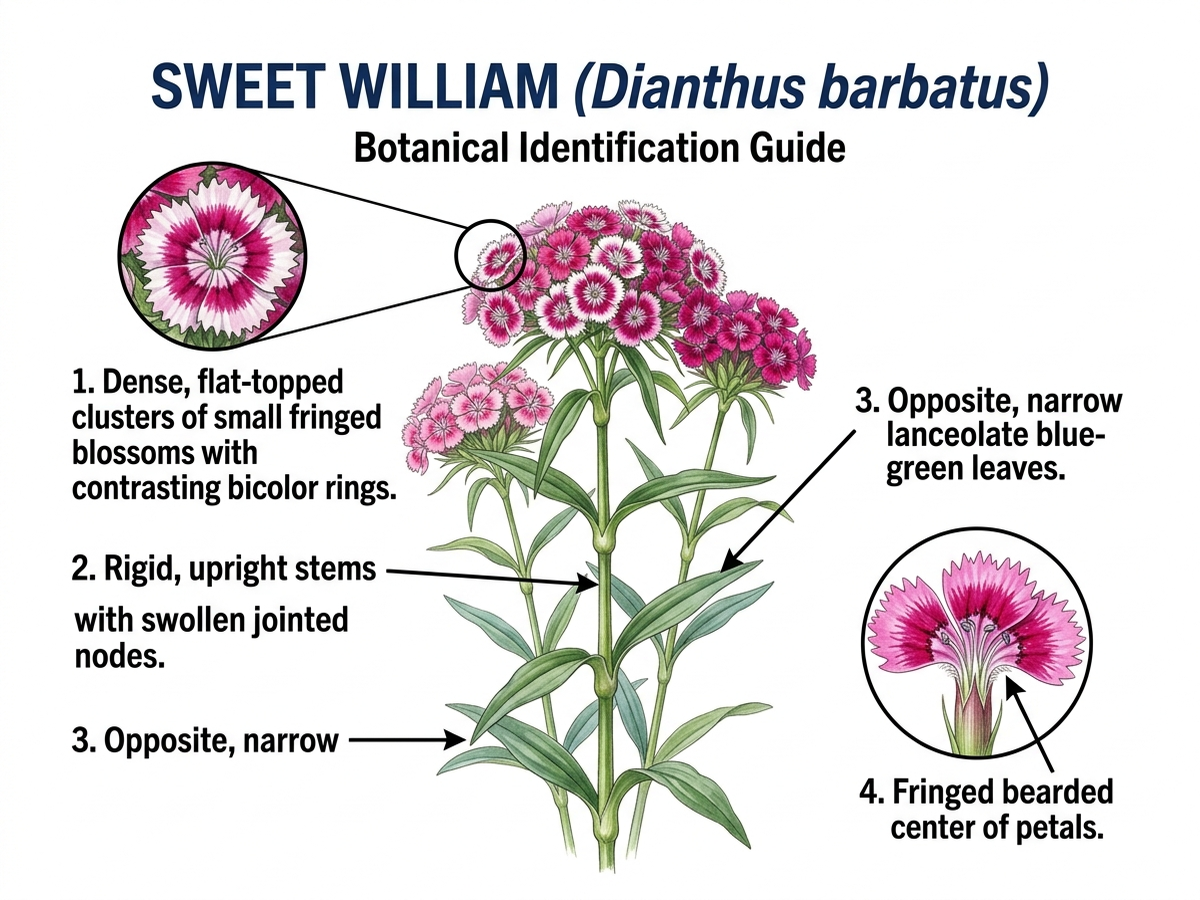
A detailed guide to identifying Sweet William (Dianthus barbatus) and Dianthus species by key botanical features:
- Dense Flat-Topped Clusters: Rounded, flat-topped clusters (cymes) containing 5 to 30 small, fringed blossoms blooming continuously from late spring to midsummer.
- Spicy Clove Fragrance: Intensely scented flowers emitting an old-fashioned, spicy clove aroma.
- Fringed & Bearded Petals: 5 flat petals with serrated, fringed, or toothed margins and bearded centers, often featuring contrasting colored rings or central eyes.
- Rigid Jointed Stems: Upright, sturdy green stems with swollen nodes (joints) and opposite, lanceolate, blue-green foliage.
Types & Sub-types of Dianthus
The genus Dianthus encompasses over 300 species and thousands of cultivars, broadly classified into three primary garden groups based on bloom structure, height, and lifecycle:
- By Flower Structure & Cluster Size:
- Sweet William (Dianthus barbatus): Biennial or short-lived perennial producing dense, flat-topped clusters (cymes) of 5–30 small fringed flowers on sturdy 12–24 inch jointed stems.
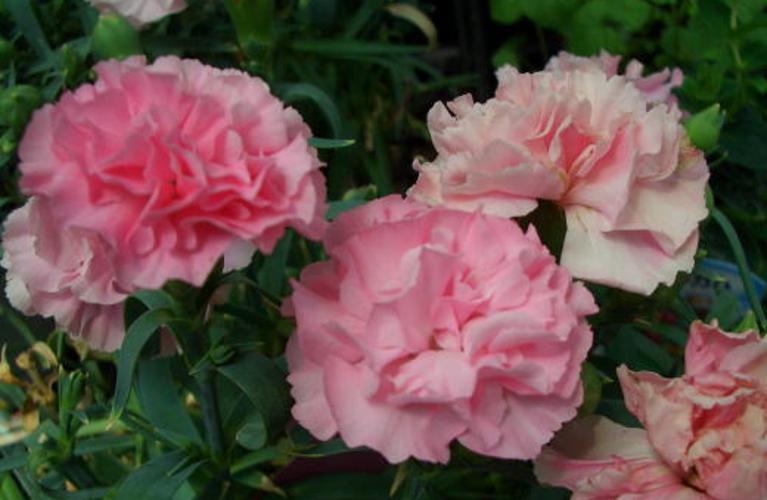
- Carnations (Dianthus caryophyllus): Tall perennials (18–36 inches) producing large, fully double, solitary blossoms on long stems, heavily cultivated for cut flower arrangements.
- Border Pinks / Maiden Pinks (Dianthus deltoides / gratianopolitanus): Low-growing, mat-forming perennials (6–12 inches tall) producing single or semi-double fragrant blossoms over evergreen blue-grey foliage.
- By Lifecycle & Longevity:
- Biennial Dianthus (Sweet William): Forms a lush leafy rosette during the first season and flowers profusely during its second year before setting seed.
- Perennial Dianthus (Pinks & Carnations): Evergreen, long-lived woody-based perennials returning year after year in well-drained soils.
- Annual China Pinks (Dianthus chinensis): Fast-growing annuals cultivated for intense summer bed display in hot climates.
- By Petal Margin & Patterning:
- Fringed / Serrated Varieties: Deeply cut, lace-like petal margins characteristic of D. barbatus and D. plumarius.
- Picotee / Bicolor Eye Varieties: Petals featuring contrasting edge borders or distinct concentric dark rings surrounding the center.
Care & Growing Guide
Sweet William (Dianthus barbatus) Care & Growing Guide:
- Light: Full direct sun (at least 6 hours daily) for vibrant, continuous blooms.
- Soil: Rich, fertile, organic-rich, exceptionally well-draining soil (pH 6.5–7.5).
- Watering: Water moderately when topsoil is dry; avoid soggy soil to prevent root rot.
- Maintenance: Promptly deadhead spent flower clusters to prolong blooming and encourage perennial growth.
Seasonal Blooming & Hardiness
Seasonal Blooming Calendar:
- Peak Bloom: Spring to early summer (typically April through June).
- Planting Time: Sow seeds directly outdoors in early spring after the last frost, or transplant nursery starts in late spring.
Bloom Timeline
About Sweet William (Dianthus barbatus)
Dianthus barbatus, universally cherished as Sweet William, is a charming, fragrant cottage garden biennial or short-lived perennial belonging to the Caryophyllaceae (pink or carnation) family. Native to the mountainous meadows, rocky slopes, and light woodlands of southern and southeastern Europe—particularly Spain, France, and Italy—this historic plant has been cultivated in gardens since Elizabethan times. It is widely celebrated for its dense, flat-topped flower heads packed with small, fringed blossoms that emit a rich, old-fashioned, spicy scent closely resembling cloves.
This upright, clumping plant grows 12 to 24 inches tall with a spread of 9 to 12 inches. It features narrow, lanceolate, mid-green to blue-green leaves that grow in opposite pairs along sturdy, jointed stems. The highlight of the plant is its spectacular inflorescence: dense, rounded, flat-topped clusters (cymes) containing 5 to 30 flowers, blooming continuously from late spring to midsummer. Each flower measures about 0.5 to 0.75 inches across, boasting 5 flat, fringed, or toothed petals. The colors are incredibly vibrant, shining in solid shades of red, pink, white, and purple, or showing intricate bicolor patterns with contrasting 'eyes' or rings.
The reproductive architecture of Sweet William is represented by the floral formula EBr ⊕ ⚥ K(5) C5 A(5+5) G(2-5). This denotes that the flower is ebracteate, radially symmetrical (actinomorphic), and bisexual. It features a calyx of 5 fused sepals forming a rigid, tubular calyx tube supported by narrow, hairy bracts at the base, and a corolla of 5 free, fringed petals with long, narrow bases. The androecium consists of 10 free stamens arranged in two whorls of five, while the syncarpous gynoecium contains 2 to 5 fused carpels forming a single superior ovary with free central placentation.
Sweet William is exceptionally hardy and easy to grow, thriving across a wide range of climates in USDA zones 3 through 9. It prefers full sun—requiring at least 6 hours of direct daily sunlight to bloom profusely—but appreciates light afternoon shade in hot summer regions. It thrives in rich, organic, moist but exceptionally well-drained soils, and is highly favored by slightly alkaline conditions (pH 6.5 to 7.5). Regular deadheading of spent flower heads is highly recommended to extend the blooming period and encourage the plant to persist as a short-lived perennial.
The genus name Dianthus comes from the Greek words 'dios' (divine) and 'anthos' (flower), translating to the 'divine flower' or 'flower of Zeus.' The species name 'barbatus' means bearded, referring to the fringed hairs that decorate the petals' centers, while the common name 'Sweet William' is thought to honor either William Shakespeare, William the Conqueror, or Saint William of York. Historically, these spicy-scented blossoms were woven into Elizabethan chaplets and wedding crowns. In the language of flowers, Sweet William stands as a symbol of gallantry, finesse, and heroic courage.
When integrating Sweet William into your home landscape, pet safety must be carefully monitored. Dianthus barbatus is classified as MILDLY TOXIC to dogs and cats by veterinary safety organizations. The primary toxic principles are triterpenoid saponins found throughout the plant's tissues. If chewed or ingested, it can cause mild gastrointestinal irritation, vomiting, and diarrhea. Additionally, the sap can trigger mild contact dermatitis (skin irritation and redness) in sensitive pets who brush against broken stems. For safe gardening tips and non-toxic alternatives, explore our Pet Guard catalog.
Sweet William is occasionally confused with Garden Phlox (Phlox paniculata) or other Dianthus species like Carnations. It is easily distinguished from Phlox by its distinctly fringed, toothed petals (Phlox petals are completely smooth-edged) and its rigid, jointed stems, and from carnations by its dense, flat-topped flower clusters rather than single, massive blossoms. Compare key differences in our Dianthus vs Phlox guide. It pairs beautifully with other historic favorites; we suggest planting it with Canterbury Bells or Sweet Pea. To see more Caryophyllaceae species, check our Flower Identifier.
Floral Formula & Features
Ebracteate (no bracts), radially symmetrical (actinomorphic), bisexual, 5 fused sepals forming tube, 5 free petals with fringed edges and long claws, 10 stamens in 2 whorls of 5, 2-5 fused carpels with superior ovary and free central placentation
- Scientific Name & Classification: Dianthus barbatus (Caryophyllaceae). Commonly known as Sweet William, Pinks, and Bearded Pink.
- Identification Markers: Upright jointed stems with opposite lanceolate leaves. Dense, flat-topped clusters of small fringed flowers with a spicy clove scent.
- Floral Formula (EBr ⊕ ⚥ K(5) C5 A(5+5) G(2-5)): Radially symmetrical, bisexual flowers with 5 free fringed petals, 10 stamens, and superior ovary.
- Growing Requirements: Prefers full sun; thrives in fertile, organic, well-draining, slightly alkaline soil. Moderate watering; cold-hardy (Zones 3-9).
- Cultural Significance: Name translates to 'Divine Flower' in Greek; 'barbatus' refers to bearded flower centers. Symbolizes gallantry and finesse.
- Safety & Toxicity: MILDLY TOXIC. Contains triterpenoid saponins that can cause mild vomiting, diarrhea, and contact skin irritation in pets.
- Common Look-alikes: Confused with Phlox, but distinguished by fringed, toothed petal margins, bearded centers, and jointed stems. Compare in our Dianthus vs Phlox guide.
- Internal Links: Traditional cottage pairing planted beside Canterbury Bells or Sweet Pea; explore differences in our Dianthus vs Phlox comparison or browse our Flower Identifier.
Names in Different Languages
Botanical Classification: Sweet William (Dianthus barbatus) belongs to the Caryophyllaceae family. Learn how to identify its floral symmetry, stamen arrangement, and structural formulas in our Botanical Family Classification Guide.
Toxicity & Safety
Always keep toxic plants out of reach of children and pets. Consult a veterinarian or medical professional immediately if ingestion is suspected.
Frequently Asked Questions
What is Floral Formula?
A floral formula is a symbolic representation of a flower's structure using letters, numbers, and special symbols. It provides a concise way to describe the arrangement and number of floral parts.
This formula describes the flower's symmetry, sepals, petals, stamens, and carpels in a standardized format.
Formula Sequence
- Bract: Br or Ebr
- Bracteole: Brl or Ebrl
- Symmetry: % (Radial) or ⊕ (Bilateral)
- Sex: ♀ (Female), ♂ (Male), or ⚥ (Bisexual)
- Calyx/Sepal: K<number> (Free or Fused)
- Corolla/Petal: C<number> (Free or Fused)
- Androecium: A<number> (Free or Fused)
- Gynaecium: G<number> (Superior or Inferior Ovary)
Symbol Meanings
- Numbers: Indicate quantity of parts
- Parentheses (): Parts are fused together
- Plus (+): Parts in different whorls
- Underline: Superior ovary position
- Overline: Inferior ovary position
- ∞: Numerous parts (too many to count)
Understanding floral formulas helps botanists quickly identify and classify flowers based on their structural characteristics.
Similar Flowers
Discover flowers that share botanical characteristics
Similar Characteristics
4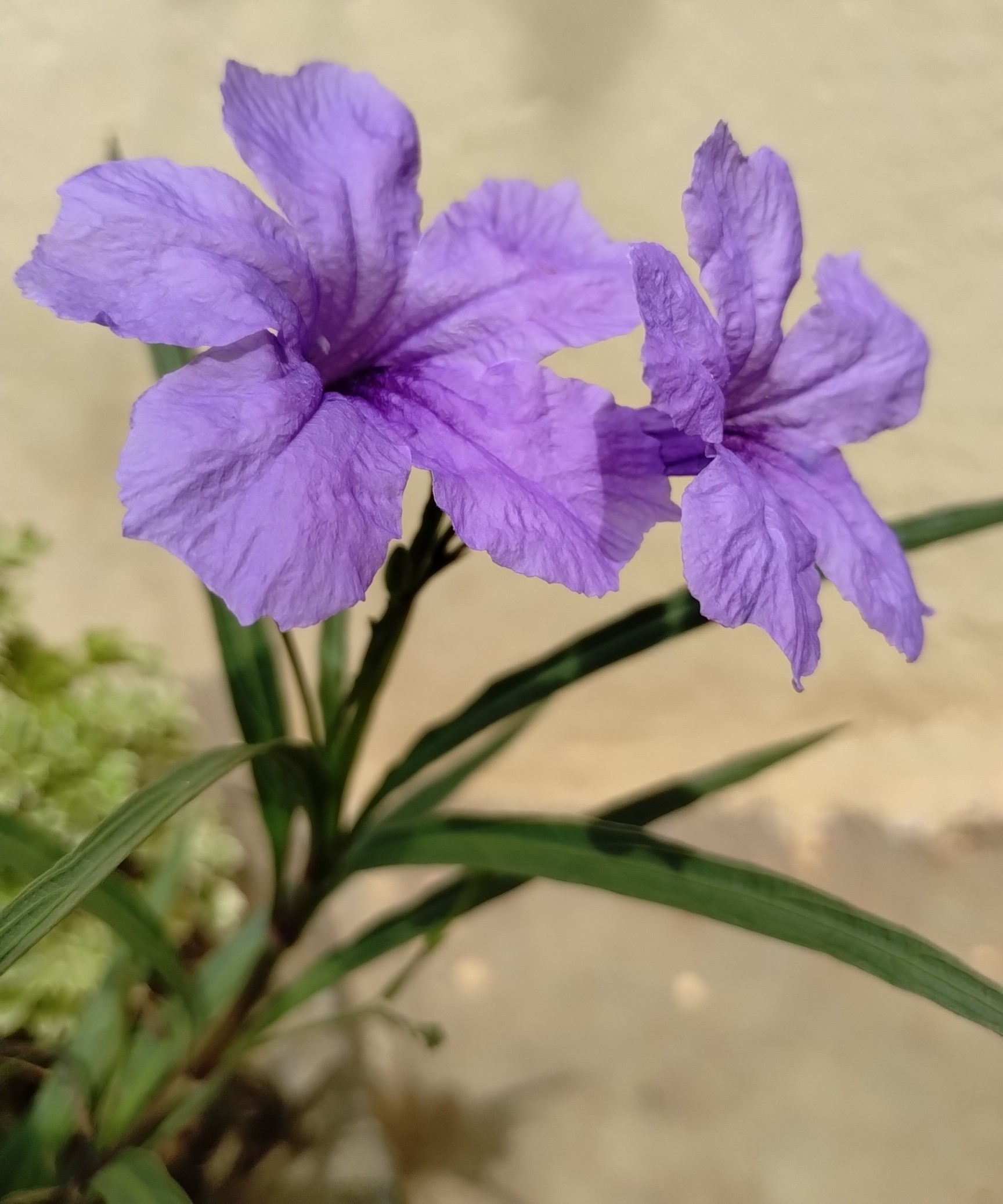
Mexican Petunia
Ruellia simplex
The Mexican Petunia, botanically classified as Ruellia simplex (and historically referred to as Ruellia brittoniana), is an exceptionally vigorous, upright herbaceous perennial belonging to the Acanthaceae (acanthus) family. Native to the warm, moisture-rich woodlands, riverbanks, and wet meadows...
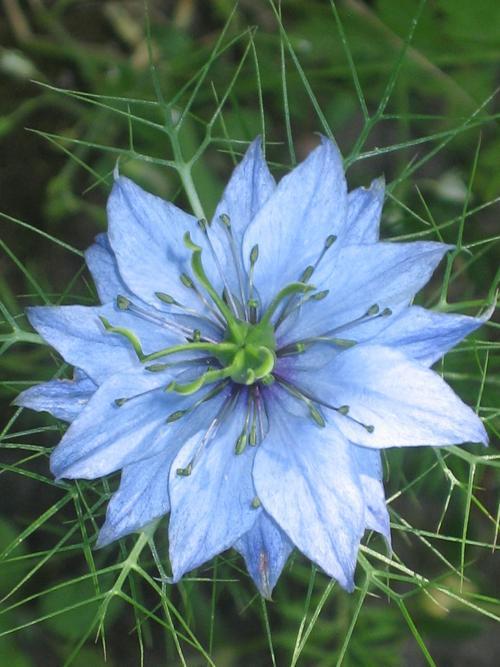
Love in a mist
Nigella damascena
The Love-in-a-mist, botanically designated as Nigella damascena and belonging to the family Ranunculaceae (the buttercup family), is a beloved, old-fashioned hardy annual flower. Native to the sunny hills, open meadows, and coastal fields of southern Europe, North Africa, and southwestern Asia—es...
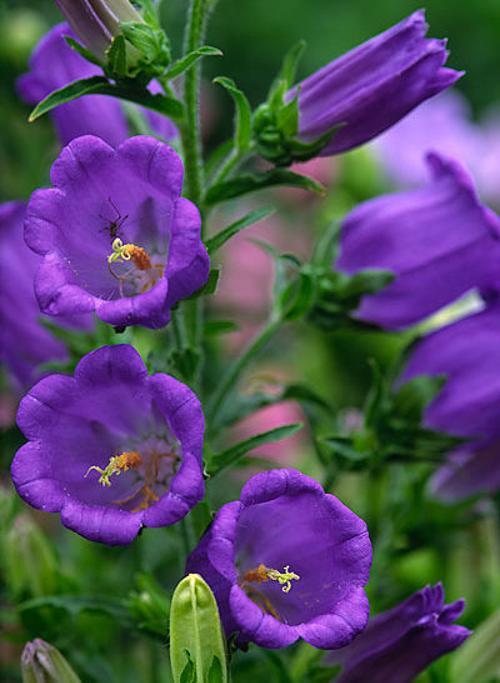
Canterbury bells
Campanula medium
Campanula medium, commonly known as Canterbury Bells, is a quintessential cottage garden biennial that brings a sense of Victorian elegance and whimsical charm to any landscape. Belonging to the Campanulaceae family, this species is native to the sun-drenched hills of Southern Europe, particularl...
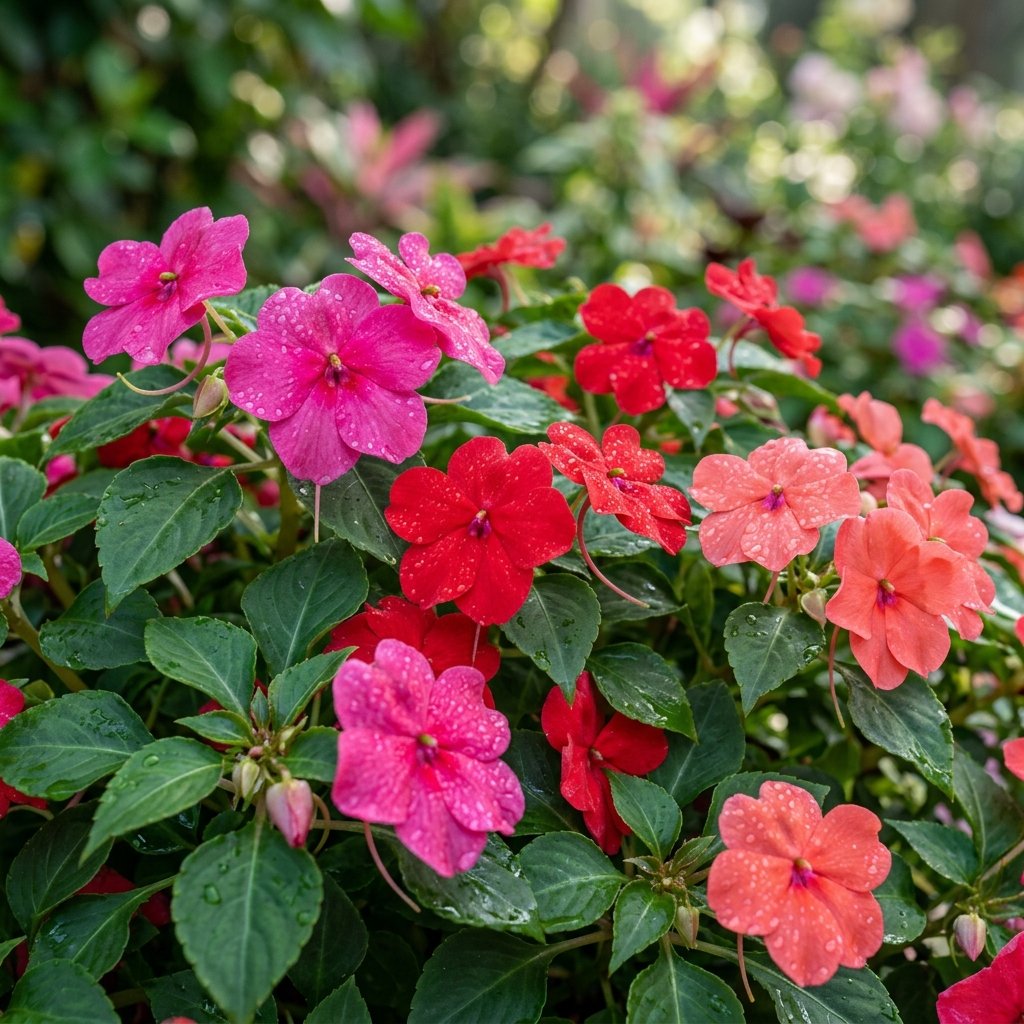
Impatiens Walleriana
Impatiens walleriana
Impatiens Walleriana, botanically classified as *Impatiens walleriana* and universally celebrated across the gardening world as Busy Lizzie, Sultana, or Patient Lucy, is an exceptionally popular, prolific, and shade-tolerant herbaceous perennial commonly cultivated as an annual. Belonging to the...