
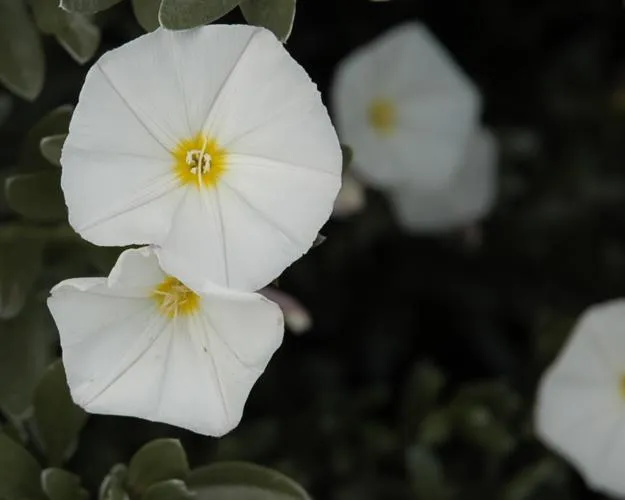
Silverbush
Convolvulus cneorum
How to Identify Silverbush
NON-TOXIC. Safe for cats, dogs, and horses, offering a highly tactile, worry-free landscaping choice for pet owners.
Care & Growing Guide
Seasonal Blooming & Hardiness
Seasonal Blooming Calendar:
- Peak Bloom: Spring to early summer (typically April through June).
- Planting Time: Sow seeds directly outdoors in early spring after the last frost, or transplant nursery starts in late spring.
Bloom Timeline
About Silverbush
The Silverbush, botanically classified as Convolvulus cneorum and widely referred to as the Silvery Bindweed or Bush Morning Glory, is an exceptionally elegant, compact evergreen shrub belonging to the Convolvulaceae (morning glory) family. Unlike its sprawling, climbing vine cousins, this species forms a neat, mounded woody shrub that shimmers with a brilliant metallic sheen under sunlight. Native to the rugged, sun-bleached limestone cliffs and coastal rocks of the Mediterranean basin—particularly in coastal Spain, Italy, Croatia, Albania, and Greece—it is celebrated for its extreme resilience and premium ornamental appeal in water-wise landscapes.
Growing into a tight, rounded hummock measuring 1.5 to 3 feet in height and spreading 3 feet wide, Convolvulus cneorum is characterized by its magnificent lance-shaped leaves. Each leaf is densely clothed in fine, silky, silver-grey hairs that reflect heat and preserve moisture, giving the entire canopy a unique silvery-white or platinum appearance. From mid-spring through late summer, the shrub produces dense clusters of satin-white, funnel-shaped flowers that measure 1 to 1.5 inches across. The blooms emerge from lovely pink-tinged, spiraled buds and open to reveal a bright, contrasting yellow star-like center.
The reproductive architecture of the Silverbush is represented by the botanical floral formula EBr ⊕ ⚥ K(5) C(5) A5 G(2). This formula indicates that the flowers are ebracteate, radially symmetrical (actinomorphic), and bisexual. The calyx is composed of 5 fused sepals that provide a sturdy, protective base, while the corolla features 5 fused petals that create the characteristic morning-glory-like trumpet or funnel shape. The androecium consists of 5 stamens attached directly to the inner walls of the corolla tube, surrounding a syncarpous gynoecium with 2 fused carpels and a superior ovary that matures into a small capsule.
Convolvulus cneorum is an exceptionally tough xeriscape plant, specifically adapted to thrive in nutrient-poor, rocky, and alkaline soils. It requires full, intense, direct sunlight, needing at least 6 to 8 hours of daily exposure to maintain the dense, reflective silvery hairs on its foliage; shade will cause the plant to grow leggy and lose its metallic luster. It demands superb, sharp soil drainage and is highly susceptible to root rot if planted in heavy clay or kept in soggy conditions. Once established, it requires minimal supplemental water and easily survives USDA hardiness zones 8 through 11.
The genus name Convolvulus is derived from the Latin verb 'convolvere,' which means 'to twine' or 'to wind around,' in reference to the typical vining habit of most species in the family, while the specific epithet cneorum is an ancient Greek term used by Theophrastus for a small, evergreen daphne-like shrub. In regional languages, it is known as Campanilla de plata in Spanish, Liseron argenté in French, and हरिनखुरी (Harinakhuri) in Hindi. Culturally, it is prized as a symbol of serene resilience and structural beauty, bringing dramatic contrast to mixed perennial borders and coastal rockeries.
For families with pets, the Silverbush is a highly recommended and worry-free landscaping addition. Convolvulus cneorum is classified as completely NON-TOXIC to cats, dogs, and horses by leading global veterinary safety groups, including the ASPCA. Its soft, silky leaves do not contain harmful sap or irritating chemical compounds, making it entirely safe for domestic animals to brush against, sniff, or play around in the yard. To learn more about integrating beautiful, drought-tolerant, and pet-friendly shrubs into your garden designs, please explore our Pet Guard catalog.
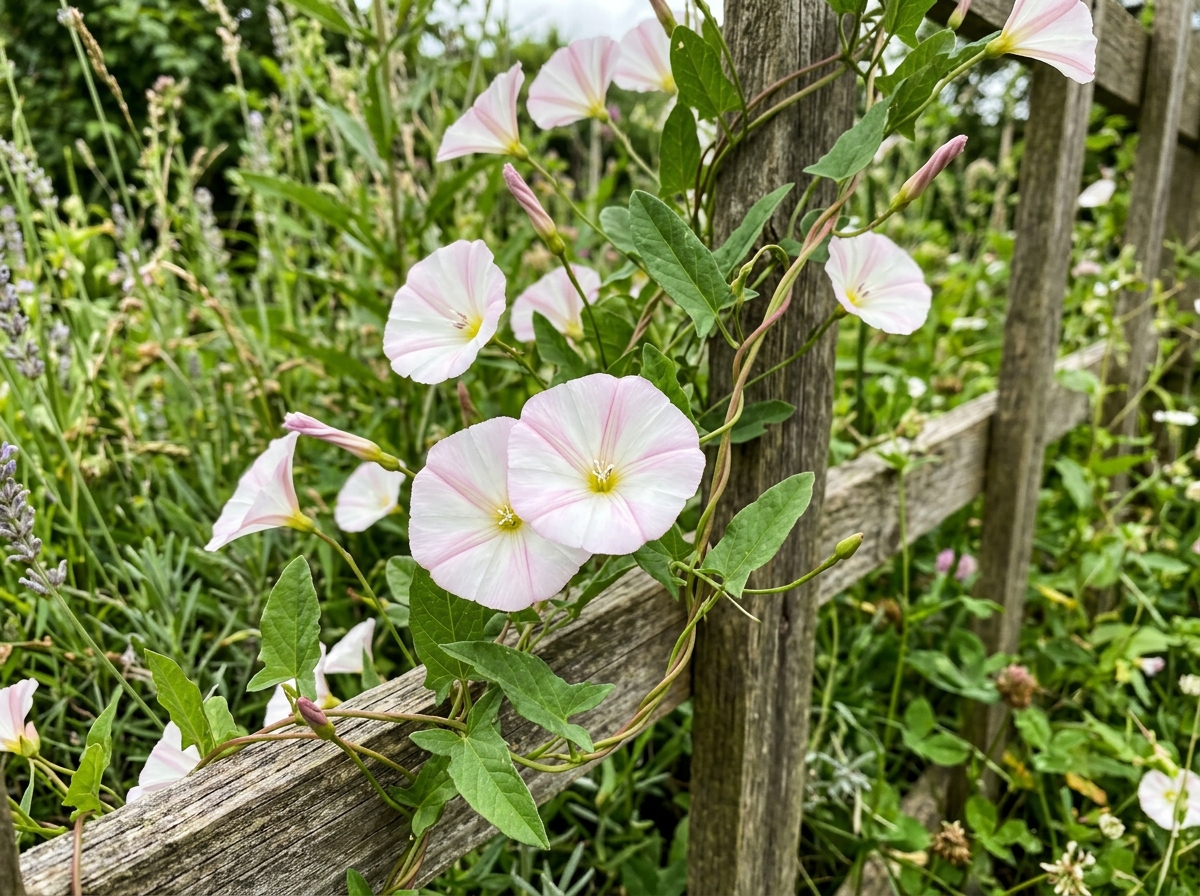
Silverbush is occasionally confused with other silvery shrubs like Lavender Cotton (Santolina chamaecyparissus) or Olive shrubs. It is easily distinguished because Convolvulus cneorum features soft, silk-textured morning-glory-like white trumpets, whereas Santolina produces yellow button-like composite heads and deeply dissected foliage. Its vining relative is the wild Bindweed (Convolvulus arvensis). It serves as a beautiful accent plant when grown alongside other water-wise specimens; we suggest pairing it with sunny Gazania or low-growing Cigar Flower. To discover more drought-tolerant Mediterranean flowers, visit our Flower Identifier.
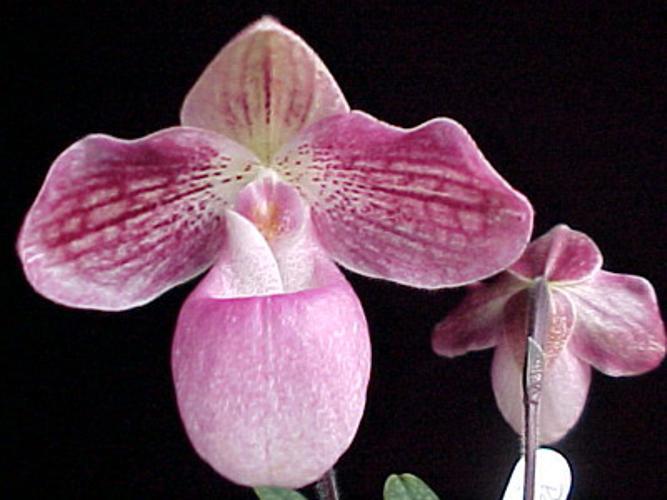
For more botanical profiles and flower identification features, see our guides on Siam Tulip and Silver Slipper Orchid.
Floral Formula & Features
Ebracteate, actinomorphic (radially symmetrical), bisexual, 5 fused sepals, 5 fused petals creating a funnel-shaped corolla, 5 stamens attached to the corolla, 2 fused carpels with superior ovary
- Scientific Name & Classification: Convolvulus cneorum (Convolvulaceae). Commonly known as Silverbush, Silvery Bindweed, and Bush Morning Glory.
- Identification Markers: Compact, rounded evergreen shrub with lance-shaped, silky silver-grey leaves. Funnel-shaped white flowers with brilliant yellow throats.
- Floral Formula (EBr ⊕ ⚥ K(5) C(5) A5 G(2)): Radially symmetrical, bisexual morning-glory-like flowers with 5 fused petals, 5 stamens, and a superior ovary.
- Growing Requirements: Full, blazing sun (6+ hours); thrives in lean, rocky, or sandy soils with exceptional drainage. Avoid overwatering and damp soil (Zones 8-11).
- Cultural Significance: Species name cneorum traces back to ancient Greek botanical descriptions. A timeless favorite in modern dry garden borders and Mediterranean rockeries.
- Safety & Toxicity: NON-TOXIC. Safe for cats, dogs, and horses, offering a highly tactile, worry-free landscaping choice for pet owners.
- Common Look-alikes: Confused with Lavender Cotton or wild Olive shrubs, but distinguished by its prominent, silky, morning-glory-type white blossoms. For a vining relative in the same family, see Bindweed.
- Internal Links: Pairs exceptionally well in hot rockeries alongside cheerful Gazania or heat-loving Cigar Flower; explore more varieties in our Flower Identifier.
Names in Different Languages
Botanical Classification: Silverbush belongs to the Convolvulaceae family. Learn how to identify its floral symmetry, stamen arrangement, and structural formulas in our Botanical Family Classification Guide.
Toxicity & Safety
Frequently Asked Questions
What is Floral Formula?
A floral formula is a symbolic representation of a flower's structure using letters, numbers, and special symbols. It provides a concise way to describe the arrangement and number of floral parts.
This formula describes the flower's symmetry, sepals, petals, stamens, and carpels in a standardized format.
Formula Sequence
- Bract: Br or Ebr
- Bracteole: Brl or Ebrl
- Symmetry: % (Radial) or ⊕ (Bilateral)
- Sex: ♀ (Female), ♂ (Male), or ⚥ (Bisexual)
- Calyx/Sepal: K<number> (Free or Fused)
- Corolla/Petal: C<number> (Free or Fused)
- Androecium: A<number> (Free or Fused)
- Gynaecium: G<number> (Superior or Inferior Ovary)
Symbol Meanings
- Numbers: Indicate quantity of parts
- Parentheses (): Parts are fused together
- Plus (+): Parts in different whorls
- Underline: Superior ovary position
- Overline: Inferior ovary position
- ∞: Numerous parts (too many to count)
Understanding floral formulas helps botanists quickly identify and classify flowers based on their structural characteristics.
Similar Flowers
Discover flowers that share botanical characteristics
Similar Characteristics
4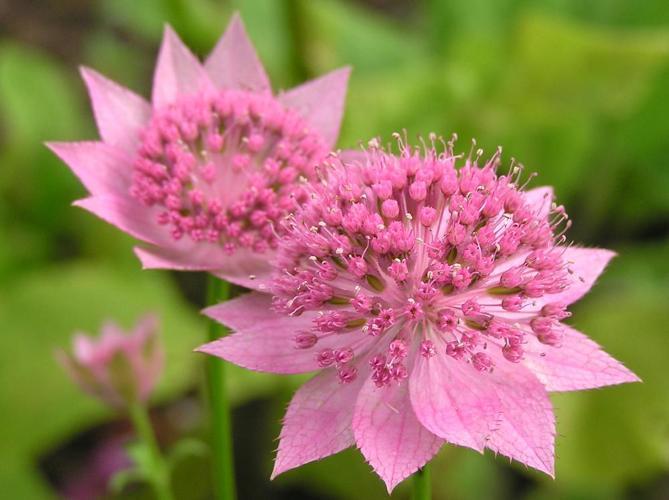
Masterwort
Astrantia
Distinctive perennial with star-shaped flower heads composed of tiny florets surrounded by prominent papery bracts that resemble a pincushion filled with decorative pins. The showy bracts come in shades of pink, white, cream, and red, creating a delicate star-like appearance. Popular cottage gard...
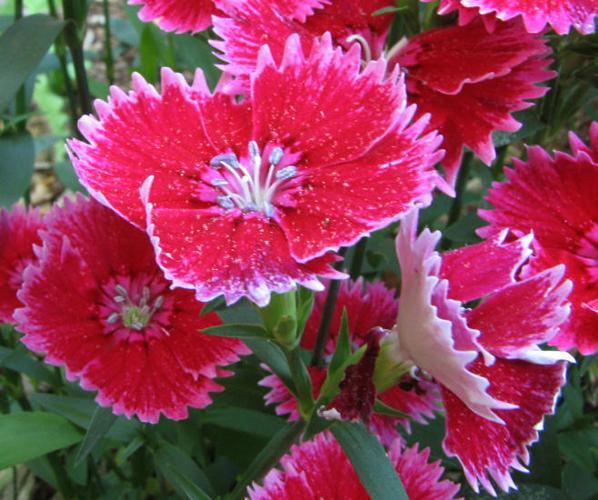
Sweet William (Dianthus barbatus)
Dianthus
Dianthus barbatus, universally cherished as Sweet William, is a charming, fragrant cottage garden biennial or short-lived perennial belonging to the Caryophyllaceae (pink or carnation) family. Native to the mountainous meadows, rocky slopes, and light woodlands of southern and southeastern Europe...
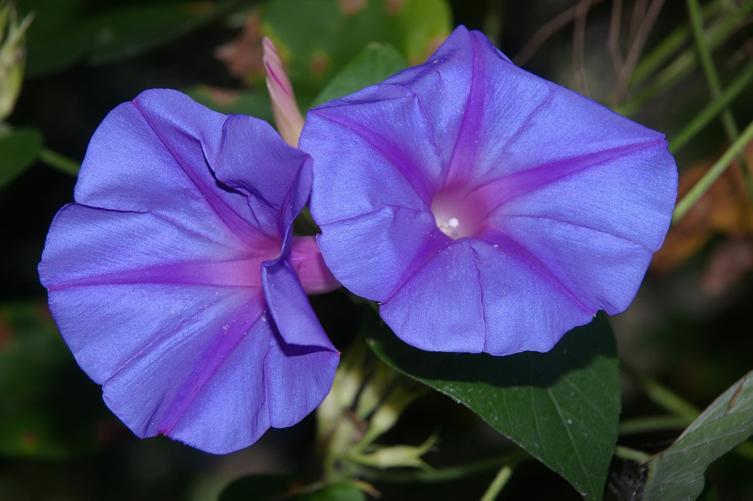
Morning Glory
Ipomoea tricolor
The Morning Glory, botanically designated as Ipomoea tricolor (and including the closely related *Ipomoea purpurea*), is an exceptionally vigorous, fast-growing climbing annual vine. Belonging to the family Convolvulaceae (the bindweed or morning glory family, tribe Ipomoeeae), this classic garde...
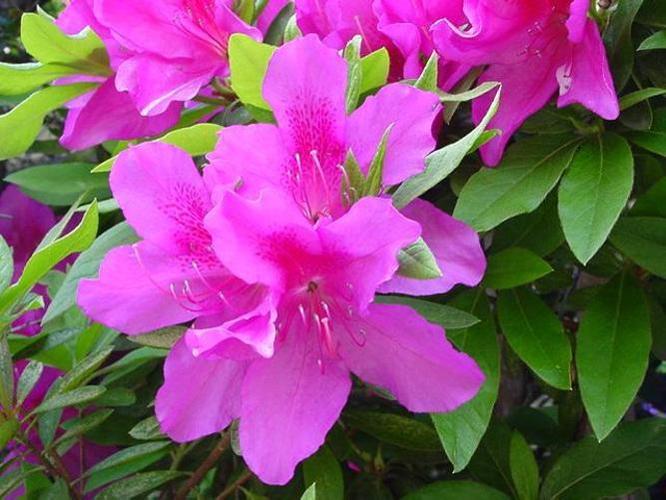
Azalea
Rhododendron (subgenus Tsutsusi)
The Azalea, botanically classified as Rhododendron (specifically under the subgenera Tsutsusi and Pentanthera) and belonging to the family Ericaceae (the heath family), is an exceptionally spectacular, heavy-blooming woody perennial shrub. Native primarily to the cool, damp woodlands, mountain sl...