
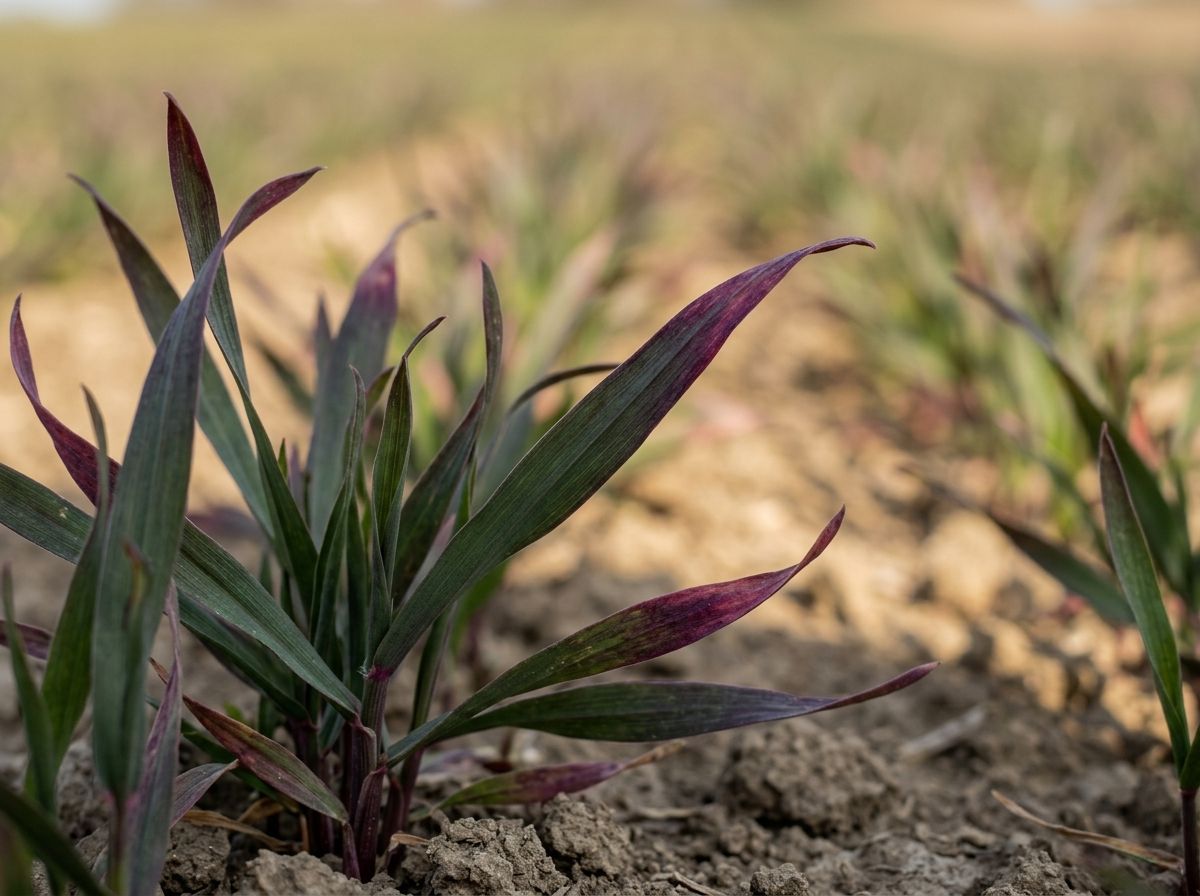
Phosphorus Deficiency
Phosphorus Deficientia
How to Identify Phosphorus Deficiency on Wheat

Visible Symptoms
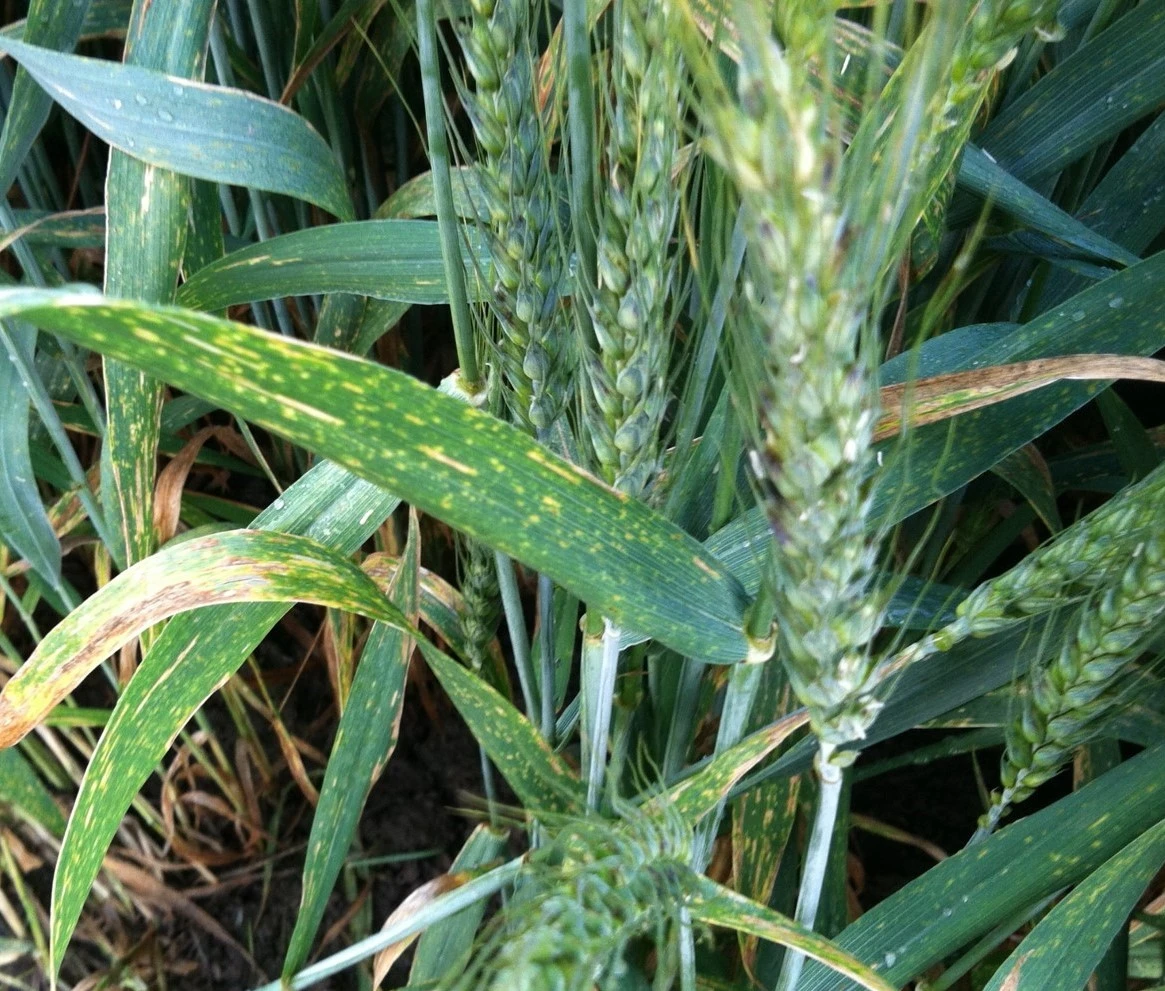
Stunted seedling growth accompanied by abnormally dark, dull-green foliage. Leaves develop distinct purple or bronze discolorations starting at the tips and margins of older basal leaves due to anthocyanin accumulation. Poor crown root anchoring leaves plants vulnerable to drought stress.
About Phosphorus Deficiency
Phosphorus deficiency severely impairs cellular energy transfer (ATP synthesis), root architecture development, and early seedling establishment in wheat crops. Because phosphorus is immobile in soil, seedlings struggle to absorb adequate phosphorus in cold or high-pH soils, causing stunted nodal roots, poor winter hardiness, delayed heading, and uneven crop maturity.
Nutrient Role & Deficiency Cause
Phosphorus deficiency severely impairs cellular energy transfer (ATP synthesis), root architecture development, and early seedling establishment in wheat crops. Because phosphorus is immobile in soil, seedlings struggle to absorb adequate phosphorus in cold or high-pH soils, causing stunted nodal roots, poor winter hardiness, delayed heading, and uneven crop maturity.
Seasonal Outbreak Calendar
Outbreak risk and activity timeline for Phosphorus Deficiency based on seasonal climate patterns:
Treatment & Correction Guide
Natural & Organic Methods
Chemical & Professional Control
Frequently Asked Questions
Why must phosphorus fertilizer always be drilled below the seed at sowing in wheat?
Phosphorus is virtually immobile in soil, moving less than 2 to 3 mm from the fertilizer granule. Broadcasting P on the surface leaves it stranded in dry topsoil where wheat crown roots cannot reach it. Banding or drilling DAP 2–3 cm below the seed places it directly in the path of expanding seminal and crown roots.
Why do phosphorus-deficient wheat leaves turn purple in winter?
When phosphorus is deficient, the plant cannot synthesize ATP to transport sugars out of leaves into roots. The accumulating sugars trigger anthocyanin pigment synthesis, which manifests as vivid purple or reddish-bronze coloration on older leaves and leaf sheaths, especially during cold winter nights.
How does phosphorus deficiency affect wheat root anchoring and lodging?
Phosphorus drives the formation of secondary crown roots (adventitious roots) at the sub-crown node at 20–25 DAS. Without crown roots, the wheat plant is supported solely by weak primary seminal roots, causing hills to topple easily under late-season winds.
What is the difference between DAP and SSP for wheat in neutral vs alkaline soils?
DAP (18-46-0) provides high-analysis P and starter nitrogen, making it ideal for large-scale mechanized drilling. SSP (16% P2O5, 11% S, 19% Ca) is superior in sulfur-deficient or sodic soils because the accompanying sulfate and calcium prevent sulfur deficiency and improve crumb structure.
Can cold winter soils cause phosphorus deficiency even when soil test levels are adequate?
Yes. Soil temperatures below 10°C (50°F) reduce root metabolic respiration and slow the physical diffusion rate of phosphate ions by up to 70%. Seedlings develop classic purple-leaf symptoms until soil warms up in early spring.
Recommended diagnostics based on crop family and symptoms:
Remedy Disclaimer & Safety Notice
This disease guide is for educational screening purposes only. Pathogen behavior, severity, and host susceptibility can vary dramatically based on seed variety, weather conditions, and regional microclimates. Chemical pesticides and organic treatments are subject to strict regional environmental regulations and registration mandates. Please verify all chemical registrations and review manufacturer safety labels carefully with local certified agronomists or agricultural extension service offices before applying.