
Septoria Leaf Spot
Septoria lycopersici
About Septoria Leaf Spot
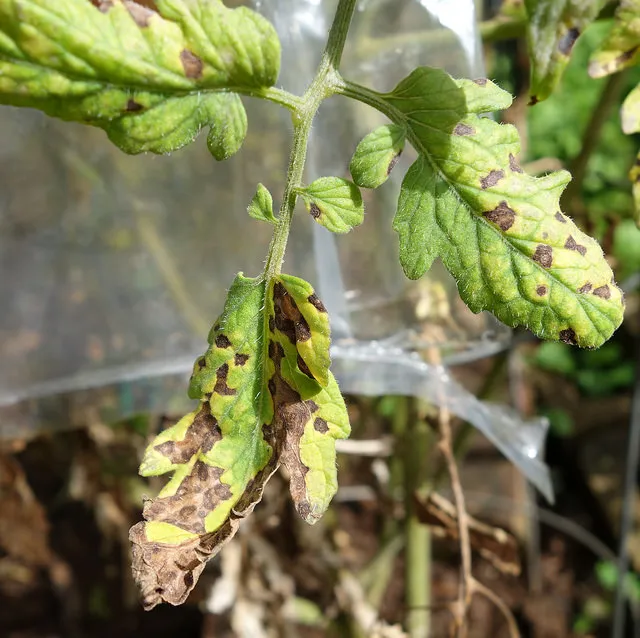
Septoria Leaf Spot, caused by the destructive ascomycete fungus *Septoria lycopersici*, is one of the most common, aggressive, and economically damaging foliar diseases of tomatoes (*Solanum lycopersicum*) and other Solanaceous crops. Belonging to the family *Mycosphaerellaceae* under the order *Mycosphaerellales*, this pathogen causes extensive leaf spotting that begins on the oldest lower leaves and rapidly spreads upward. By destroying foliar tissues, the fungus causes severe premature defoliation. This leaf loss exposes developing fruits to direct sunlight, leading to extreme sunscald and drastically reducing crop yields.
Identifying Septoria leaf spot involves examining lower leaves for highly characteristic lesion patterns. Symptoms begin as small, circular, water-soaked spots (1.5–3 mm) on the undersides of older leaves. As these spots mature, they develop dark brown borders surrounding a highly diagnostic, circular, ash-grey or tan center. Under magnification, the grey centers are peppered with tiny, black, pimple-like fruiting bodies called pycnidia. Spherically shaped, these pycnidia ooze sticky gelatinous spore coils when wet. Affected leaves turn yellow, wither, and drop, leaving stems bare.
Although highly destructive to tomatoes, *Septoria lycopersici* can also infect other members of the nightshade family, including eggplants and potatoes, as well as some wild solanaceous weeds.
| Affected Solanaceous Crops | Severity Rating | Damage Symptoms |
|---|---|---|
| Tomatoes (Solanum lycopersicum) | Extreme (⭐⭐⭐) | Circular grey spots, pycnidia specks, severe lower defoliation, sunscald |
| Potatoes, Eggplants | High (⭐⭐) | Foliar leaf spots, chlorotic halos, localized drying, lower yield |
| Horsenettle, Nightshade weeds | Medium (⭐) | Minor leaf spots, reservoir host survival for agricultural spores |
The fungus overwinters as dormant mycelium and pycnidia on infected crop residue, volunteer tomato plants, and weed hosts. In warm, wet summer weather (20°C to 25°C with frequent rain or dew), the pycnidia absorb moisture and swell, discharging millions of microscopic conidia. These sticky spores are spread primarily by splashing rain, overhead sprinkler irrigation, garden tools, and crawling insects. Organic control focuses on strict sanitation: raking and removing all crop residue in autumn, mulching around plant bases to prevent soil splashing, and avoiding overhead watering. Chemical sprays rely on protective copper hydroxide or chlorothalonil. For complete foliar disease guides, check our Plant Disease Identifier Hub, or explore similar fungal profiles like Early Blight, Late Blight, and Anthracnose.
Taxonomy & Features
- Pimpled Grey Centers: Circular leaf spots develop a dark brown border with an ash-grey center peppered with tiny black pycnidia spore bodies.
- Lower Canopy Start: Infection strictly starts on the oldest lower leaves touching the soil, migrating upward through rain splash.
- Fruit-Shield Sunscald: Defoliates the lower leaves rapidly, exposing ripening green tomato fruit to intense sunlight and causing severe sunscald.
- Wet-Triggered Spore Ooze: Spherically shaped pycnidia absorb rain and dew, oozing sticky microscopic conidia in massive gelatinous coils.
- Foliar Focus: Unlike early or late blight, Septoria lycopersici restricts its infection to leaves and stems, rarely attacking fruit directly.
- Straw/Mulch Shield: Applying a thick layer of organic straw mulch blocks water droplets from splashing soil-borne spores onto lower leaves.
Seasonal Outbreak Calendar
Outbreak risk and activity timeline for Septoria Leaf Spot based on seasonal climate patterns:
Names in Different Languages
Affected Plant Species
Vegetables & Crops
- Tomato (Highly preferred)
- Eggplant
- Potato
- Tomatillo
- Horsenettle weed
- Black Nightshade weed
Flowers & Ornamentals
- None
Fruits & Berries
- None
Prevention & Cure
Natural & Organic Methods
- Foliar Straw Mulch: Apply a 2-3 inch layer of clean straw, pine needles, or plastic mulch around tomato bases to prevent rain splash of soil spores.
- Pruning Lower Leaves: Prune off and discard the lower 12-18 inches of tomato branches once the plant grows to eliminate soil contact.
- Watering Discipline: Water the soil directly using drip irrigation or soaker hoses; avoid overhead sprinkler watering to keep foliage dry.
- Crop Rotation: Practice a strict 3-year rotation in nightshade beds, growing beans, corn, or leafy greens to starve soil spores.
Chemical & Professional Control
- Protective Copper Sprays: Apply liquid copper octanoate or copper hydroxide sprays thoroughly to leaf undersides at the first sign of spotting.
- Chlorothalonil Fungicides: Spray chlorothalonil or mancozeb protectively every 7-10 days during cool, rainy summer forecasts.
- Sanitizing Tools: Dip pruning shears in 70% isopropyl alcohol regularly when pruning different tomato plants to block transmission.
Frequently Asked Questions
Does Septoria Leaf Spot affect the tomato fruit directly?
No. Unlike other pathogens like early blight or late blight, Septoria lycopersici almost never infects the tomato fruit itself. However, it is still highly damaging because it causes extreme lower canopy defoliation. Without a protective leaf canopy, the exposed ripening tomato fruits develop severe sunscald, rot, and drop.
What are the tiny black dots inside the grey leaf spots?
The tiny black dots are called 'pycnidia.' These are the spherical, microscopic fungal fruiting structures produced by the Septoria fungus. When mature and exposed to wet weather, they act like tiny spores pumps, swelling and oozing out sticky, thread-like coils containing millions of conidia spores to start new infections.
How do I distinguish Septoria Leaf Spot from Early Blight?
Septoria spots are small (1.5-3 mm), numerous, circular, and have dark brown borders surrounding a clear, ash-grey center filled with tiny black pinhead dots (pycnidia). Early Blight lesions are much larger (up to 12 mm), dark brown, and have a highly distinct, concentric target-board ring pattern with yellow halos.
Recommended diagnostics based on crop family and symptoms:
Remedy Disclaimer & Safety Notice
This disease guide is for educational screening purposes only. Pathogen behavior, severity, and host susceptibility can vary dramatically based on seed variety, weather conditions, and regional microclimates. Chemical pesticides and organic treatments are subject to strict regional environmental regulations and registration mandates. Please verify all chemical registrations and review manufacturer safety labels carefully with local certified agronomists or agricultural extension service offices before applying.