
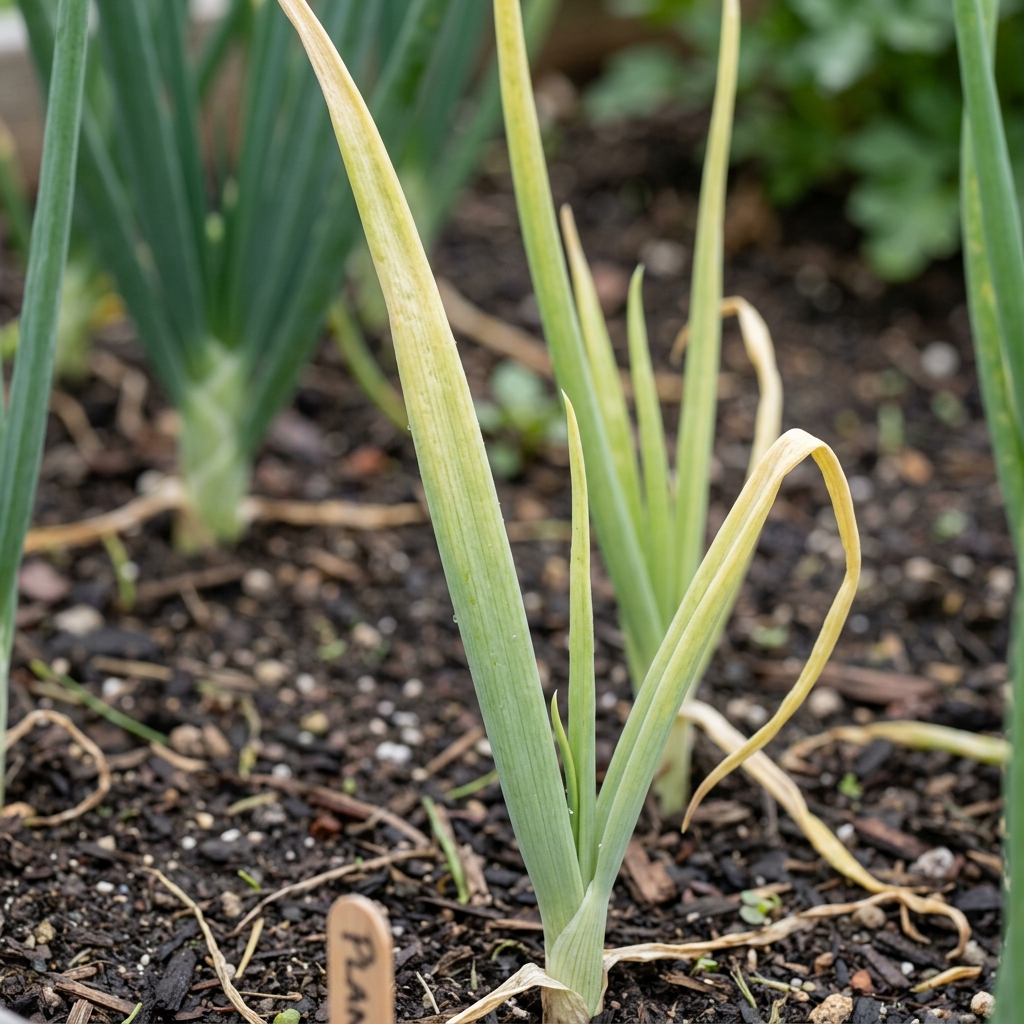
Nitrogen Deficiency
Nitrogen Deficientia
How to Identify Nitrogen Deficiency on Onion

Visible Symptoms
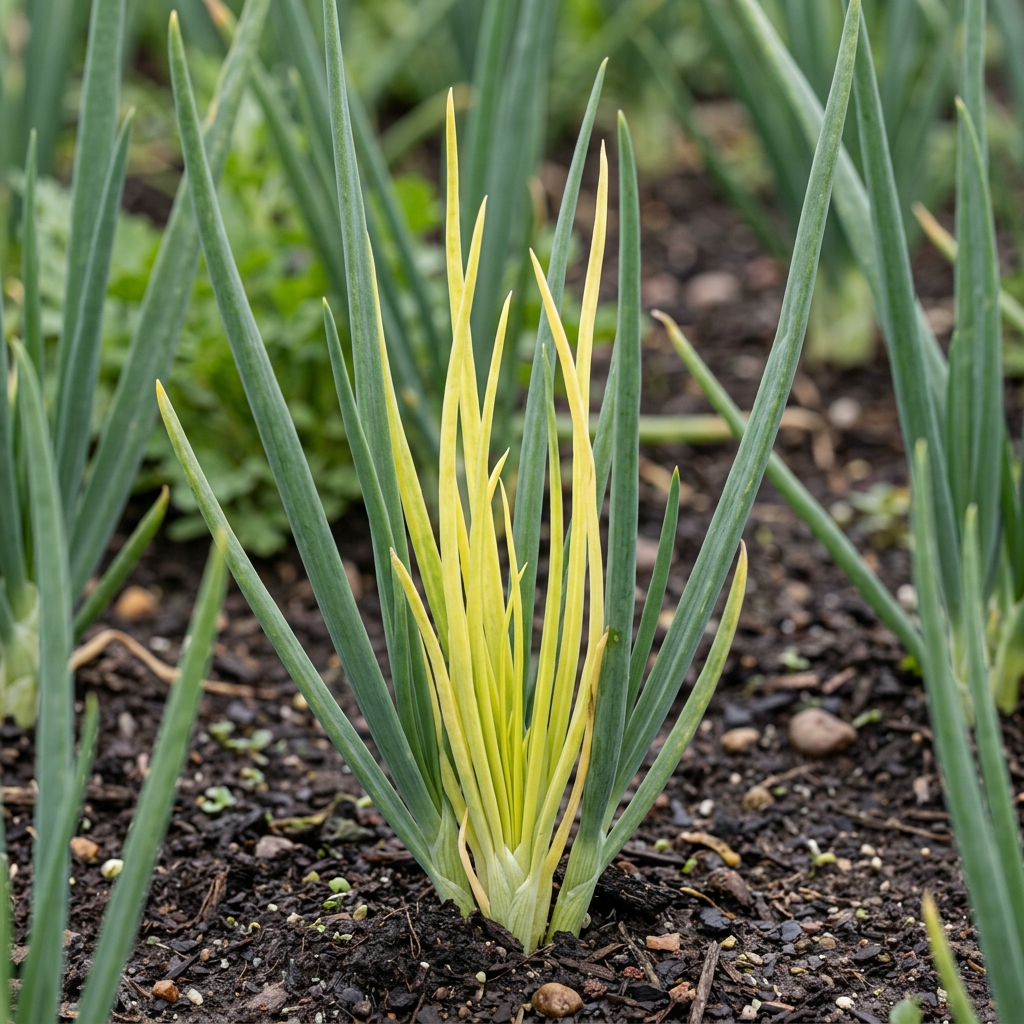
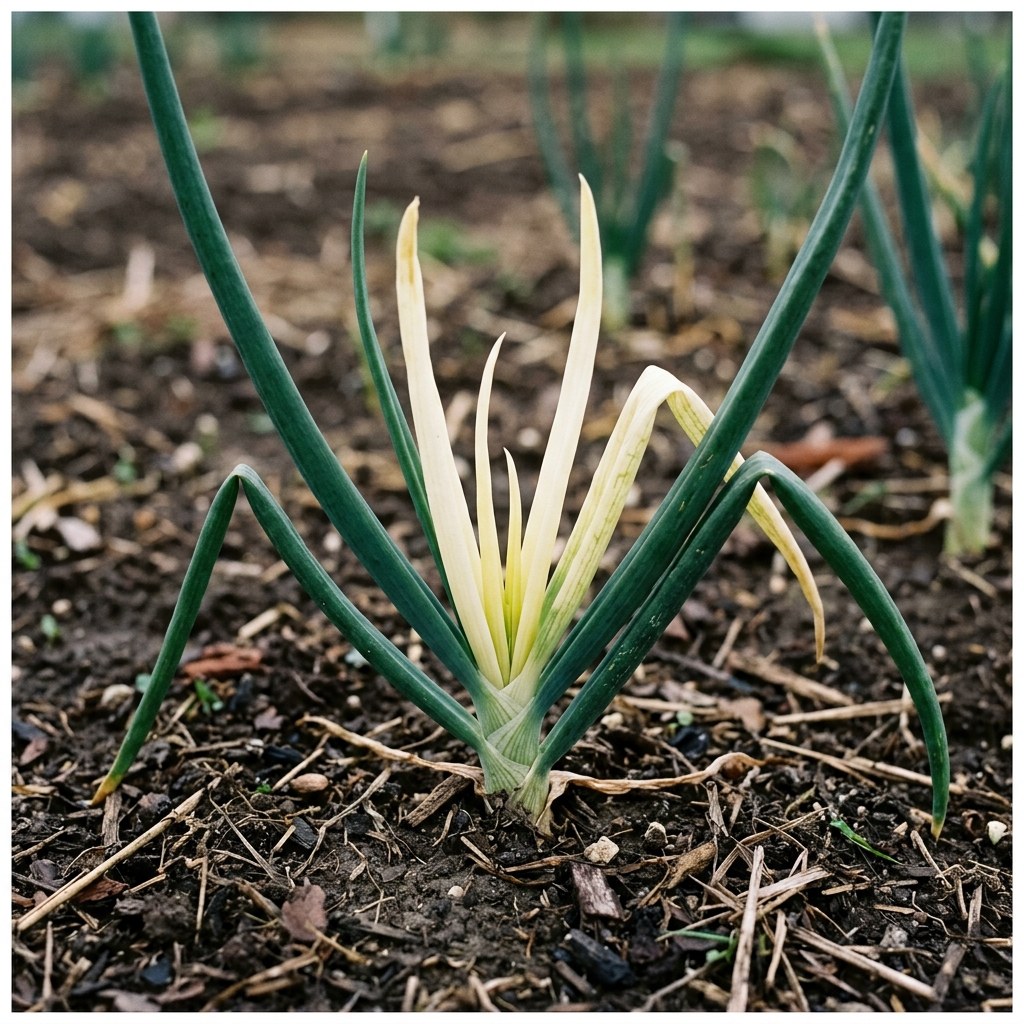
Older tubular leaves turn pale green, then yellow starting from leaf tips. Tips shrivel and die back prematurely. Stems grow thin and bulb development is stunted.
About Nitrogen Deficiency
Nitrogen deficiency in onions stunts foliage development, reducing photosynthetic capacity and severely limiting final bulb sizes.
Nutrient Role & Deficiency Cause
Nitrogen deficiency in onions stunts foliage development, reducing photosynthetic capacity and severely limiting final bulb sizes.
Seasonal Outbreak Calendar
Outbreak risk and activity timeline for Nitrogen Deficiency based on seasonal climate patterns:
Treatment & Correction Guide
Natural & Organic Methods
Chemical & Professional Control
Frequently Asked Questions
When should I apply nitrogen to onions to prevent deficiency?
Onions have a shallow root system and require nitrogen early in vegetative development. Split applications are critical: apply 40% at planting, 30% at 30 days after transplanting, and 30% at 45 to 50 days. Stop all nitrogen 30 days prior to harvest.
Why does nitrogen deficiency cause premature bulbing in onions?
Each onion leaf blade represents one bulb scale layer. If nitrogen is restricted early, the plant stops producing new leaves and enters emergency bulbing, forming small, undersized 'button' bulbs with very low yield.
What happens if I apply nitrogen too late in the onion season?
Late nitrogen applications (during late bulb swelling) prevent the neck from drying and shrinking, causing 'thick necks' or 'bull necks' that cannot seal, leaving the bulb vulnerable to bacterial soft rot and mold in storage.
How fast can foliar spray 19:19:19 revive nitrogen-deficient onions?
Foliar water-soluble 19:19:19 (4–5 g/L) is absorbed through tubular leaf stomata within hours, producing visible deepening of green leaf color in 48 to 72 hours, with vigorous new leaf growth in 5 to 7 days.
Can sandy soils cause severe nitrogen deficiency in onions?
Yes. Nitrate (NO3⁻) is highly soluble and leaches rapidly below the top 15 cm of sandy soil with heavy rain or irrigation. On sandy soils, apply nitrogen in smaller, frequent weekly doses through drip lines or top-dressings.
Recommended diagnostics based on crop family and symptoms:
Remedy Disclaimer & Safety Notice
This disease guide is for educational screening purposes only. Pathogen behavior, severity, and host susceptibility can vary dramatically based on seed variety, weather conditions, and regional microclimates. Chemical pesticides and organic treatments are subject to strict regional environmental regulations and registration mandates. Please verify all chemical registrations and review manufacturer safety labels carefully with local certified agronomists or agricultural extension service offices before applying.