
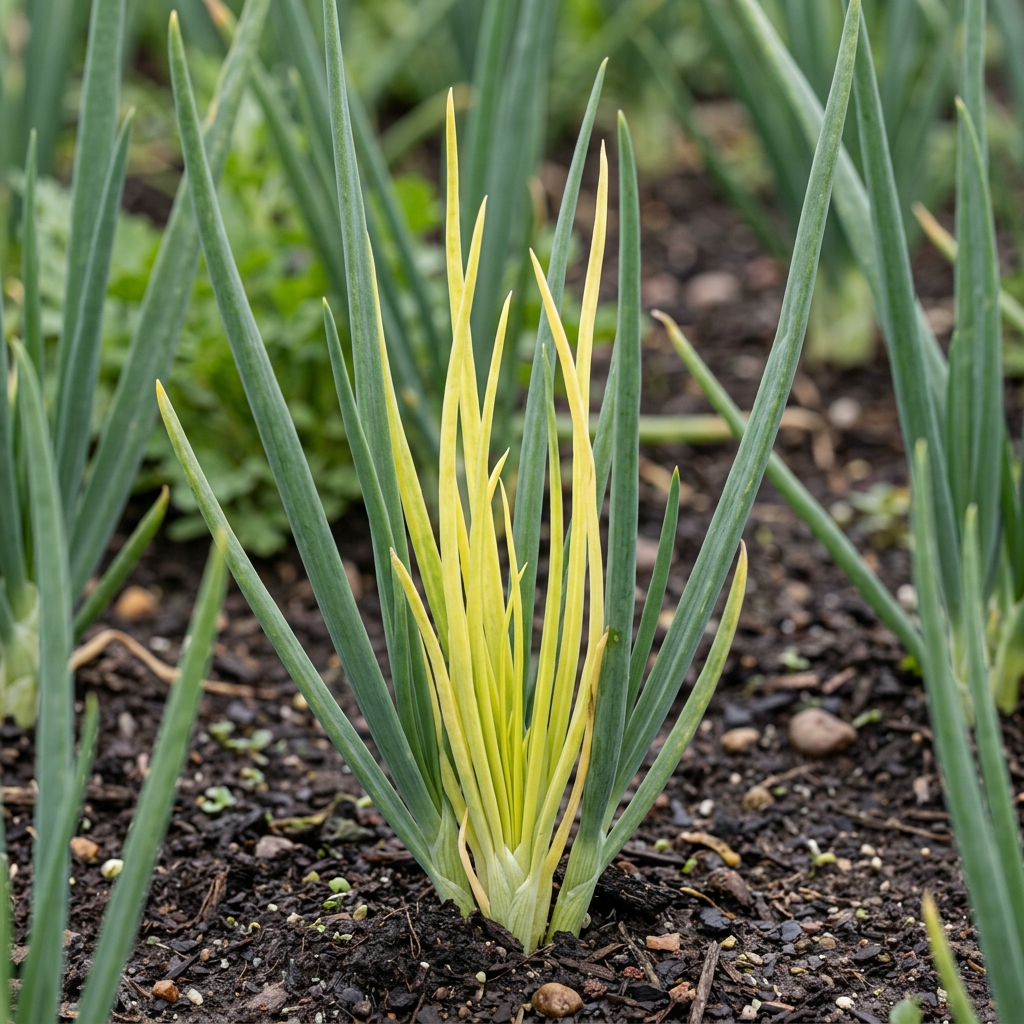
Sulfur Deficiency
Sulfur Deficientia
How to Identify Sulfur Deficiency on Onion

Visible Symptoms
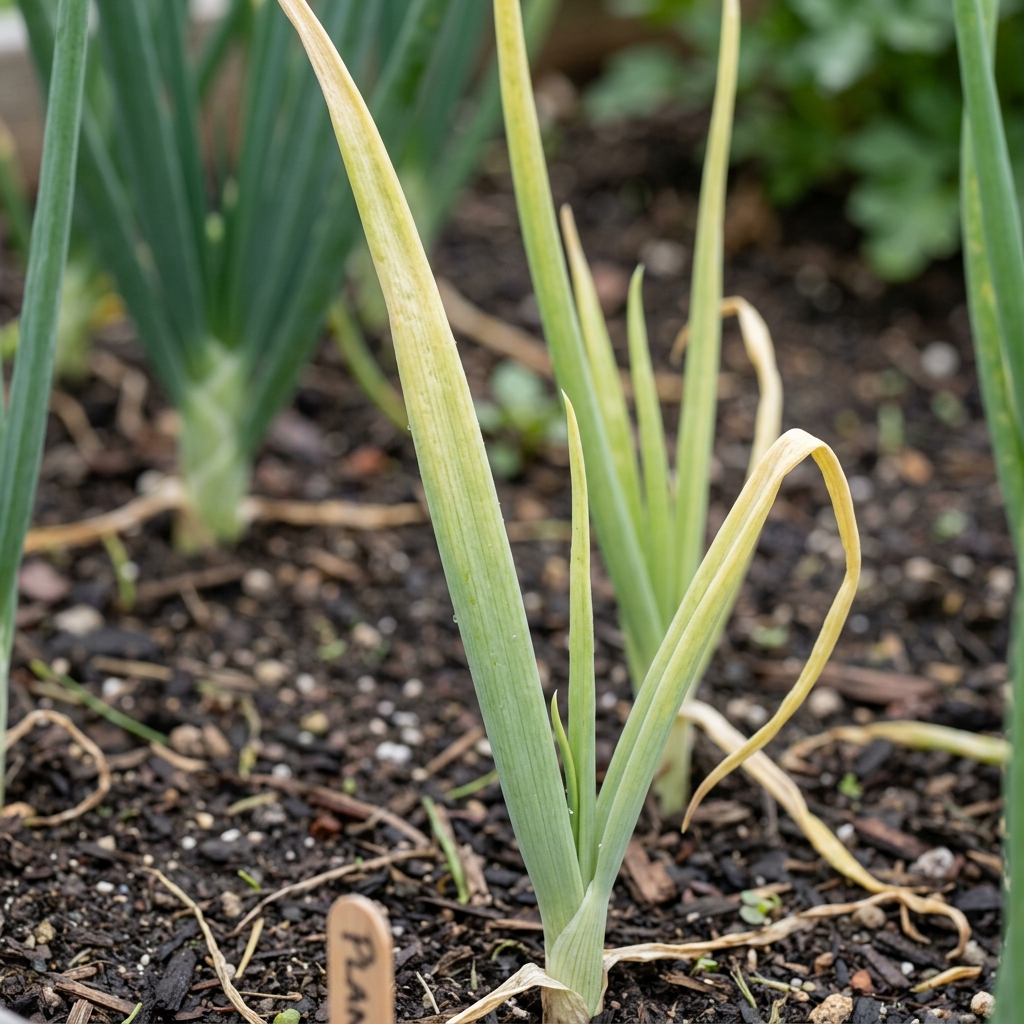
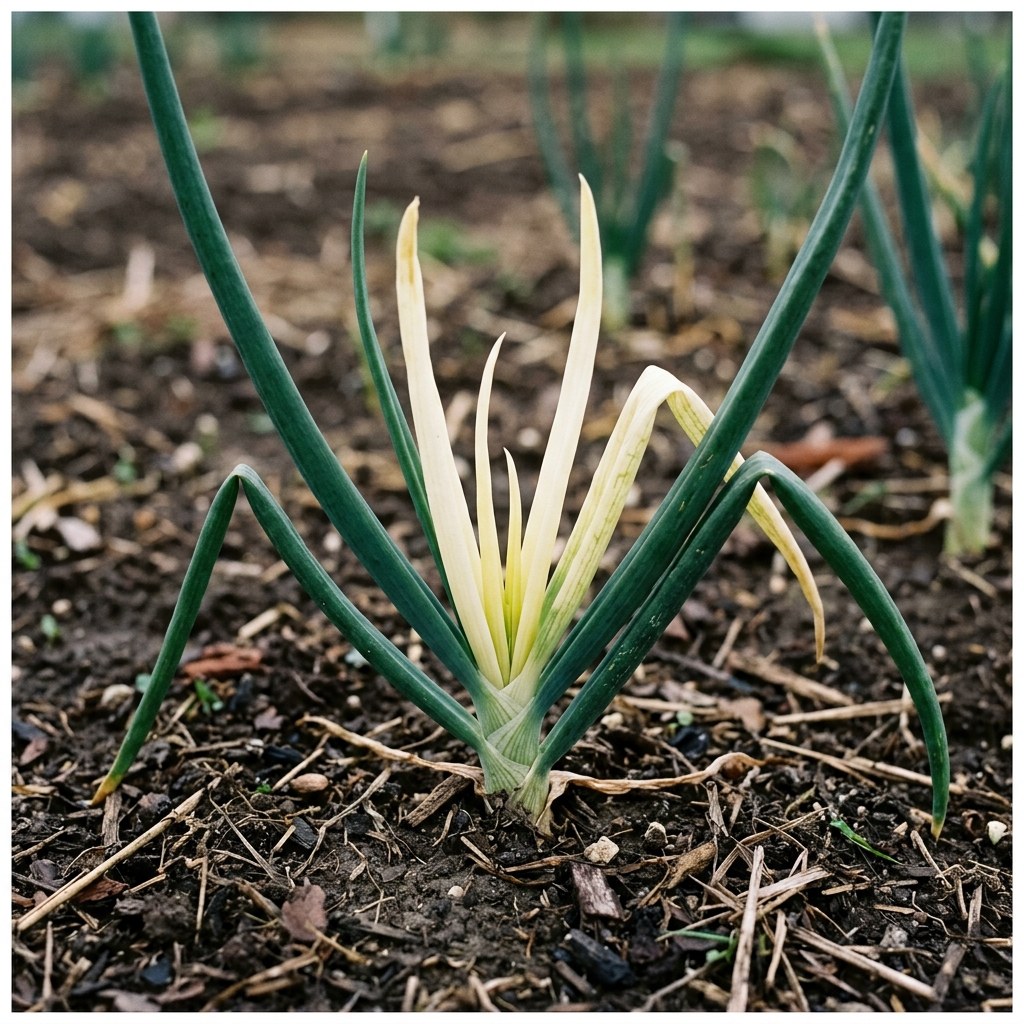
Young inner leaves turn uniformly light green to pale yellow first, while older leaves remain green. Plants are stunted and bulbs are small and lack typical onion pungency.
About Sulfur Deficiency
Onions have high sulfur demands to synthesize volatile flavor compounds (allyls). Sulfur is immobile in plants, so deficiency affects young, inner leaves first, unlike Nitrogen.
Nutrient Role & Deficiency Cause
Onions have high sulfur demands to synthesize volatile flavor compounds (allyls). Sulfur is immobile in plants, so deficiency affects young, inner leaves first, unlike Nitrogen.
Seasonal Outbreak Calendar
Outbreak risk and activity timeline for Sulfur Deficiency based on seasonal climate patterns:
Treatment & Correction Guide
Natural & Organic Methods
Chemical & Professional Control
Frequently Asked Questions
Why do onions need so much sulfur compared to other vegetables?
Onions are heavy sulfur feeders because sulfur is the core component of alliin and thiosulfinate oils, which create the characteristic pungency, flavor, and medicinal properties of onions. Adequate sulfur also thickens outer scales and extends post-harvest shelf life.
How do I distinguish sulfur deficiency from nitrogen deficiency in onions?
Sulfur deficiency appears on the youngest central leaves first because sulfur is immobile. In contrast, nitrogen is highly mobile, so nitrogen deficiency yellows the oldest outer leaves first while new leaves remain green.
Does agricultural gypsum change soil pH when applied for sulfur?
No. Agricultural gypsum (calcium sulfate dihydrate, CaSO4·2H2O) is a neutral salt. It delivers 18% sulfate sulfur and 22% calcium directly to onion roots without altering soil pH, making it ideal for neutral to alkaline soils.
What is the best fertilizer to quickly correct sulfur deficiency in onions?
Ammonium sulfate (21-0-0 + 24% S) applied at 20–25 kg/acre provides the fastest soil response (4–6 days) because sulfate (SO4²⁻) is immediately available for root uptake. For foliar rescue, a 1% Magnesium Sulfate spray provides visible greening in 3–5 days.
Can sulfur deficiency affect onion bulb storage life?
Yes, significantly. Sulfur-deficient bulbs have thinner, papery outer skin and lower dry matter content, making them much more susceptible to storage rots and early sprouting during post-harvest storage.
Recommended diagnostics based on crop family and symptoms:
Remedy Disclaimer & Safety Notice
This disease guide is for educational screening purposes only. Pathogen behavior, severity, and host susceptibility can vary dramatically based on seed variety, weather conditions, and regional microclimates. Chemical pesticides and organic treatments are subject to strict regional environmental regulations and registration mandates. Please verify all chemical registrations and review manufacturer safety labels carefully with local certified agronomists or agricultural extension service offices before applying.