
Onion
Onions are highly responsive to soil mineral balances. Tip burn, sulfur yellowing, and boron center corking are major challenges in onion production.
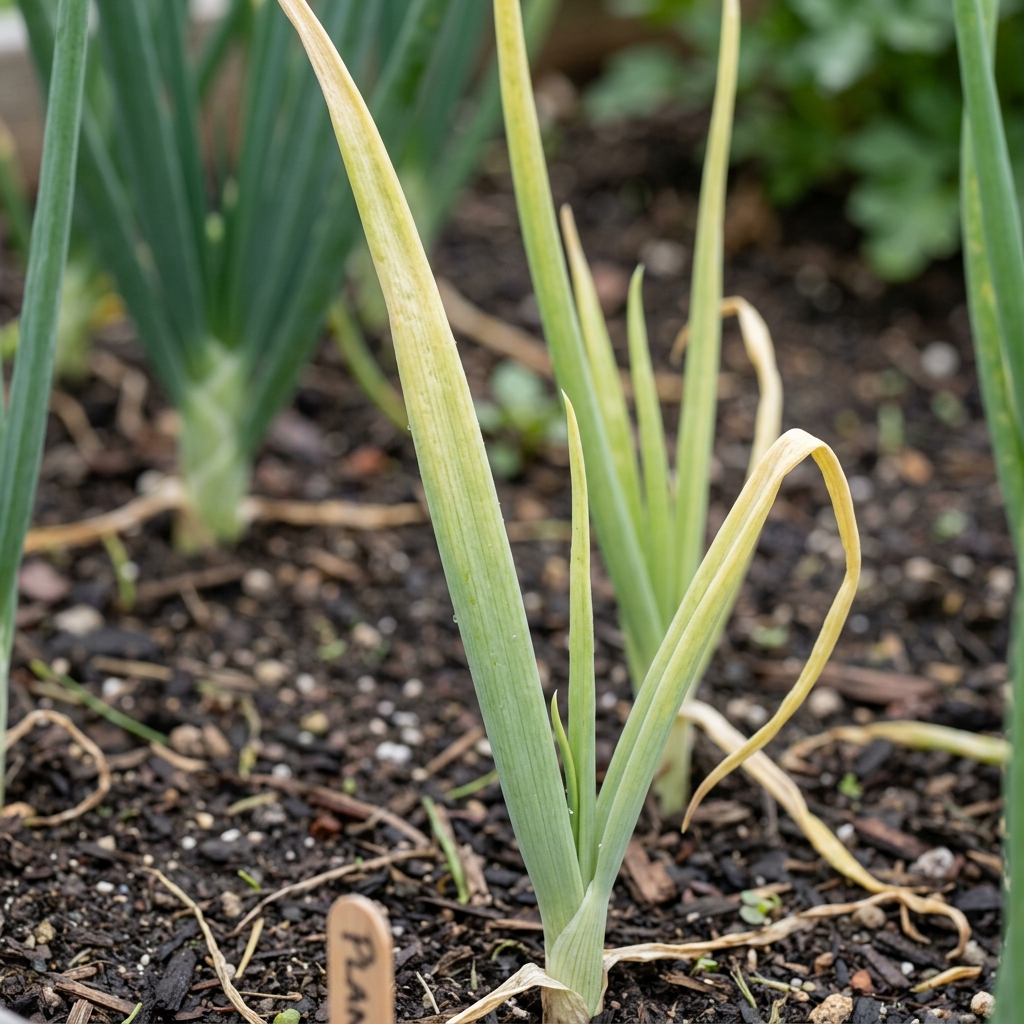
Nitrogen Deficiency
Nitrogen Deficientia
Key Visual Symptoms
Older tubular leaves turn pale green, then yellow starting from leaf tips. Tips shrivel and die back prematurely. Stems grow thin and bulb development is stunted.
Organic Remedy
- Incorporate well-decomposed FYM or vermicompost (10–12 tons/ha) enriched with neem cake during basal plowing to establish slow-release organic nitrogen.
- Inoculate seedling roots with Azotobacter or Azospirillum biofertilizers (2 kg/acre mixed with compost) at transplanting to boost biological nitrogen fixation.
- Drench active crop rows with fermented mustard cake tea or fish amino acid (3% solution) every 14 days during the first 60 days of growth.
- Avoid late nitrogen application after bulb swelling starts, as excess nitrogen causes thick necks ('bull necks') and poor bulb storability.
Chemical Correction
- Apply nitrogen in 3 split doses: 40% as basal (via DAP or complex fertilizer), 30% at 30 days, and 30% at 45–50 days after transplanting (using CAN or Urea at 20–25 kg/acre).
- For rapid recovery of pale yellow crops, foliar spray water-soluble 19:19:19 at 4–5 g/L (0.4–0.5%) in 200 liters of water per acre during early morning hours.
- In drip systems, fertigate with Calcium Nitrate (15.5-0-0) at 2.5 kg/acre weekly up to bulb formation, cutting off all nitrogen 3–4 weeks before harvest.
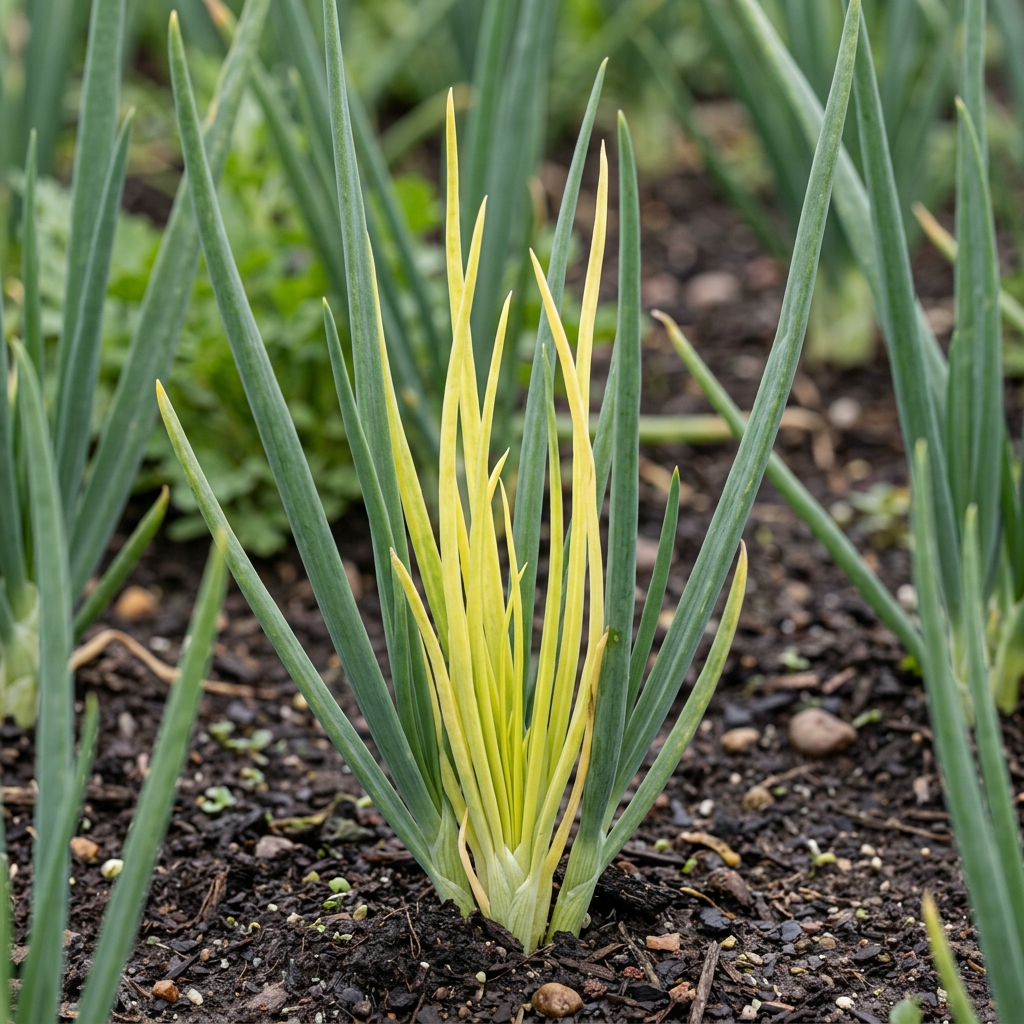
Sulfur Deficiency
Sulfur Deficientia
Key Visual Symptoms
Young inner leaves turn uniformly light green to pale yellow first, while older leaves remain green. Plants are stunted and bulbs are small and lack typical onion pungency.
Organic Remedy
- Broadcast agricultural gypsum (40–50 kg/acre) during bed preparation to supply abundant, water-soluble sulfate without altering soil pH.
- Incorporate well-cured compost amended with elemental sulfur (10–15 kg/acre) 3 weeks before transplanting to build a steady biological sulfur reservoir.
- Rotate onions with sulfur-accumulating green manures (mustard, radish) and chop residues into the soil to release organic sulfur compounds.
- Maintain steady soil moisture, as dry soils severely restrict organic matter mineralization and sulfate diffusion to shallow onion roots.
Chemical Correction
- Top-dress with Ammonium Sulfate (21% N, 24% S) at 20–25 kg/acre at 30 and 45 days after transplanting, irrigating immediately to drive sulfate into the root zone.
- For drip-irrigated fields, inject Sulfate of Potash (SOP 0-0-50 + 17.5% S) at 3–4 kg/acre weekly during early bulb swelling to support both potassium and sulfur demands.
- For rapid emergency correction, foliar spray 1% Magnesium Sulfate (10 g/L) or 0.5% Micronized Wettable Sulfur during early morning hours, repeating after 7 days.
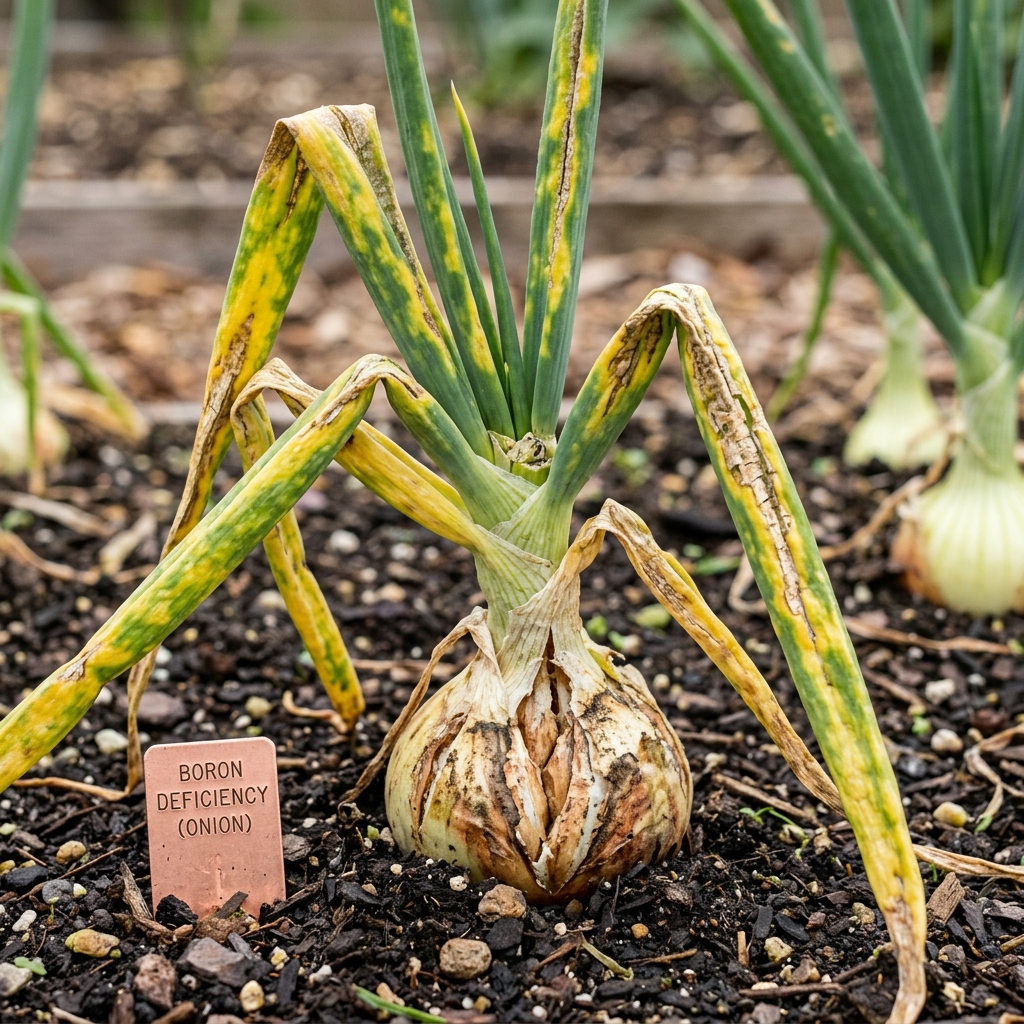
Boron Deficiency
Boron Deficientia
Key Visual Symptoms
Young leaves emerge distorted, twisted, and brittle. Slicing open harvested bulbs reveals hollow, corky, dry brown center cores.
Organic Remedy
- Incorporate well-decomposed compost enriched with trace minerals during soil preparation to improve boron retention in light sandy soils.
- Maintain uniform root zone moisture through drip irrigation and mulching; temporary soil drying precipitates boron into an insoluble, unabsorbable form.
- Avoid over-liming; raising soil pH above 7.0 dramatically binds boron to soil colloids and reduces root uptake.
- Apply liquid seaweed extract (2 ml/L) during early vegetative growth to naturally deliver bioavailable chelated trace elements.
Chemical Correction
- Apply agricultural Borax (10.5% B) at 4–5 kg/acre mixed with basal fertilizer or dry sand during field preparation to ensure uniform distribution.
- Foliar spray Solubor (Disodium Octaborate Tetrahydrate, 20% B) at 1.0–1.5 g/L (0.1–0.15%) at 30 and 50 days after transplanting during cool morning hours.
- Strictly adhere to recommended dosages: the margin between boron deficiency and boron toxicity is narrow (never exceed 2 g/L in foliar sprays).
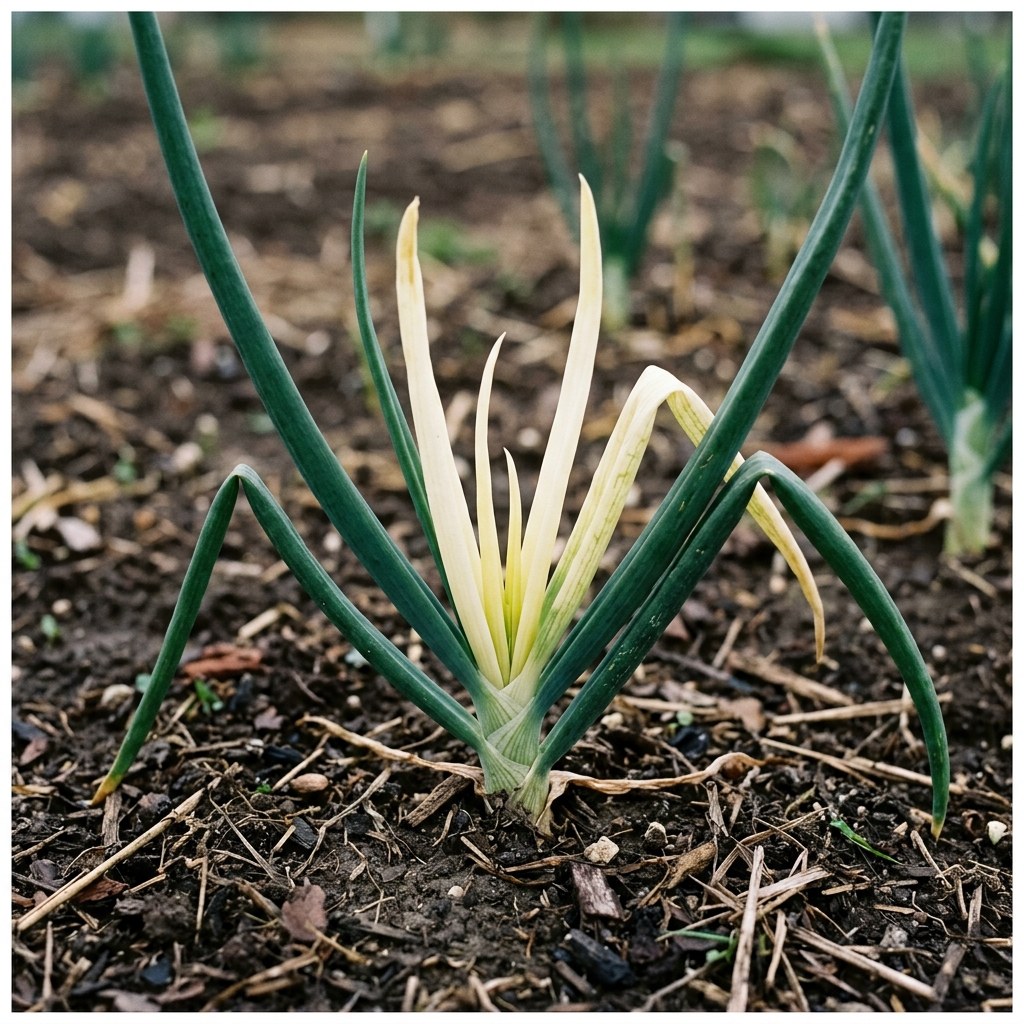
Iron Deficiency
Ferrum Deficientia
Key Visual Symptoms
Newly emerging central leaves become pale yellow to ivory white. Unlike sulfur deficiency where yellowing is uniform and light green, severe iron deficiency causes stark bleaching of inner foliage. Plant growth slows and bulb sizes remain undersized.
Organic Remedy
- Test soil pH; if above 7.2, incorporate agricultural elemental sulfur (15–20 kg/acre) or acidic organic matter to bring pH down to the optimal 6.0–6.8 range.
- Drench root zone with liquid humic and fulvic acid (12% at 1 L/acre) to naturally chelate locked soil iron and stimulate fine feeder roots.
- Avoid over-irrigation and poor drainage in heavy soils, as oxygen-depleted roots cannot chemically reduce ferric iron into plant-absorbable ferrous iron.
- Mulch between rows with composted pine needles or leaf mold to promote beneficial soil microbes and maintain steady root-zone moisture.
Chemical Correction
- On alkaline or calcareous soils (pH > 7.2), apply Fe-EDDHA (6% iron chelate) at 1.5–2 kg/acre via drip irrigation or direct root drenching.
- For rapid symptom arrest on neutral to slightly acidic soils, foliar spray Fe-EDTA (12% chelate) at 1.0–1.5 g/L with an agricultural wetting agent early in the morning.
- Alternatively, apply 0.25% Ferrous Sulfate (2.5 g/L) buffered with 0.1% citric acid to prevent leaf scorch, repeating every 7–10 days until new central leaves emerge deep green.
Onion Diagnostic Guide: Diseases vs. Deficiencies
Onion leaf tip dieback can indicate Downy Mildew disease or Potassium starvation. Use this comparative key.
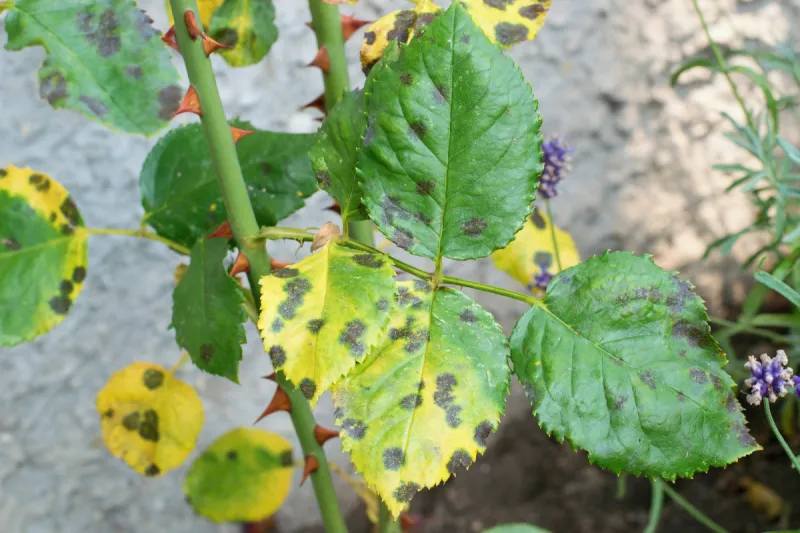
Onion Downy Mildew
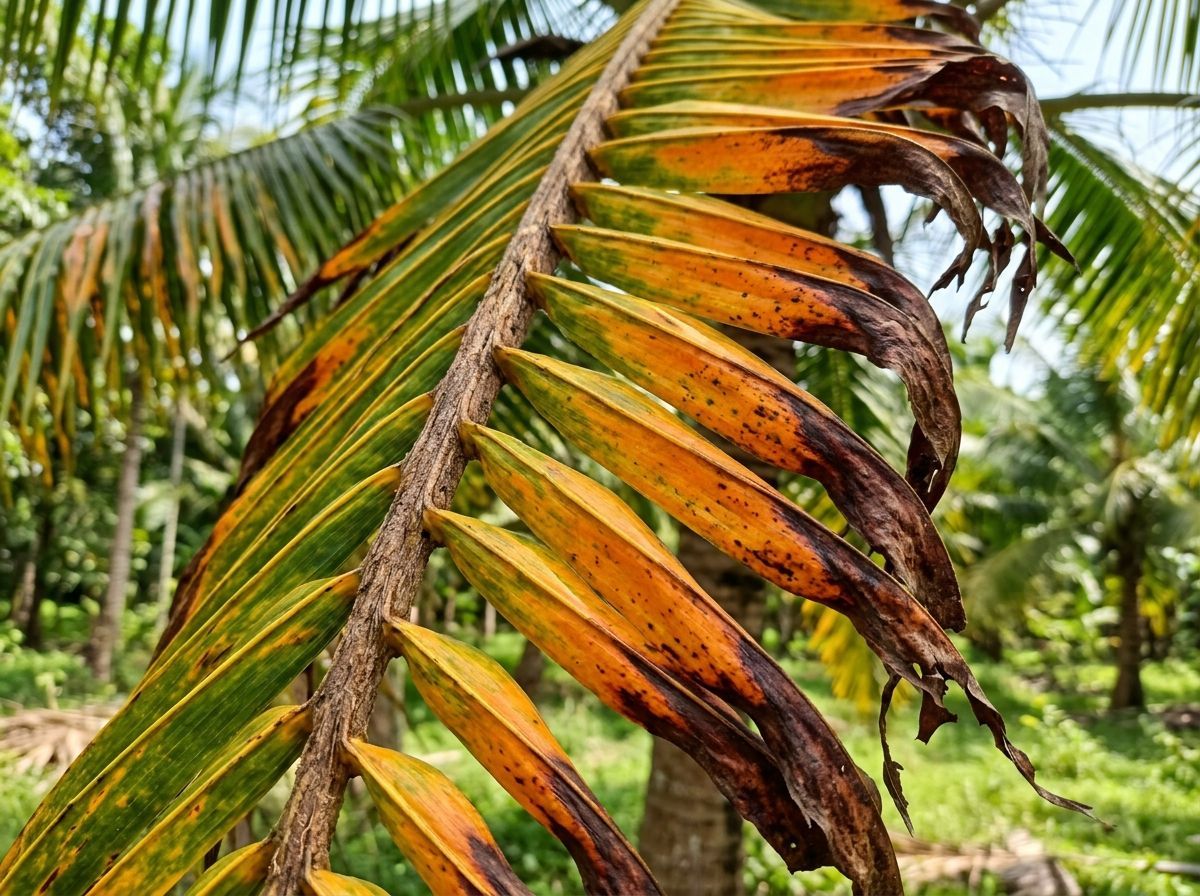
Potassium Tip Burn
Key Indicators to Look For:
- Mold Growth: Downy Mildew produces a visible purplish fuzzy mold on leaf blades under damp, cool conditions. Potassium deficiency causes dry, flat leaf margins without mold.
- Bulb Quality: Boron deficiency leads to distorted foliage and soft, corky bulb centers. Neck rot disease causes wet, spongy decay at the neck of the bulb.
- Sulfur vs. Iron Yellowing: Sulfur deficiency is the primary cause of yellowing on young inner onion leaves, directly impairing pungent flavor oils. Iron deficiency occurs on high pH calcareous soils (>7.5) causing stark ivory bleaching of inner foliage.
Diagnose Your Onion Crop Instantly
Take or upload a photo of your leaf or field damage to let our AI model scan for diseases, insect pests, or nutritional deficiencies.
Seasonal Outbreak Calendar
Track peak infestation and disease risk months by geographic region. Access the interactive dashboard to see what diseases are active this month.
Explore Disease CalendarFeatured Agronomy Guide
Read our comprehensive guide comparing plant nutrient deficiencies, infectious diseases, and pests.
Read Symptom Diagnosis GuideExplore Other Crop Hubs
Rice (Paddy) Hub
Grain health, blast management, and water guides.
Wheat Hub
Cereal growth guides, rust diagnosis, and soil prep.
Tomato Hub
Solanaceous care, fruit rots, and calcium fixes.
Coconut Hub
Palm care, potassium checks, and organic pest remedies.
Mango Hub
Mango variety guides, zinc sprays, and leaf curl tips.