
Iron Deficiency
Ferrum Deficientia
How to Identify Iron Deficiency on Onion

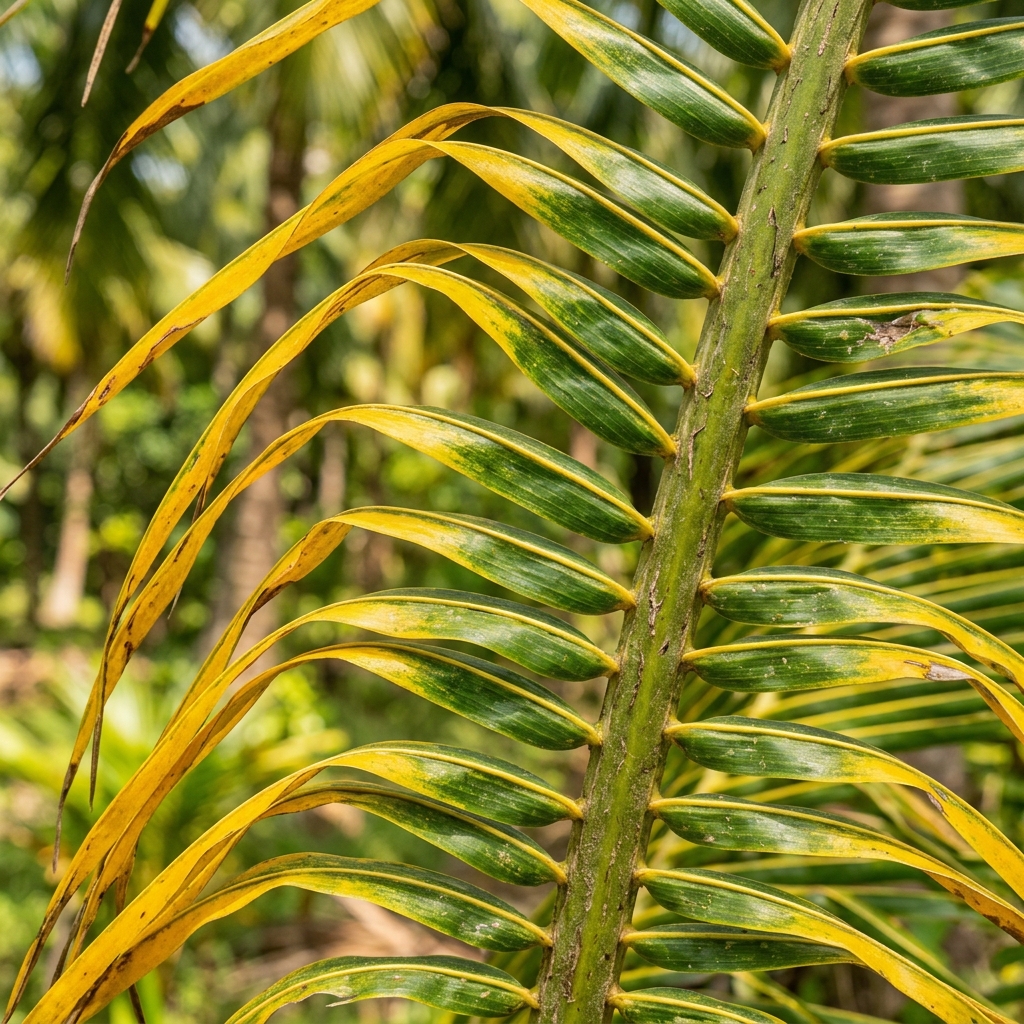
Visible Symptoms
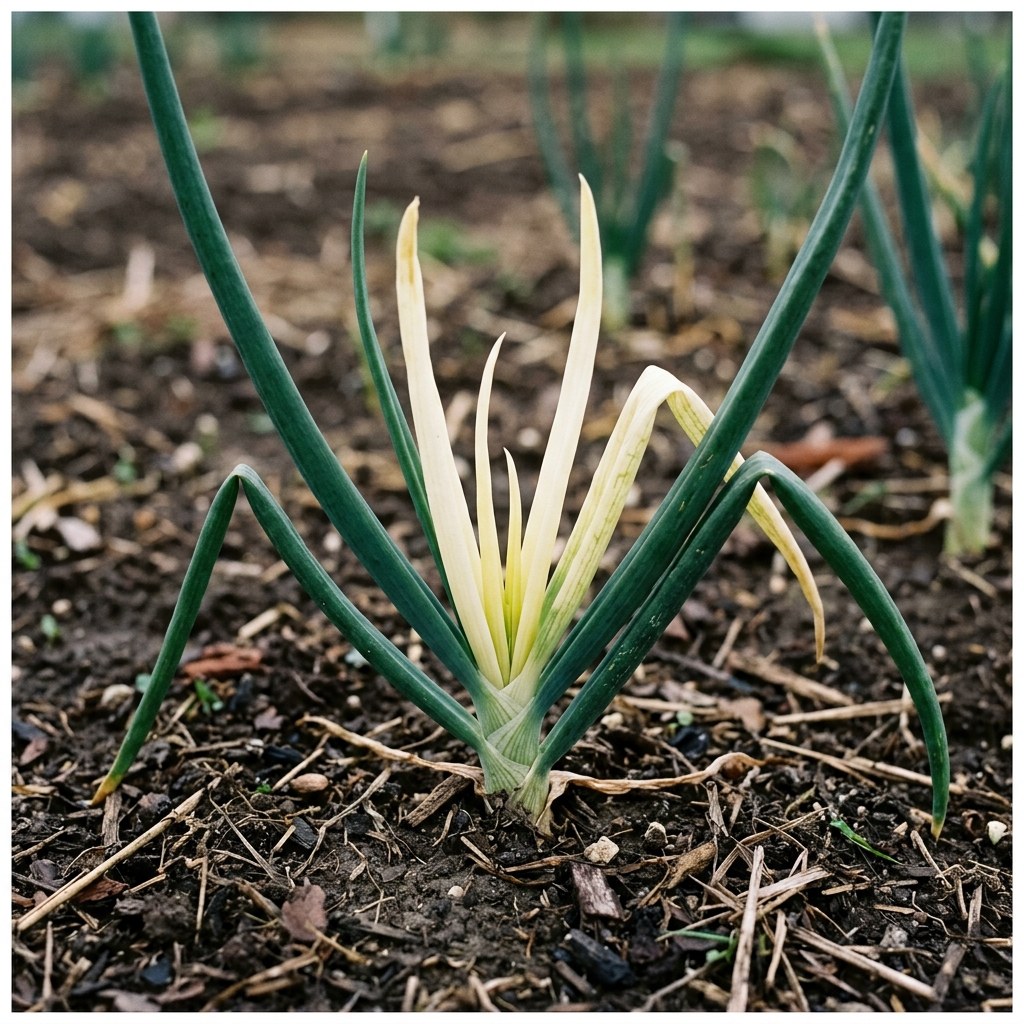
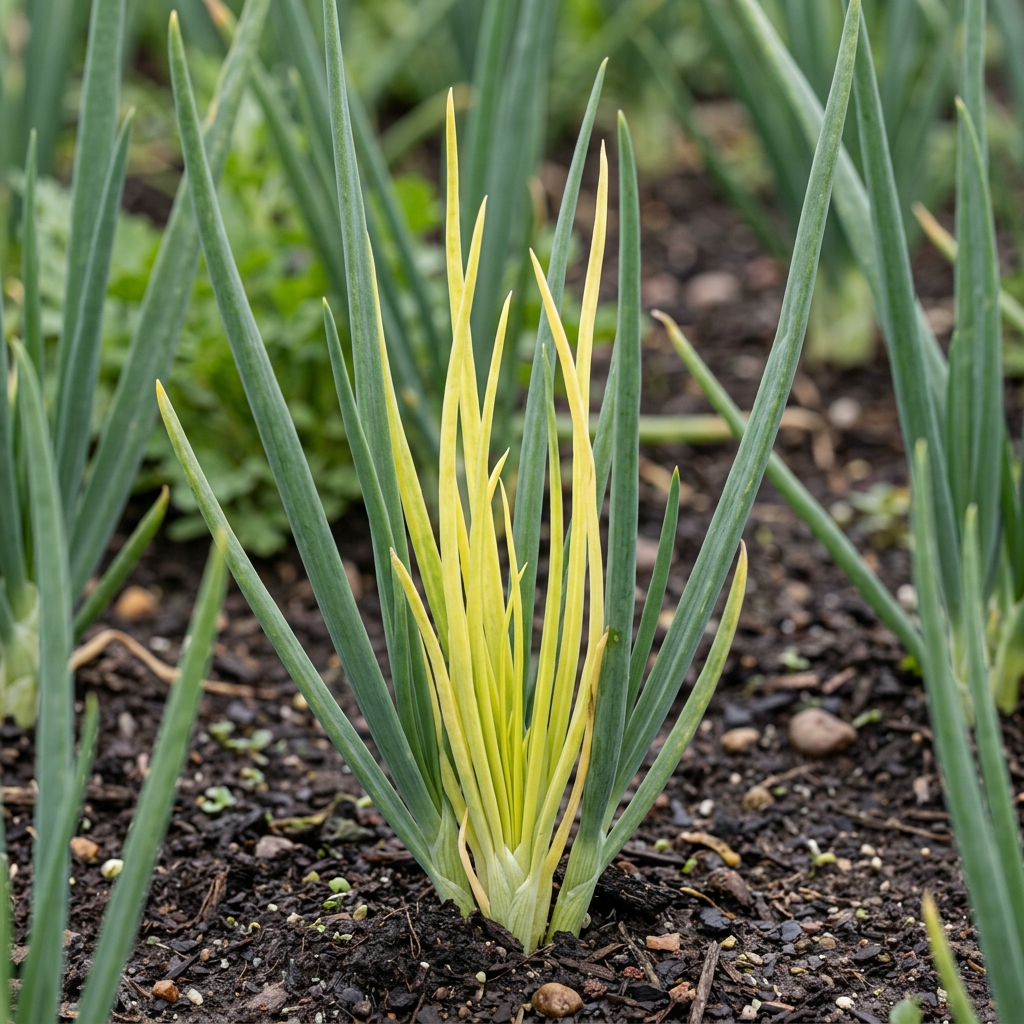
Newly emerging central leaves become pale yellow to ivory white. Unlike sulfur deficiency where yellowing is uniform and light green, severe iron deficiency causes stark bleaching of inner foliage. Plant growth slows and bulb sizes remain undersized.
About Iron Deficiency
Iron deficiency in onions develops on high pH calcareous or alkaline soils (pH > 7.5) where iron becomes insoluble. Because iron is immobile in plant tissue, severe chlorosis and ivory whitening localize specifically to newly emerging inner tubular leaves while older outer leaves remain green.
Nutrient Role & Deficiency Cause
Iron deficiency in onions develops on high pH calcareous or alkaline soils (pH > 7.5) where iron becomes insoluble. Because iron is immobile in plant tissue, severe chlorosis and ivory whitening localize specifically to newly emerging inner tubular leaves while older outer leaves remain green.
Seasonal Outbreak Calendar
Outbreak risk and activity timeline for Iron Deficiency based on seasonal climate patterns:
Treatment & Correction Guide
Natural & Organic Methods
Chemical & Professional Control
Frequently Asked Questions
Why are only the innermost center leaves of my onions turning white?
Iron is an immobile nutrient in plants, meaning onions cannot transfer iron from older outer foliage to new shoots. When roots cannot absorb iron, newly formed central leaves lack chlorophyll and emerge bleached ivory-white, while older outer leaves remain dark green.
Why is 'organic sulfur compost' incorrect for treating iron deficiency?
Compost alone does not significantly acidify alkaline soil. To mobilize locked iron in high-pH soils, pure agricultural elemental sulfur (90% S) must be applied so soil bacteria oxidize it into sulfuric acid, lowering pH. For immediate plant uptake, chelated iron (Fe-EDDHA) is required.
Which iron chelate should I use for onions in alkaline soil?
Use Fe-EDDHA (6% chelate) if your soil pH is above 7.2 or calcareous. Unlike Fe-EDTA which destabilizes in alkaline soils, Fe-EDDHA remains fully soluble and plant-absorbable up to pH 9.0.
How fast will onion leaves re-green after applying iron chelate?
With foliar Fe-EDTA or a soil drench of Fe-EDDHA, newly emerging center leaves begin showing green pigment within 4 to 7 days. Leaves that were completely bleached white may only partially recover, but subsequent leaves will grow normal dark green.
Can waterlogged soil trigger iron chlorosis in onions?
Yes. Saturated soil eliminates root-zone oxygen and leads to bicarbonate buildup. Bicarbonate inactivates iron uptake mechanisms in onion root hairs, triggering severe iron chlorosis even if the soil has abundant iron.
Recommended diagnostics based on crop family and symptoms:
Remedy Disclaimer & Safety Notice
This disease guide is for educational screening purposes only. Pathogen behavior, severity, and host susceptibility can vary dramatically based on seed variety, weather conditions, and regional microclimates. Chemical pesticides and organic treatments are subject to strict regional environmental regulations and registration mandates. Please verify all chemical registrations and review manufacturer safety labels carefully with local certified agronomists or agricultural extension service offices before applying.