
Potassium Deficiency
Potassium Deficientia
How to Identify Potassium Deficiency on Coconut

Visible Symptoms
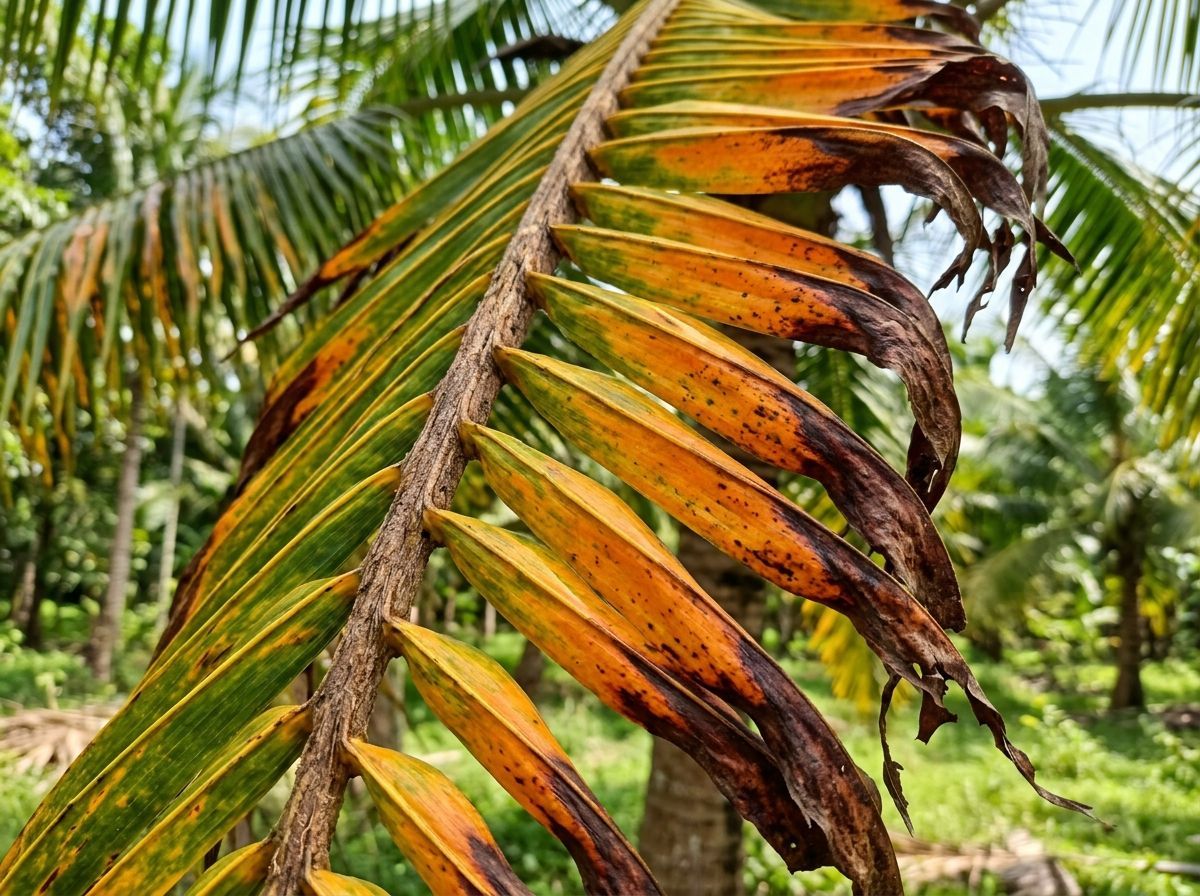
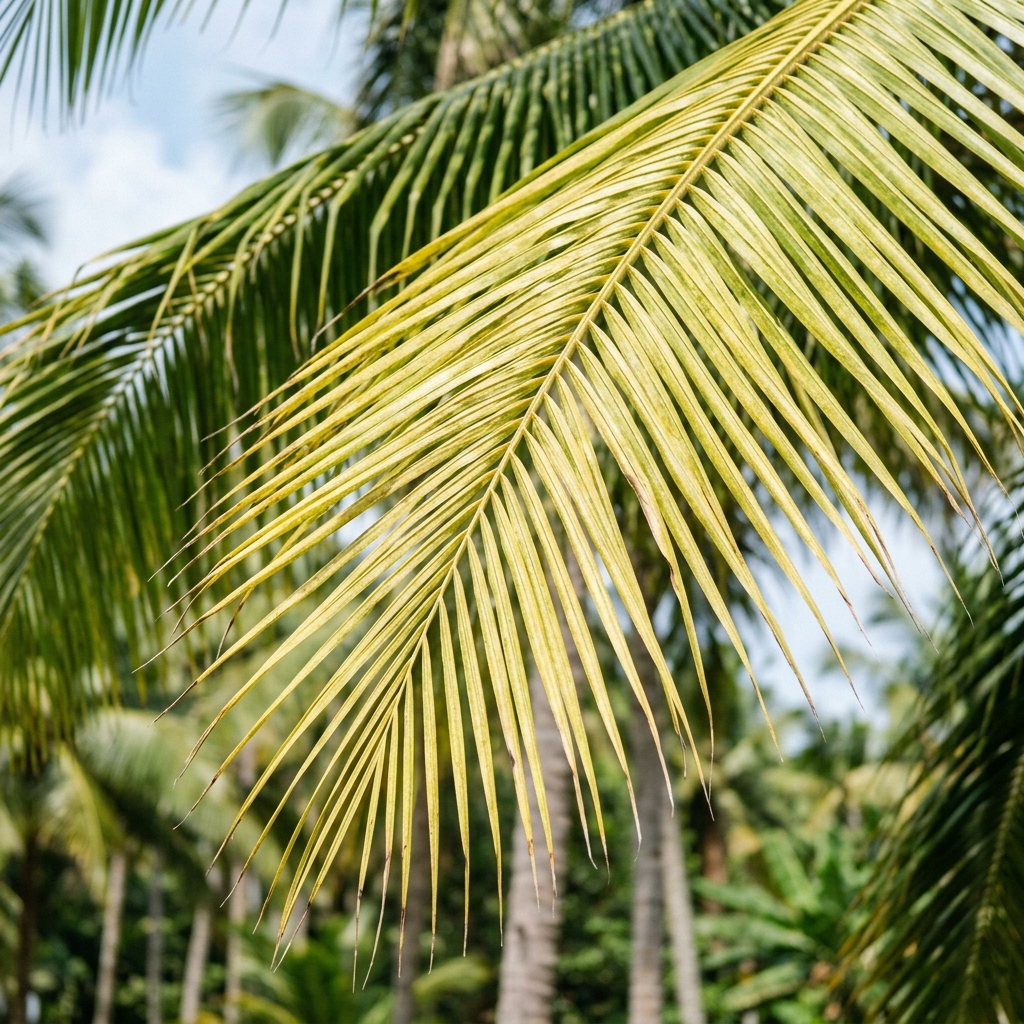
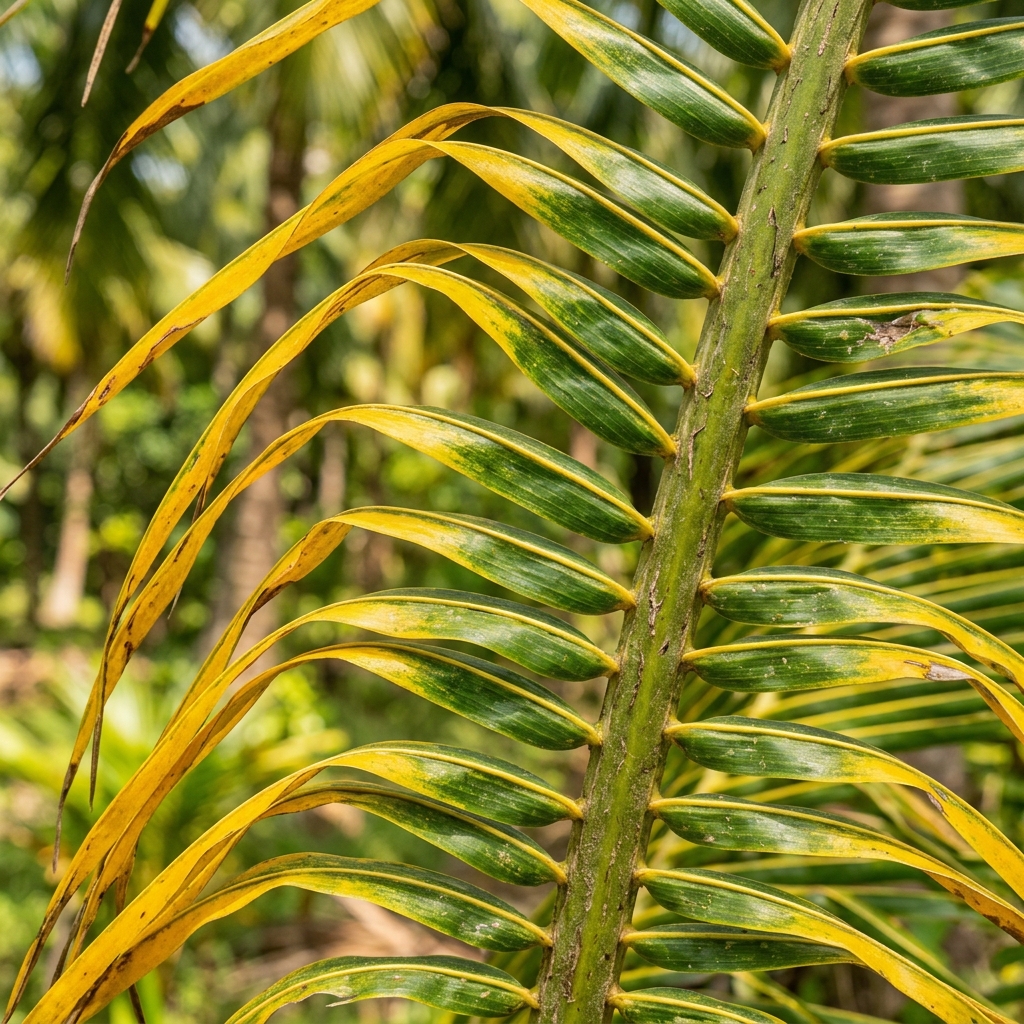
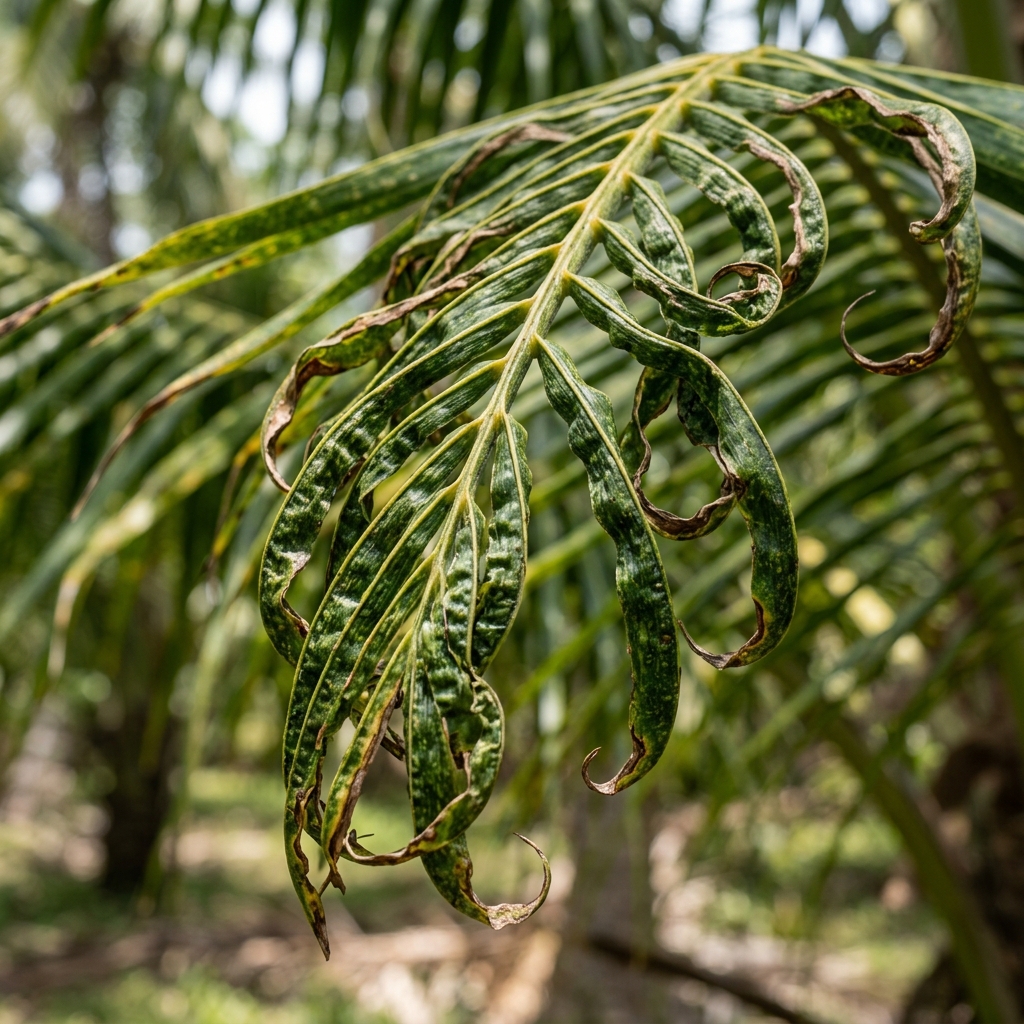
Older fronds turn bright orange-yellow. Pinnae (leaflets) show yellow spots followed by marginal scorching and dry, necrotic tips. The crown size is severely reduced, and the trunk tapers significantly near the crown ('pencil point').
About Potassium Deficiency
Potassium deficiency is the most common nutrient disorder in coconut cultivation. High demand for potassium during nut production causes older fronds to exhaust their reserves, showing severe yellowing and tip necrosis.
Nutrient Role & Deficiency Cause
Potassium deficiency is the most common nutrient disorder in coconut cultivation. High demand for potassium during nut production causes older fronds to exhaust their reserves, showing severe yellowing and tip necrosis.
Seasonal Outbreak Calendar
Outbreak risk and activity timeline for Potassium Deficiency based on seasonal climate patterns:
Treatment & Correction Guide
Natural & Organic Methods
Chemical & Professional Control
Frequently Asked Questions
Why is potassium considered the single most critical nutrient for coconut palms?
Coconut palms are heavy potassium accumulators. Each ton of harvested copra exports 70 to 100 kg of K2O from the soil. Potassium governs stomatal water regulation, drives sugar translocation into the nuts, maintains petiole turgor, and directly determines kernel thickness and copra weight.
What is 'pencil point' syndrome in coconut palms, and how is it related to potassium?
'Pencil point' (stem tapering) occurs when chronic potassium starvation restricts the apical meristem's ability to produce robust trunk tissue. Over several years, the trunk diameter diminishes from a normal 30 cm to a narrow 10 cm point before the palm ultimately ceases bearing and collapses.
Why do dead fronds hang down like a skirt around potassium-deficient coconut trees?
Potassium deficiency weakens vascular bundles in the petiole. The petiole collapses under frond weight while still partially attached to the stem node, forming a vertical 'skirt' of dead brown leaves that fail to shed cleanly.
How does burying coconut husks help cure potassium deficiency?
Coconut husks are rich in potassium (~1.5% K2O). Burying 100–150 husks in circular trenches 1.5 meters from the trunk provides up to 1.5 kg of slow-release potash over 4–5 years while acting as a subterranean sponge holding 6–8 times its weight in moisture.
Can common salt (Sodium Chloride) substitute for potassium in coconut palms?
Common salt (NaCl at 1 kg/palm/year) can partially substitute for potassium in generic osmotic and water-balance roles, boosting nut yield in inland palms. However, sodium CANNOT replace potassium in enzyme activation or starch and oil synthesis; MOP remains mandatory.
Recommended diagnostics based on crop family and symptoms:
Remedy Disclaimer & Safety Notice
This disease guide is for educational screening purposes only. Pathogen behavior, severity, and host susceptibility can vary dramatically based on seed variety, weather conditions, and regional microclimates. Chemical pesticides and organic treatments are subject to strict regional environmental regulations and registration mandates. Please verify all chemical registrations and review manufacturer safety labels carefully with local certified agronomists or agricultural extension service offices before applying.