
Boron Deficiency
Boron Deficientia
How to Identify Boron Deficiency on Coconut

Visible Symptoms
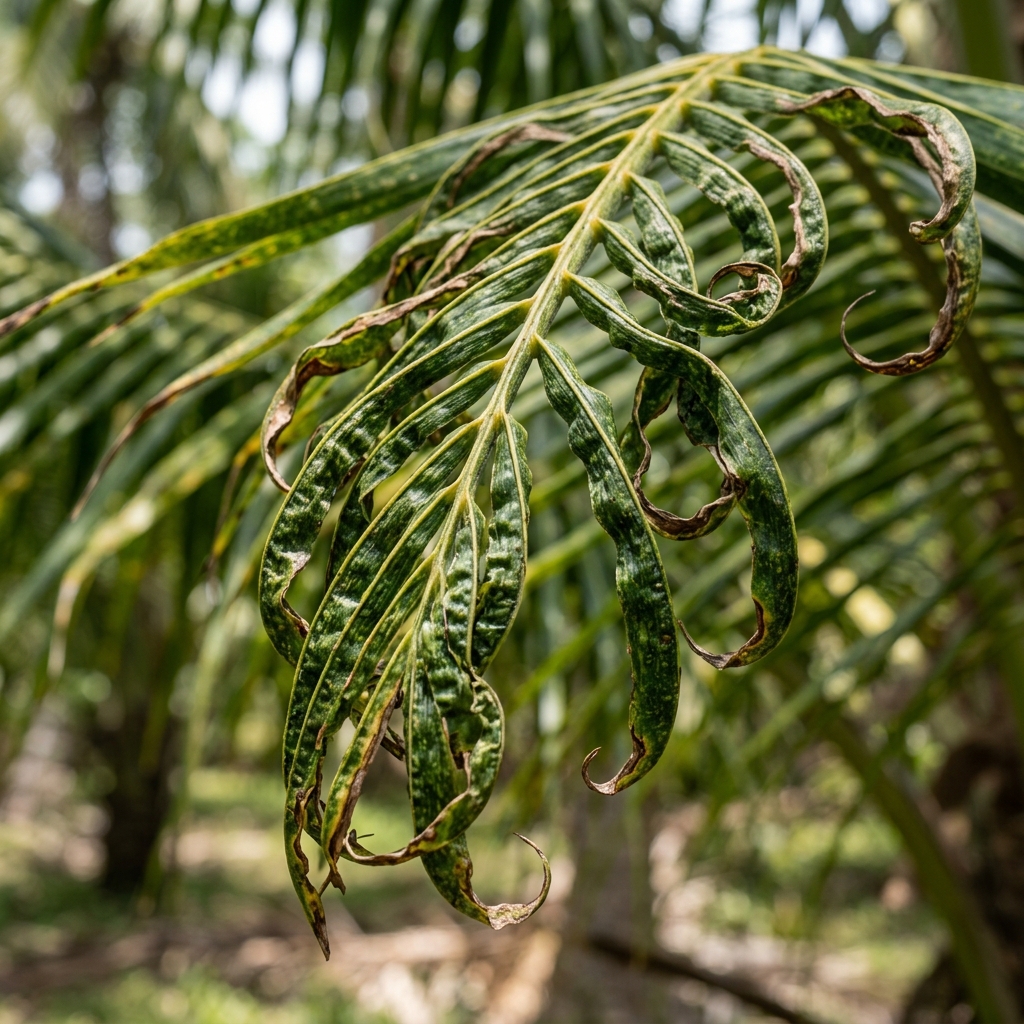
Leaflets fail to split normally, emerging fused and curled into a characteristic hook shape ('hook leaf' or 'bayonet deformity'). The crown becomes distorted and flat-topped. Developing nuts crack, secrete gum, and drop prematurely.
About Boron Deficiency
Boron deficiency in coconuts leads to cell division failure in emerging fronds and developing nuts. It results in leaf leaflet fusing and severe premature nut drop.
Nutrient Role & Deficiency Cause
Boron deficiency in coconuts leads to cell division failure in emerging fronds and developing nuts. It results in leaf leaflet fusing and severe premature nut drop.
Seasonal Outbreak Calendar
Outbreak risk and activity timeline for Boron Deficiency based on seasonal climate patterns:
Treatment & Correction Guide
Natural & Organic Methods
Chemical & Professional Control
Frequently Asked Questions
What causes 'hook leaf' and fused leaflets in coconut palms?
Boron is mandatory for pectin synthesis and calcium cross-linking in newly dividing cell walls. In the apical meristem ('cabbage'), boron deficiency prevents pinnae from splitting apart during spear leaf expansion, causing leaflets to emerge fused and bent into a stiff, hooked sickle shape.
What is the safe annual dose of Borax for a mature coconut tree?
Apply 50 to 100 grams of Agricultural Borax (10.5% B) per mature palm per year, divided into two splits. Never exceed 150 grams per palm in a year, as coconut palms are sensitive to boron toxicity, which causes severe marginal leaflet necrosis and canopy decline.
Why do young coconut buttons crack and ooze sticky brown gum?
Boron deficiency weakens cell wall elasticity in the expanding button nut pericarp. Internal hydrostatic pressure ruptures the outer epidermal layers, causing the fruit to weep amber-colored gum droplets ('nut gumming') and abort prematurely.
How long does it take for a coconut palm to recover from boron deficiency?
Because fronds are initiated in the coconut crown 24 to 30 months before emerging, fronds that are already deformed cannot uncurl. Newly emerging spear leaves show normal, unfolded leaflets within 3 to 5 months after Borax application, and full canopy recovery takes 12 to 18 months.
Can over-liming cause boron deficiency in coconut plantations?
Yes. Applying excessive agricultural lime or dolomite (raising soil pH above 7.0) binds borate anions tightly to soil mineral surfaces, chemically locking boron away from coconut root hairs.
Recommended diagnostics based on crop family and symptoms:
Remedy Disclaimer & Safety Notice
This disease guide is for educational screening purposes only. Pathogen behavior, severity, and host susceptibility can vary dramatically based on seed variety, weather conditions, and regional microclimates. Chemical pesticides and organic treatments are subject to strict regional environmental regulations and registration mandates. Please verify all chemical registrations and review manufacturer safety labels carefully with local certified agronomists or agricultural extension service offices before applying.