
Black Rot (Grape)
Phyllosticta ampelicida
About Black Rot (Grape)
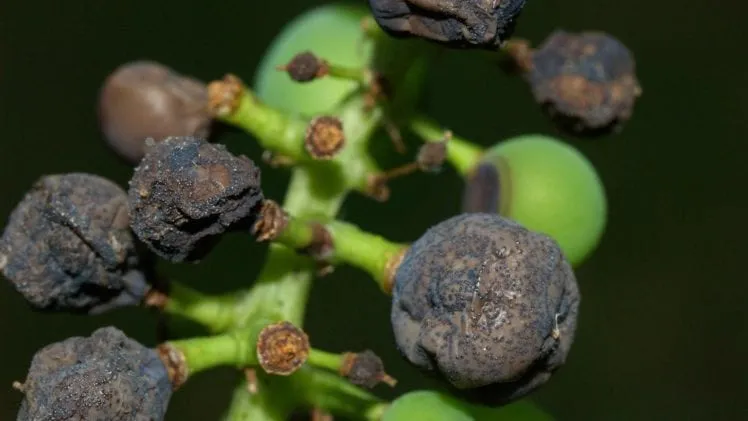
Black Rot of grape is a highly destructive foliar and fruit disease caused by the specialized Ascomycete fungus *Phyllosticta ampelicida* (anamorph) / *Guignardia bidwellii* (teleomorph). Native to North America, this pathogen has spread globally, posing a severe threat to both commercial vineyards and home growers. The fungus behaves as a necrotrophic parasite, aggressively invading the leaves, petioles, shoots, and fruit clusters of grapevines (*Vitis* species). If left unmanaged, the pathogen can cause complete crop loss in warm, humid regions. It thrives by exploiting plant injuries and soft green tissue, destroying grape berries and leaving behind hard, dry, wrinkled black structures called mummies.
Identifying black rot requires monitoring grapevines starting in mid-spring. Foliar symptoms appear as small, circular, tan-to-reddish-brown spots (2–10 mm) with dark brown borders. As the lesions expand, tiny black pinpoint dots called pycnidia (the asexual fruiting bodies) form a concentric ring inside the spots. Shoot and petiole lesions appear as elongated, sunken black cankers. The most devastating phase targets developing berries when they are half-grown. A small, light-brown circular spot quickly expands, rotting the entire berry within 2 to 3 days. Affected grapes turn soft, rot, and rapidly shrivel into hard, wrinkled, purple-black 'mummies' that remain attached to the bunch, resembling dark raisins.
While *Vitis vinifera* and *Vitis labrusca* cultivars are highly susceptible, black rot can also infect other woody vines and wild grape relatives, serving as reservoirs.
| Crop/Plant Type | Severity Rating | Impact Description |
|---|---|---|
| European Grapes (Pinot Noir, Chardonnay) | Extreme (⭐⭐⭐) | Total bunch rot, shriveled black mummies, and complete crop loss |
| American Grapes (Concord, Niagara) | High (⭐⭐) | Severe foliar spotting, cane cankers, and significant yield reduction |
| Boston Ivy, Virginia Creeper | Medium (⭐) | Foliar lesions and circular spots; acts as an inoculum source |
The lifecycle of *Phyllosticta ampelicida* is tightly coupled with warm, rainy spring weather. The fungus overwinters inside the mummified berries left on the vine or on the ground. Spring rains trigger the release of airborne ascospores and water-splashed conidia, infecting young shoots at temperatures between 15°C and 27°C. For organic control, remove and destroy all overwintering mummies, prune the vine canopy to improve airflow, and apply liquid copper or sulfur sprays. Chemical management relies on protective sprays using active ingredients like mancozeb, myclobutanil, or captan starting at early shoot growth. For detailed vineyard health guides, visit our Plant Disease Identifier Hub, or explore related threat profiles like Downy Mildew of Grape, Sooty Mold, and Black Spot.
Taxonomy & Features
- Hard Black Mummies: Rotting grape berries rapidly lose moisture, shriveling into hard, wrinkled, purple-black mummified structures.
- Circular Leaf Spots: Leaf symptoms manifest as distinct tan-to-reddish-brown circular spots with dark brown margins.
- Fruiting Body Rings: Conspicuous rings of black pinpoint dots (pycnidia) form concentrically inside the foliar leaf lesions.
- Dormant Overwintering: The fungus overwinter inside infected cane lesions and the fallen mummified berries on the vineyard floor.
- Sunken Stem Cankers: Young shoots and leaf stems develop elongated, purple-to-black sunken cankers that weaken the vines.
- Airborne Ascospore Release: High spring humidity and rain trigger the discharge of wind-blown ascospores to infect new spring flush.
Seasonal Outbreak Calendar
Outbreak risk and activity timeline for Black Rot (Grape) based on seasonal climate patterns:
Names in Different Languages
Affected Plant Species
Vegetables & Crops
- None documented (Pathogen is strictly host-specific to Vitaceae plants)
Flowers & Ornamentals
- Clematis
- Boston Ivy
- Virginia Creeper
Fruits & Berries
- Grape (Vitis vinifera)
- Concord Grape (Vitis labrusca)
- Muscadine Grape (Vitis rotundifolia)
- Wild Grape (Vitis riparia)
Prevention & Cure
Natural & Organic Methods
- Mummy Removal: Rake and remove all fallen mummified berries and clusters under the vines during winter dormancy to eliminate primary inocula.
- Canopy Management: Prune vines to keep the canopy open, allowing maximum sunlight penetration and rapid drying of leaves and fruit.
- Organic Copper Spray: Apply organic liquid copper fungicide early in the season, particularly after wet spring rains.
- Resistant Varieties: Plant less susceptible varieties such as Delaware or Chancellor in regions with high black rot pressure.
Chemical & Professional Control
- Myclobutanil Fungicide: Apply systemic myclobutanil (e.g., Nova) starting at bud-break and repeating through bloom.
- Mancozeb Protection: Apply protective mancozeb foliar sprays early in the season to prevent spore germination on new leaves.
- Strobilurin Treatment: Use strobilurin-based fungicides (like azoxystrobin) to protect fruit clusters during high-infection windows.
Frequently Asked Questions
Can I eat grapes that have shriveled from black rot?
No. Grapes affected by black rot turn into dry, hard, wrinkled black mummies. They lose all moisture, taste bitter, are completely ruined, and are not suitable for consumption.
Why is black rot so difficult to control once it appears on the fruit?
Once the fungus enters the grape berry, it grows systemically within the fruit tissue, making external contact sprays ineffective. Prevention is critical; you must apply protective sprays before the fungus infects the berries.
How does the black rot fungus survive the winter?
The fungus overwinters in the mummified berries that fell to the ground or remained hanging on the vines. These mummies contain spore-producing structures that release fresh spores during warm, rainy spring days, restarting the infection.
Recommended diagnostics based on crop family and symptoms:
Remedy Disclaimer & Safety Notice
This disease guide is for educational screening purposes only. Pathogen behavior, severity, and host susceptibility can vary dramatically based on seed variety, weather conditions, and regional microclimates. Chemical pesticides and organic treatments are subject to strict regional environmental regulations and registration mandates. Please verify all chemical registrations and review manufacturer safety labels carefully with local certified agronomists or agricultural extension service offices before applying.