
Nitrogen Deficiency
Nitrogen Deficientia
How to Identify Nitrogen Deficiency on Coconut

Visible Symptoms
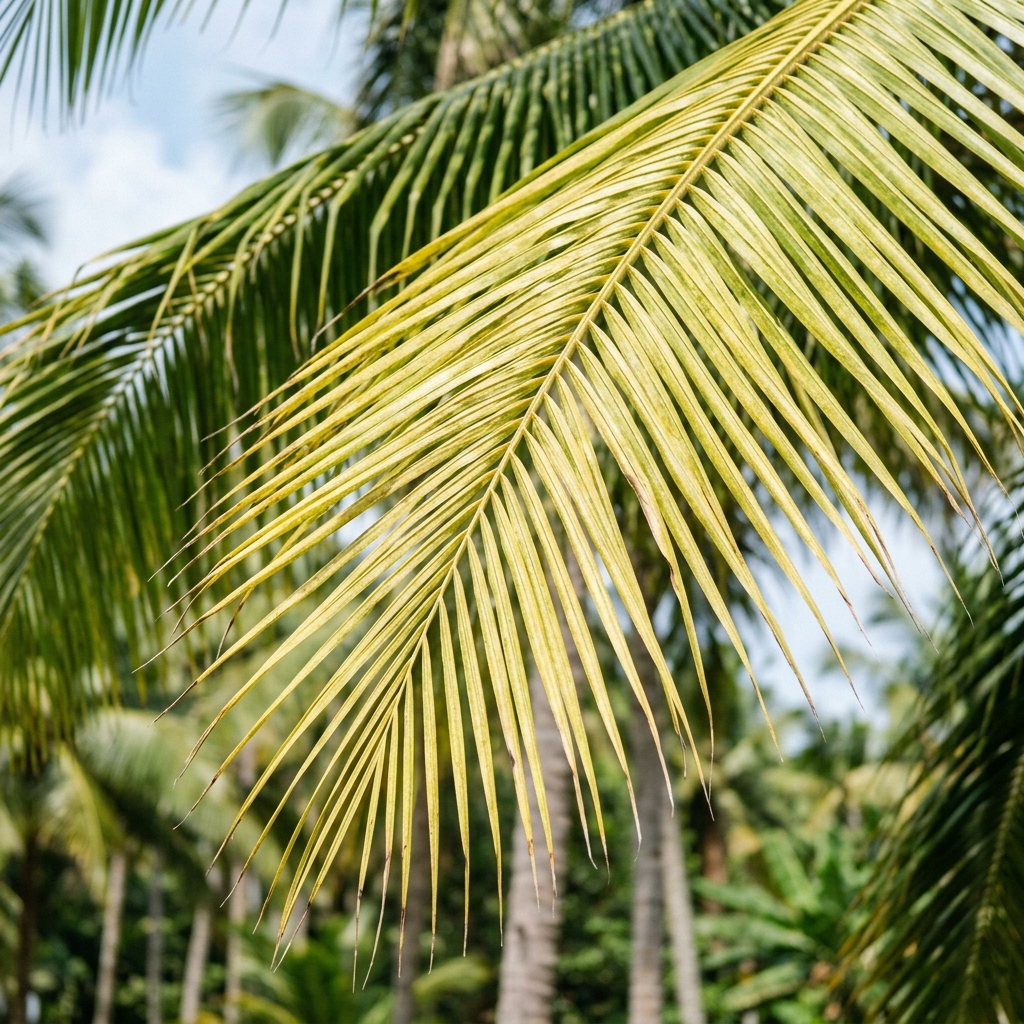
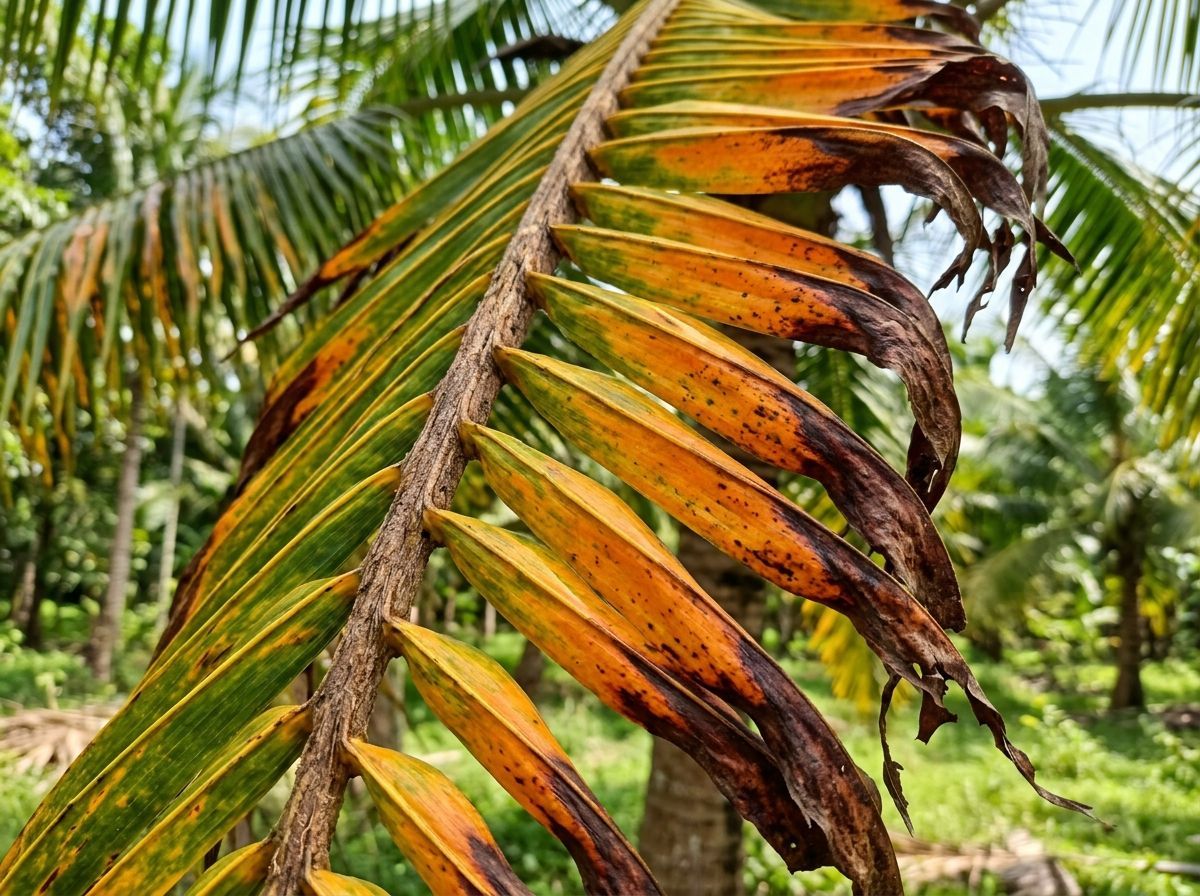
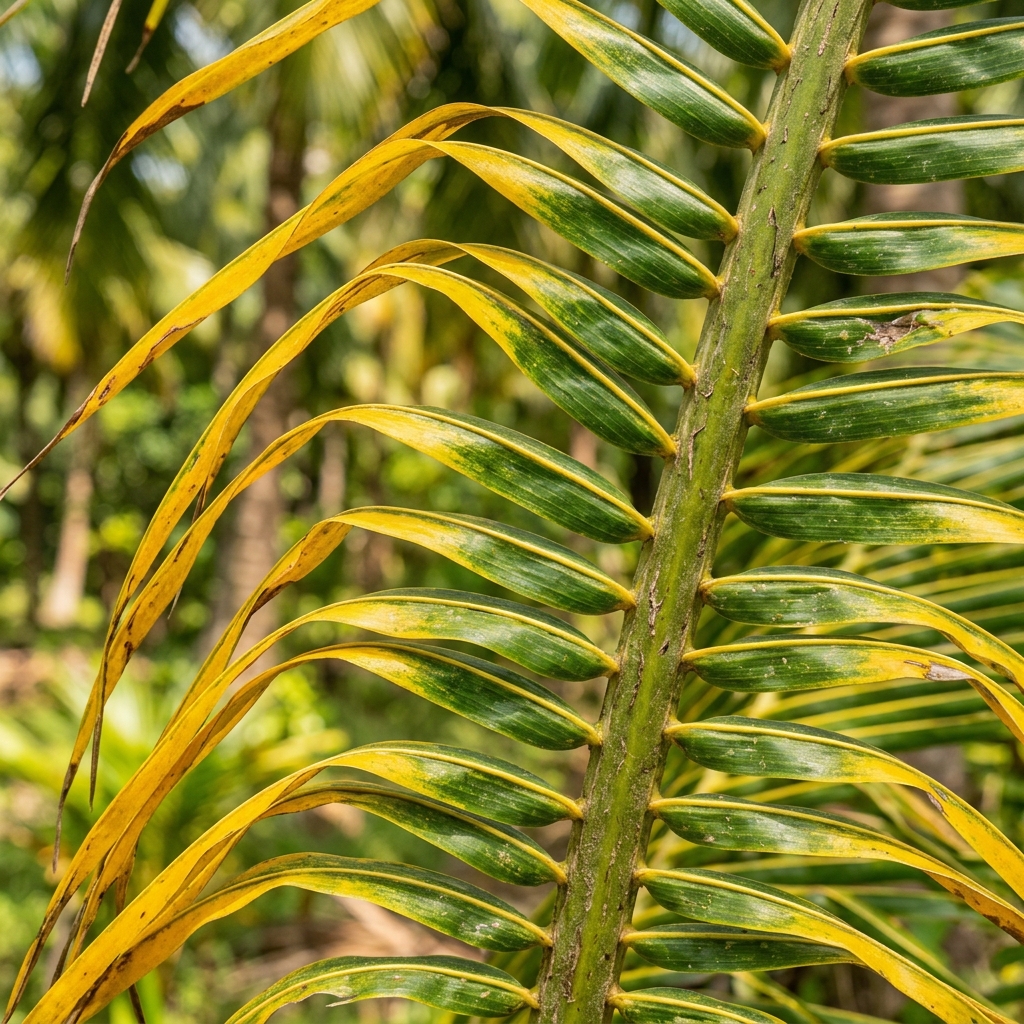
Lower older fronds turn pale green to yellowish-green. Frond count and overall crown size decrease, and the leaflets emerge shorter and thinner.
About Nitrogen Deficiency
Nitrogen deficiency in coconut palms reduces photosynthetic capacity, leading to a smaller crown, fewer leaves, and low nut yields. Common in sandy, leached soils.
Nutrient Role & Deficiency Cause
Nitrogen deficiency in coconut palms reduces photosynthetic capacity, leading to a smaller crown, fewer leaves, and low nut yields. Common in sandy, leached soils.
Seasonal Outbreak Calendar
Outbreak risk and activity timeline for Nitrogen Deficiency based on seasonal climate patterns:
Treatment & Correction Guide
Natural & Organic Methods
Chemical & Professional Control
Frequently Asked Questions
How does nitrogen deficiency affect coconut nut yield and copra quality?
Coconut inflorescences initiate inside the crown 32 months before opening. Chronic nitrogen starvation reduces female flower production, triggers massive button shedding in the first 3 months after spathe opening, and produces smaller nuts with thin, rubbery meat (copra) containing significantly lower oil percentage.
Where exactly should fertilizer be applied around a mature coconut palm?
Apply fertilizer in a circular circular trench or band 1.5 to 2.0 meters away from the palm trunk, incorporated 10–15 cm deep. Over 80% of active fine feeder roots are concentrated in this 1.5–2.0 meter radial zone; heaping fertilizer against the trunk base wastes nutrients and can cause bole rot.
Why do older fronds turn golden-yellow while the spear leaf stays green in coconut palms?
Nitrogen is highly mobile inside palm tissue. When root uptake is insufficient, the palm scavenges stored nitrogen from its oldest fronds (ranks 19–30) and translocates it upward to support the vital emerging spear leaf and developing spadix.
What green manure crops fix the most nitrogen in coconut palm basins?
Sunn hemp (Crotalaria juncea) and Velvet bean (Mucuna pruriens) are ideal. Sowing 100 g of sunn hemp seed in the 1.8 m basin at the onset of pre-monsoon showers produces 20–25 kg of nitrogen-rich green biomass per palm within 45–50 days.
Can summer drought mimic nitrogen deficiency in coconut trees?
Yes. Soil moisture deficit halts nitrate mass-flow toward roots, leading to induced nitrogen starvation where lower fronds yellow, droop, and crack at the petiole base. Maintaining regular basin drip irrigation (40–50 L/palm/day) is essential for nitrogen absorption.
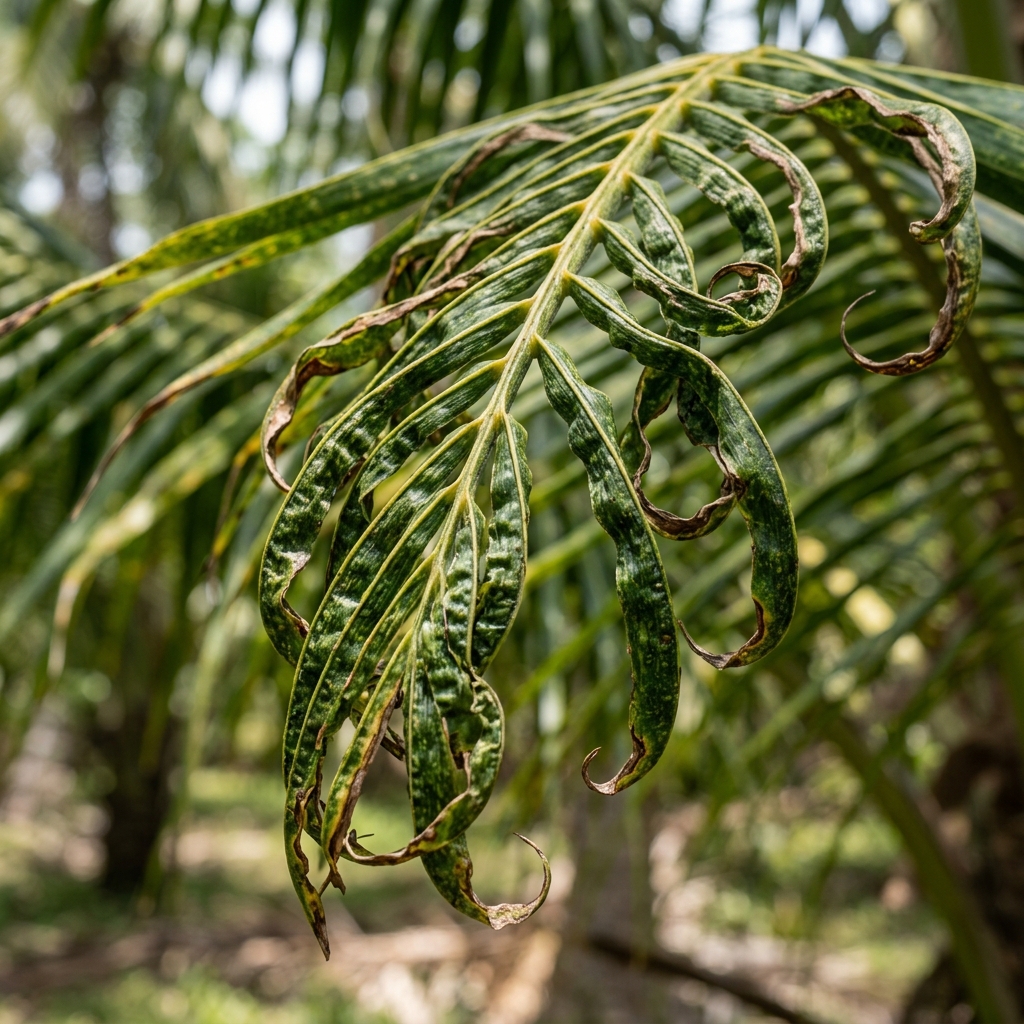
Recommended diagnostics based on crop family and symptoms:
Remedy Disclaimer & Safety Notice
This disease guide is for educational screening purposes only. Pathogen behavior, severity, and host susceptibility can vary dramatically based on seed variety, weather conditions, and regional microclimates. Chemical pesticides and organic treatments are subject to strict regional environmental regulations and registration mandates. Please verify all chemical registrations and review manufacturer safety labels carefully with local certified agronomists or agricultural extension service offices before applying.