
Magnesium Deficiency
Magnesium Deficientia
How to Identify Magnesium Deficiency on Coconut

Visible Symptoms
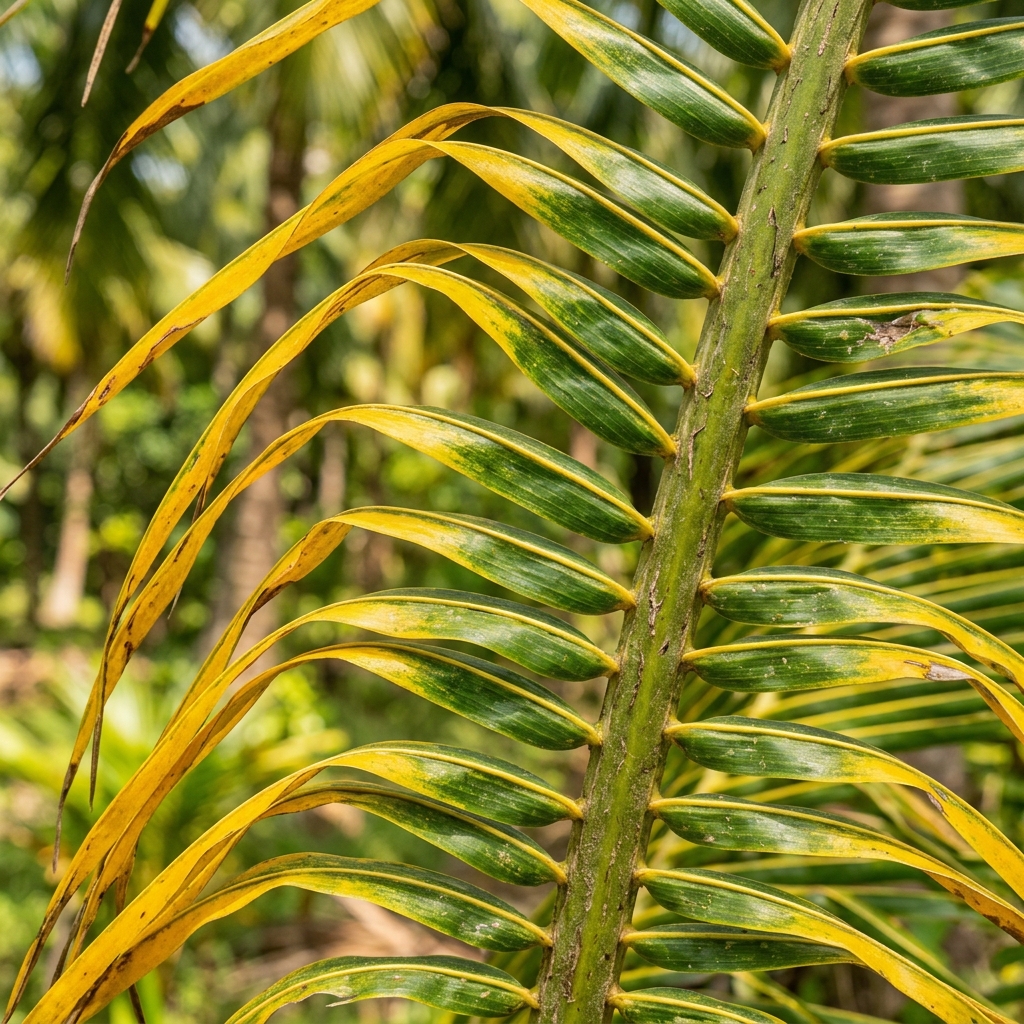
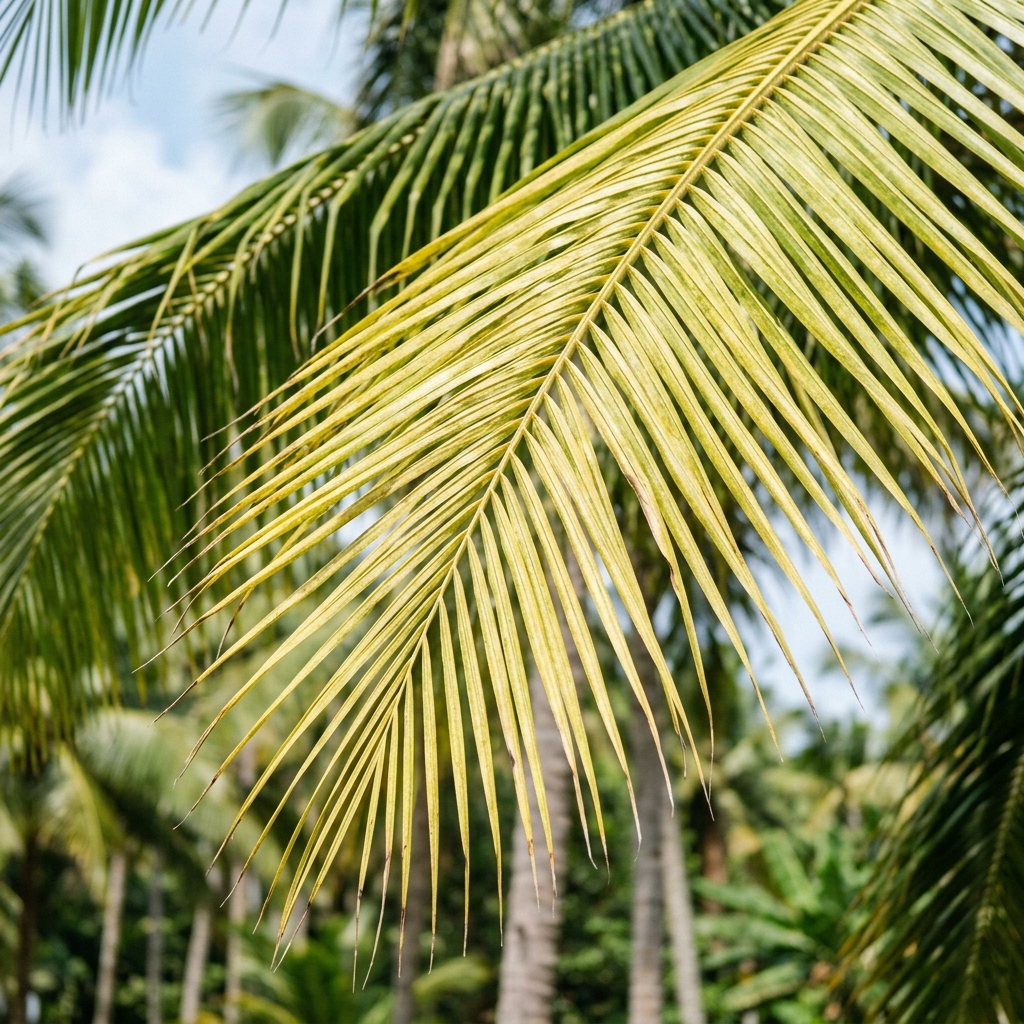
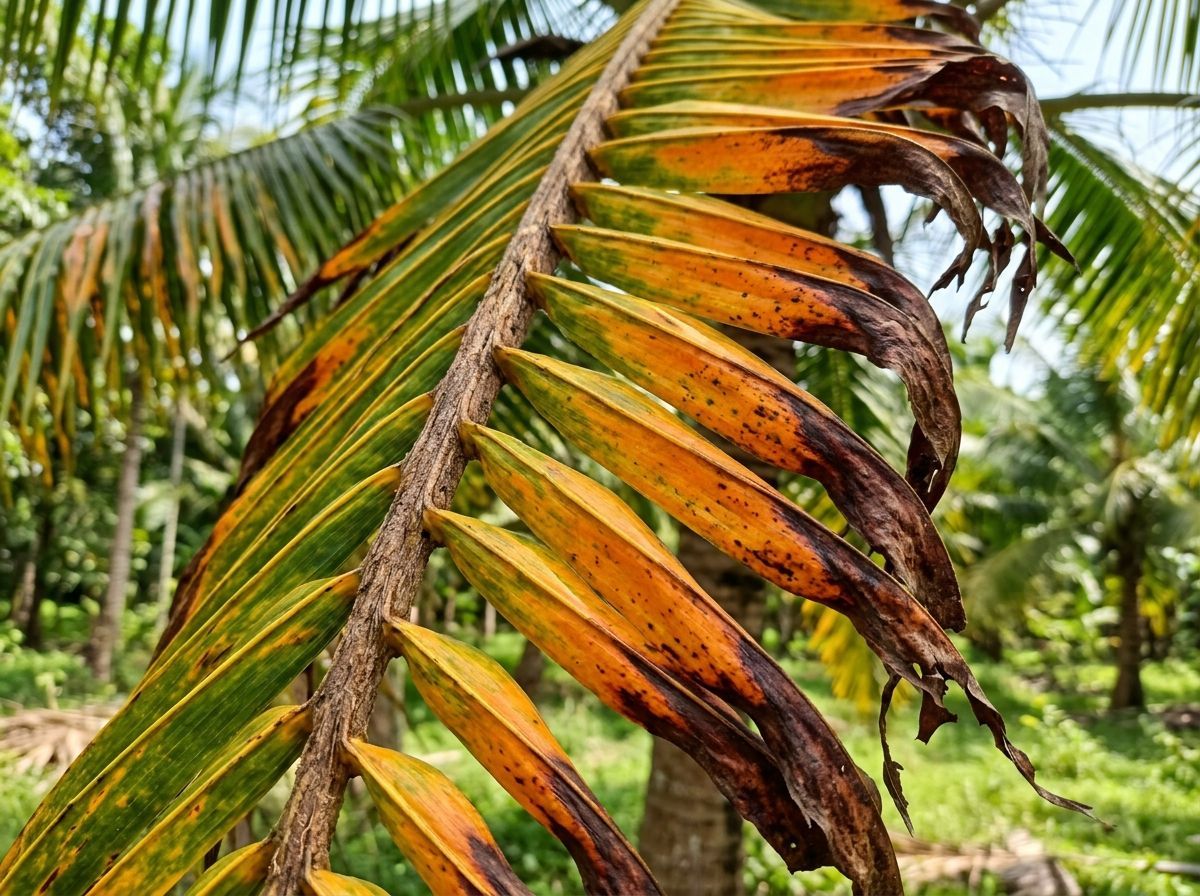
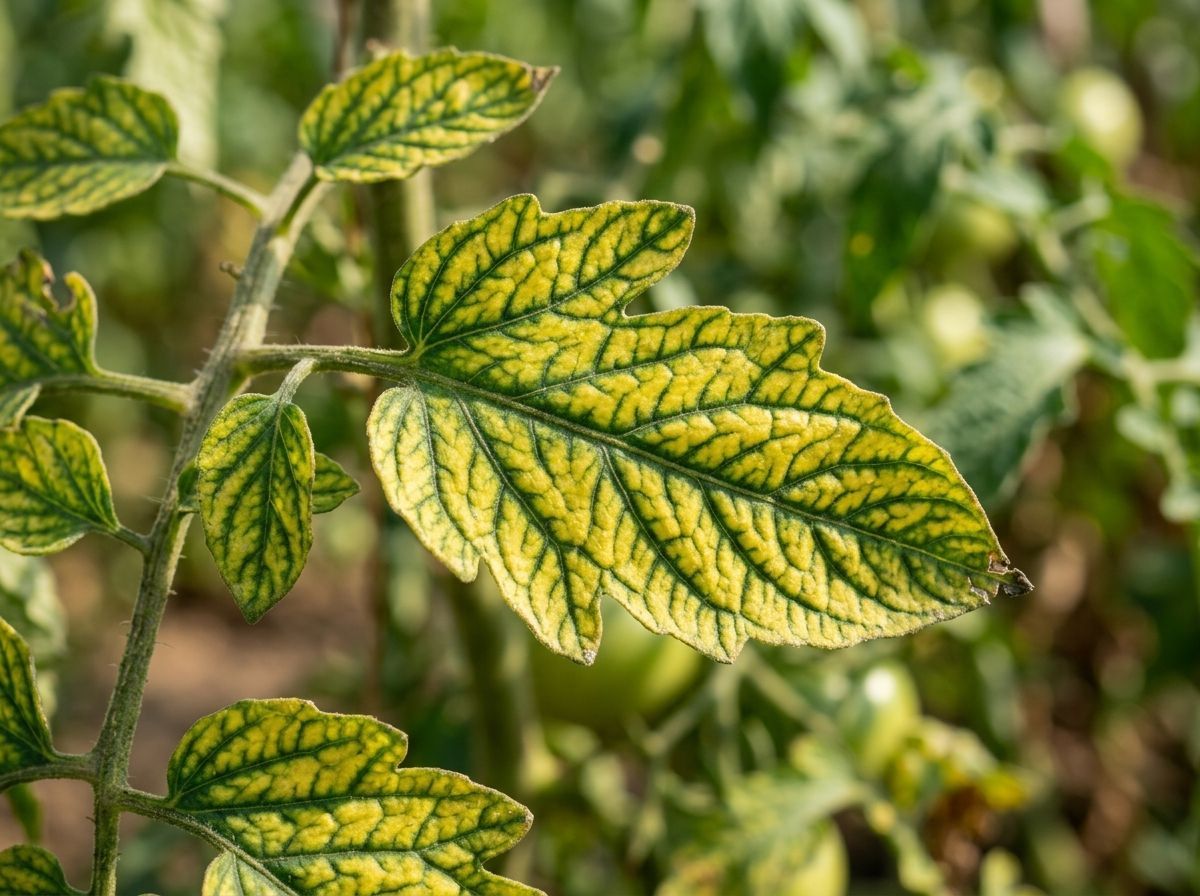
Older fronds show bright golden-yellow margins while the center of the leaflet and midrib remain green. This forms a prominent green 'V' pattern on the yellowing leaf blade. Leaves exposed to full sun show the most severe symptoms.
About Magnesium Deficiency
Magnesium deficiency commonly affects coconut palms in acidic, high-rainfall soils where magnesium is leached. It creates a highly distinct leaf symptom pattern.
Nutrient Role & Deficiency Cause
Magnesium deficiency commonly affects coconut palms in acidic, high-rainfall soils where magnesium is leached. It creates a highly distinct leaf symptom pattern.
Seasonal Outbreak Calendar
Outbreak risk and activity timeline for Magnesium Deficiency based on seasonal climate patterns:
Treatment & Correction Guide
Natural & Organic Methods
Chemical & Professional Control
Frequently Asked Questions
Why is magnesium deficiency in coconuts called 'sunburst' or 'festoon' chlorosis?
Magnesium deficiency is accelerated by light. Only the upper leaflet surfaces directly exposed to solar radiation turn brilliant golden-yellow. Pinnae shaded by upper fronds or overlapping leaves remain deep green, giving the canopy an ornamental, festooned appearance.
How does heavy potash (MOP) application induce magnesium deficiency in coconut palms?
Potassium (K+) and magnesium (Mg2+) compete for root uptake. When excessive Muriate of Potash is applied without corresponding magnesium, high K+ levels suppress Mg2+ uptake through competitive ion antagonism, triggering induced magnesium deficiency.
Which frond number is sampled to diagnose magnesium deficiency in coconuts?
Leaf analysis is performed on Frond 14 (counting down from the youngest fully open spear leaf as Frond 1). The critical deficiency threshold in coconut leaflets is 0.20% Mg; healthy palms should test between 0.30% and 0.45% Mg on dry matter basis.
Can dolomitic limestone be mixed together with urea and potash in the palm basin?
No! Never mix dolomite or agricultural lime directly with urea. Dolomite creates an alkaline micro-environment that converts urea into gaseous ammonia (NH3), causing severe nitrogen loss. Apply dolomite 4 weeks before chemical fertilizers.
Why is magnesium deficiency so prevalent in coastal sandy coconut plantations?
High annual rainfall (>2000 mm) readily leaches divalent magnesium cations through coarse quartz sands which have negligible clay content and extremely low cation exchange capacity (CEC).
Recommended diagnostics based on crop family and symptoms:
Remedy Disclaimer & Safety Notice
This disease guide is for educational screening purposes only. Pathogen behavior, severity, and host susceptibility can vary dramatically based on seed variety, weather conditions, and regional microclimates. Chemical pesticides and organic treatments are subject to strict regional environmental regulations and registration mandates. Please verify all chemical registrations and review manufacturer safety labels carefully with local certified agronomists or agricultural extension service offices before applying.